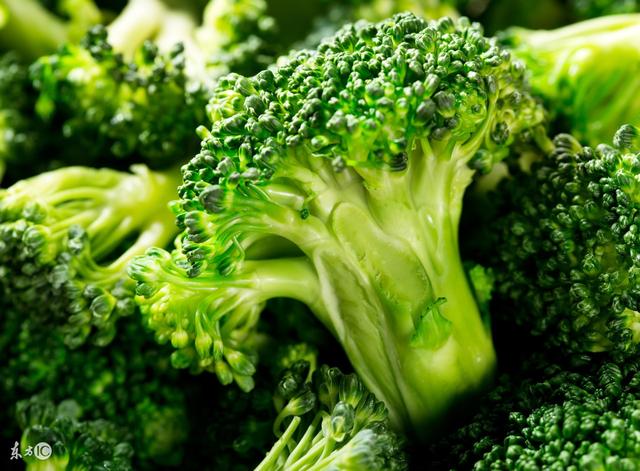
Detailed Explanation of Key Technical Points for Growing Cauliflower in Hoop Houses
1. Variety selection
Early-maturing varieties: Fujibai No. 2 and No. 3, Athena; late-maturing varieties: Xueni, Qiangbao, late-maturing 90 days.
2. Environmental conditions
Cauliflower requires loose, fertile soil. It needs a relatively large amount of nitrogen fertilizer in the early stage, and has a high demand for nitrogen, phosphorus and potassium during curd formation. It is relatively sensitive to boron and magnesium; a deficiency can cause symptoms such as hollow flower stems.
3. Raising seedlings
Cauliflower is grown twice a year. A: Sow seeds for seedlings in early February. B: Sow seeds for seedlings around June 15, and transplant seedlings before July 20.
Raise seedlings on February 10; seedling age 40-50 days. Use 72-cell plug trays for raising seedlings. During the seedling stage, control leafminers; at the two-leaf-one-heart stage, spray Yingke to control leafminers.
Check seedlings and fill gaps promptly. The seedling stage requires relatively high temperatures; generally keep the daytime temperature at 25°C-28°C, and it should not be lower than 15°C at night. Later, lower the temperature gradually; control the daytime temperature at around 20°C and the nighttime temperature at 12-15°C, which helps form strong seedlings.
Hardening seedlings: when there are 3-4 leaves, at 20 days of seedling growth, restrain growth and ventilate (upper vent). At 30 days of seedling age, ventilate through the lower vent. Temperature management: 25-28°C during the day and 15°C at night.
Carry this out gradually from opening a small crack to fully opening the house, to increase the seedlings' cold resistance and ability to tolerate direct sunlight.
Water and fertilizer control during the seedling stage: generally it is advisable that no standing water is visible, and soil moisture should be kept at around 75%; in the middle and late stages it can be kept at around 50%. When seedling growth is not vigorous, an appropriate amount of potassium dihydrogen phosphate can be added when watering, or foliar fertilizer can be sprayed.
4. Transplanting to the field
Transplant on April 10, best around Qingming Festival, 3500 plants per mu, with sufficient base fertilizer. Apply 5000 kg of high-quality decomposed farmyard manure per 667 sq m, deep plow 30-40 cm, prepare the land and make beds, and cover flat beds with plastic film. Transplanting should be done on a windless morning, punching holes in the plastic film on the bed surface for transplanting. After planting, soak the seedlings with a small amount of water in the furrow or drench the roots with a rooting agent, then immediately cover with the hoop house film. At planting, water with the planting water; after the seedlings recover, water with the recovery water, then cultivate 2-3 times and restrain growth appropriately to promote root development. After the seedlings recover, the key management focus is to promote plant growth and strive to form more mature leaves, creating conditions for curd formation.
5. Hoop house planting
First lay the drip irrigation tape, insert bamboo strips at the end of March, transplant 6 rows, with a plant spacing of 50 cm and a row spacing of 60 cm, then cover with hoop house film (4 m). No ventilation is needed for one week after planting; after one week, ventilate appropriately depending on the weather. When the cauliflower heads reach the size of a goose egg, water once; watering is best done in the afternoon when the temperature is lower. Remove the hoop house film on May 15.
6. Field management
Because the interior of the house dries faster after ventilation, water according to soil characteristics and moisture conditions, on a sunny morning, using furrow irrigation, preferably filling the small furrows. After watering, weed and loosen the soil promptly to increase soil aeration. When the nighttime temperature reaches above 15°C, the hoop house film can be removed; do not remove the bamboo strips for the time being to prevent a late spring cold snap, and re-cover the hoop house film to keep warm if necessary.
7. Fertilization
When preparing the land, apply 4 cubic meters of decomposed pig manure per mu; at the first watering, apply 10-15 kg of urea and 8-10 kg of drip irrigation fertilizer.
8. Pest and disease control
Early planting basically has no pest or disease damage; late-planted cauliflower suffers severe pest damage. Raise seedlings on April 25, transplant in mid-June, and after planting spray emamectin benzoate and beta-cypermethrin to control cabbage caterpillars, spraying once every 7 days.
9. Severe weather management
When strong winds occur, promptly add soil around the hoop house film. If the film bulges, immediately add windbreak belts. If the film is lifted or torn, reinforce or replace it promptly. If a cold wave occurs, take insulation measures, such as lighting a candle at each end inside the house, or adding old film, which helps prevent cold and freezing damage. In snowy weather, promptly clear the snow from the hoop house film to prevent the snow from becoming too thick and collapsing the hoop house.
10. Timely harvest
Sold at the end of May and early June, with a yield of 3.5-5 tons. Autumn cauliflower can be marketed at the end of September and early October, with a yield of 6-7 tons.