How to Grow Chinese Cabbage for High Yield? A Detailed Guide to Practical Growing Techniques
Chinese cabbage, also called heading cabbage or yellow-bud cabbage, originated in China. China is also rich in variety resources, with high yields per unit area, generally 3500-4000 kg per mu, and up to more than 5000 kg for the highest yields. It is eaten for its tender heads, rosette leaves or flower stems, and its cultivation area and consumption volume rank first among all vegetables in China.
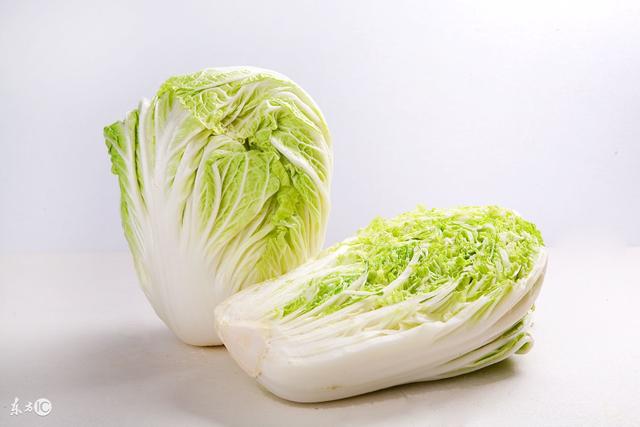
Botanical Characteristics of Chinese Cabbage
Chinese cabbage has a well-developed root system, and the radicle can form a thick, fleshy taproot. The main root is slender, reaching up to 0.7 m in length, with many lateral root branches, and each fine root tip bears a large number of root hairs. The stem of Chinese cabbage is divided into the young stem, the shortened stem and the flower stem. The young stem is the epicotyl portion of the cotyledon stage, which becomes part of the main root after the cotyledons drop off. The length of the young stem is an important indicator for judging whether seedlings at the cotyledon stage are vigorous or not.
The flowers of Chinese cabbage are borne in an indeterminate raceme. The length of the inflorescence varies with variety. The fruit is a silique, cylindrical in shape, with two locules separated by a septum, and the seeds are attached on both sides.
Chinese Cabbage
Growing Conditions for Chinese Cabbage
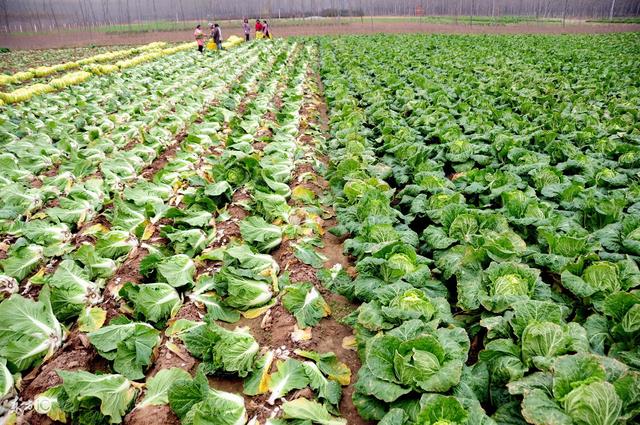
1. Temperature: Chinese cabbage prefers a mild climate. Seeds can germinate at 8-10°C, and germinate rapidly and vigorously at 20-25°C. The suitable temperature during the growing period is 10-22°C (18-22°C during the outer leaf growth stage, and 12-16°C during the heart leaf growth stage). When the temperature reaches above 25°C, growth is poor; above 30°C it cannot adapt; below 10°C growth is slow; and below 5°C it suffers freeze damage.
2. Light: Chinese cabbage needs plenty of sunlight, and insufficient light will seriously affect yield.
3. Soil: Chinese cabbage is fairly tolerant of fertilizer and requires relatively high soil moisture and air humidity. It is suitable for planting in fertile, loose soil with strong water and fertilizer retention and good drainage. Especially during the heading stage, supplying sufficient water and nitrogen fertilizer plays an important role in increasing yield.
Chinese Cabbage
Growing Techniques for Chinese Cabbage
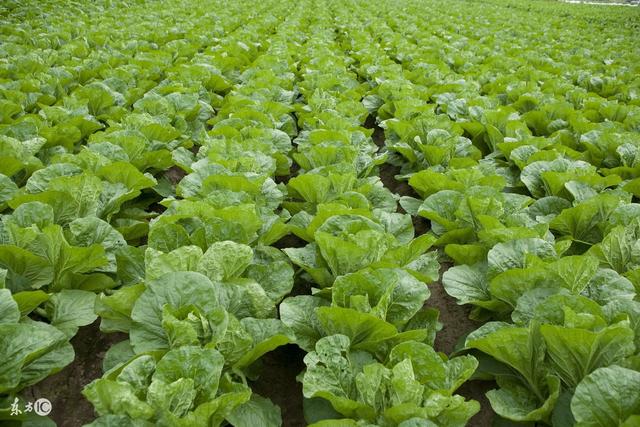
1. Cultivation season: Early-maturing varieties are generally sown in early to mid-August, and some are sown as early as late July. Mid-maturing varieties can be sown from late August to early September. Late-maturing varieties are best sown in late August.
2. Site selection and land preparation: Continuous cropping of Chinese cabbage tends to cause disease, so crop rotation should be carried out, with rotation between grain and vegetables or between paddy and dryland crops especially recommended. When growing on permanent vegetable land, continuous cropping with cruciferous vegetables should be avoided; land previously planted with early beans, early peppers, early cucumbers or early tomatoes can be chosen. The land for growing Chinese cabbage should be deep-ploughed 20-27 cm and left to dry for 10-15 days, then the soil should be broken up and leveled, and beds 1.3-1.7 m wide, or narrow beds or raised beds 0.8 m wide, should be made. When making beds, deeply open the bed furrows, middle furrows and surrounding furrows to more than 27 cm, so that all furrows connect with one another.
3. Apply heavy basal fertilizer, mainly Yongchun eco carbon-based fertilizer: In mid to late July, after the previous crop is harvested, deep-plough the soil and leave it to dry. When preparing the land, broadcast 100-150 kg of lime per mu. In plots where clubroot has occurred, an appropriate amount of lime must also be applied in the sowing furrow. Heavy basal fertilizer is required, with nitrogen, phosphorus and potassium well matched. In early July, applying 5 to 10 kg of Yongchun carbon-based fertilizer per mu can effectively increase yield and improve the soil.
4. Sowing: Chinese cabbage is generally direct-sown, but can also be raised as seedlings and transplanted. Direct sowing is mainly in drills, with spot sowing as a supplement. When the previous crop land cannot be freed up in time, seedling raising and transplanting can also be used so as not to affect the cultivation season. Whichever method is used, the soil must be finely broken up and leveled. For direct sowing, about 200 g of seed is used per mu. For seedling raising and transplanting, about 5-6 li of seedbed is needed for each mu of field, mostly by broadcasting, with 75-100 g of seed used. After direct sowing, apply 40-50 dan of rotted human manure and urine per mu, and cover the ground at the same time. After that, water once in the morning and once in the evening every day to keep the soil moist, and seedlings will emerge in 3-4 days. The row and plant spacing of Chinese cabbage should be determined according to the variety. Generally, early-maturing varieties are spaced 33-50 x 33 cm, with 2100-2300 plants per mu; late-maturing varieties are spaced 67 x 50 cm, with fewer than 2000 plants per mu. For seedling raising and transplanting, it is best to choose a cloudy day or a sunny evening. To increase the survival rate, it is best to transplant small seedlings with soil, and water with settling water after planting.
5. Field management
(1) Thinning: Carry out the first thinning when there are 2-3 true leaves, the second thinning when there are 5-6 leaves, and final thinning when there are 7-8 leaves. Select different row and plant spacings according to different varieties, leaving 1 strong seedling per hole. Weeding can be combined with thinning.
(2) Topdressing: After Chinese cabbage is planted and has survived, topdressing can begin. Apply 15% rotted human manure and urine once every 3-4 days, at 4-5 dan per mu. Depending on the weather and whether the soil is dry or wet, apply the human manure and urine diluted with water. When Chinese cabbage enters the rosette stage, the concentration of topdressing should be increased, usually applying 30% rotted human manure and urine once every 5-7 days, at 15-20 dan per mu, along with 75-100 kg of rapeseed cake or sesame cake. After heading begins, heavy topdressing and additional potassium fertilizer are necessary measures to increase yield. You can communicate with Professor Liu Cunshou's carbon-based fertilizer WeChat scqsqvip. Apply 30-40 dan of 50% rotted human manure per mu, and open furrows to apply 100 kg of plant ash or 10-15 kg of potassium sulfate. Farmers call this fertilization "heart-pouring fertilizer." If these farmyard manures are not available, use Yongchun carbon-based nutritional fertilizer, 5 to 10 kg at a time, fertilizing once every half month.
(3) Cultivation and earthing up: To make topdressing easier, loosen the soil in the early stage and weed 2-3 times. Especially after long rain clears up, cultivation and drying of the soil should be carried out promptly to promote root growth. In the mid-rosette stage, combine furrow application of cake fertilizer with earthing up to form ridges 10-13 cm high. The purpose of earthing up is mainly to make fertilizing and watering easier and to reduce disease. After earthing up, manure is poured into the ridge furrows and must not cling to the leaves; water is poured into the furrows and must not soak the base of the plants. At the same time, keep the air circulating in the furrows to reduce air humidity between plants. In this way, the occurrence of soft rot can be reduced.
(4) Irrigation: During the seedling stage, Chinese cabbage should be watered lightly and frequently to keep it moist. During the rosette stage, irrigate intermittently, alternating dry and wet, and harden the seedlings appropriately. During heading, the water requirement is relatively high, and furrow irrigation can be used when the soil is dry. Irrigation should be carried out in the evening or at night after the soil temperature has dropped. Water should be let in slowly, and flooding the whole bed must be avoided. After the water seeps into the soil, excess water should be drained promptly. Make sure no water accumulates in the furrows, no water is visible on the bed surface, and the roots are not short of water. Generally speaking, from the end of the rosette stage to the middle of the heading stage, keeping the soil moist is one of the keys to achieving a high yield of Chinese cabbage.
(5) Leaf tying and covering: Heading and head formation in Chinese cabbage is an inevitable law of its growth and development, and leaf tying is not needed. However, for late-maturing varieties, in case of severe cold, in order to promote good heading and delay harvest and supply, the outer leaves can be lifted up after Light Snow, tied with rice straw, and covered with a layer of rice straw or agricultural film, which can protect the heart leaves from freeze damage and also has a softening effect. Early-maturing varieties do not need leaf tying or covering.
Chinese Cabbage
Pest and Disease Control of Chinese Cabbage
The main pests and diseases of Chinese cabbage include: soft rot, tobacco cutworm, and others.
1. Soft rot
[Symptoms] Soft rot is also called rotten lump. It mostly begins during the heading stage. In the early stage of the disease, the outer leaves mostly appear wilted and drooping under sunlight, but still recover in the morning and evening. As the disease develops, these diseased leaves no longer recover, exposing the head. The lesions are water-soaked, and the diseased tissue turns brown, rots and becomes slimy, with a foul odor.
[Control methods] Adopt integrated control with the principle of prevention first. The specific measures are: (1) Practice crop rotation. Where conditions permit, rotation between paddy and dryland crops is preferable. Do not apply disease-carrying organic fertilizer. Deep-plough and sun-bleach the soil to control the source of the pathogen. (2) Practice raised-bed cultivation, which helps drainage and waterlogging prevention and can reduce the occurrence of disease. (3) Irrigate and fertilize reasonably: apply sufficient basal fertilizer and timely topdressing so that the seedlings grow vigorously and disease resistance is enhanced. (4) Pull out diseased plants promptly: removing diseased plants can reduce the source of inoculum and prevent the pathogen from spreading. Especially before irrigation, check and deal with them promptly. Sprinkle lime into the holes for sterilization. (5) Pay attention to pest control: avoid causing wounds, so as to prevent the pathogen from invading. (6) Choose disease-resistant varieties: generally green-stem varieties and first-generation hybrids have relatively strong disease resistance. (7) Chemical control: the following pesticides can be chosen: agricultural streptomycin, one small packet added to 100 kg of water, or 70% dexon at 600 times for root drenching; 20% longkejun at 600 times or 47% jiaruinong at 800 times can also be used, once every 7 days, sprayed 2-3 times in succession.
2. Tobacco cutworm
[Damage symptoms] Tobacco cutworm is also called mamar insect or lotus leaf worm. Newly hatched larvae gather on the undersides of leaves and feed on them, leaving only the upper epidermis and veins, so the damaged leaves look like a "screen window." After the larvae grow up, they eat the leaves into notches, and in severe cases can eat the entire leaf bare, or even bite through young tender stems.
[Control methods] Tobacco cutworm has the characteristics of being omnivorous, outbreak-prone and highly reproductive, and older larvae are strongly resistant to pesticides. Therefore, control should focus on killing moths and pupae, removing egg masses, and promptly controlling 1st and 2nd instar larvae.