Cultivation Methods and Key Technical Points for Dendrobium officinale
(1) Propagation Methods of Dendrobium officinale
The propagation methods of Dendrobium are divided into two major categories: sexual propagation and asexual propagation. At present, asexual propagation methods are mainly used for production.
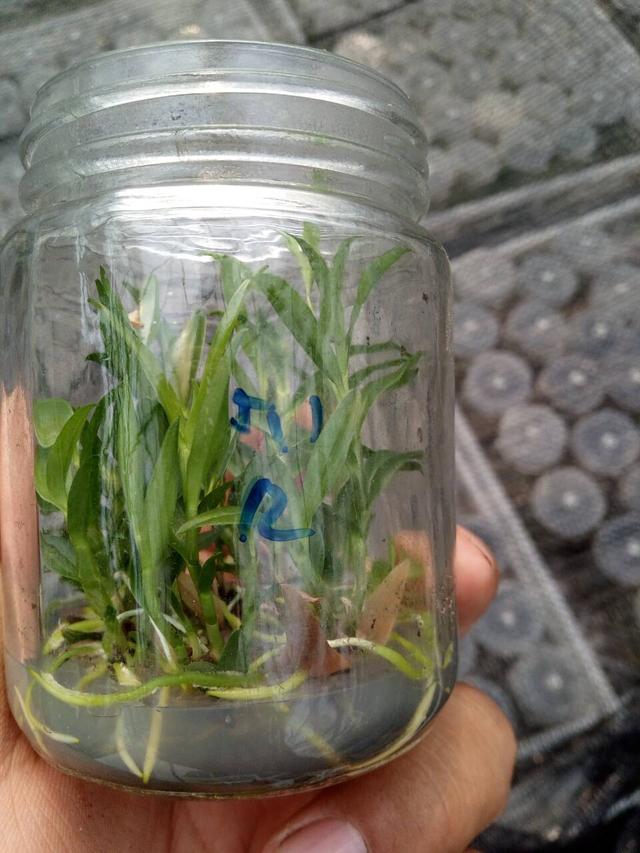
Tissue-cultured seedlings of Dendrobium officinale
1. Sexual propagation, namely seed propagation. Dendrobium seeds are extremely small, with about 20,000 seeds per capsule, appearing as yellow powder. They basically do not germinate, and can only germinate and grow in a specific environment with sufficient nutrients, suitable temperature, and moderate light. At present, the fastest and most effective propagation method is culture in a tissue culture room. Although the propagation coefficient of Dendrobium is very high, the success rate of its sexual propagation is extremely low.
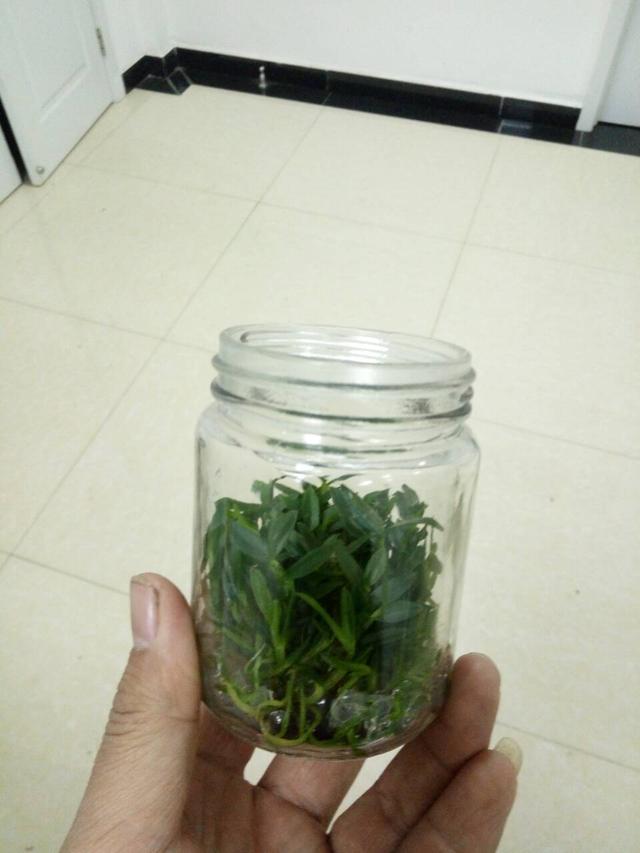
Tissue-cultured seedlings of Dendrobium officinale
2. Asexual propagation
Types of asexual propagation: division propagation,cutting propagation, and tissue culture. Among them, tissue culture is the most common.Tissue culture propagation: Dendrobium can be rapidly propagated into test-tube plantlets by tissue culture using the following method. After routine disinfection of the leaves, young stems, and roots of Dendrobium, cut them into 0.5-1 cm explants, insert them vertically with tweezers into sterilized bottles containing culture medium, then seal the bottles and place them in a culture room, carrying out tissue culture at a culture temperature of 25°C-28°C, 9-10 hours of light per day, and a light intensity of 1800-1900 lx. After about 20 days, small bud points appear at the stems and leaves; after about 1 month, the small buds elongate and branch at the tips; after 2 months, the small buds grow into test-tube plantlets about 2.2-2.7 cm tall with 4-8 leaves.
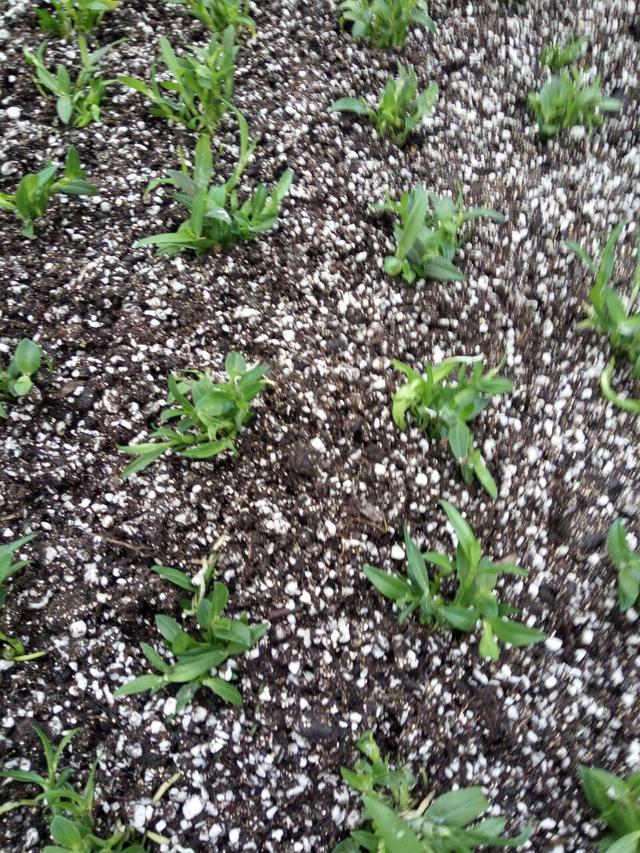
Dendrobium officinale
Selection of epiphytic sites for Dendrobium officinale
1、Dendrobium officinale is an epiphytic plant, and the host has a relatively large influence on its growth. Dendrobium is different from other food crops. Food crops all rely on taproots, lateral roots, and fibrous roots to absorb water and nutrients from the soil, while Dendrobium officinale relies on exposed aerial roots to absorb nutrients and water from the air. The carrier of food crops is soil, while the carrier of Dendrobium is rocks, gravel, tree trunks, and pine needles, that is, the host of Dendrobium can be rocks, gravel, or tree trunks, pine needles, and so on.
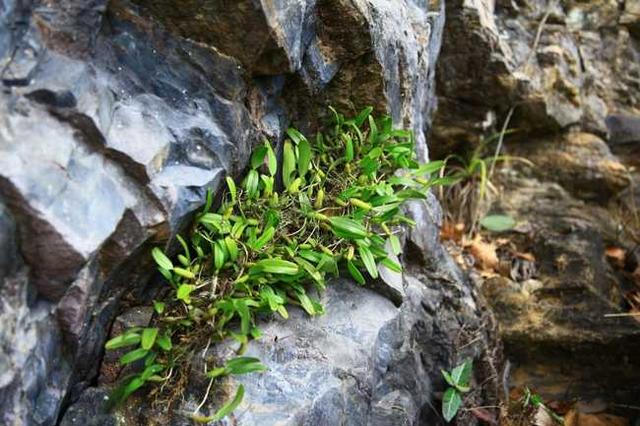
Dendrobium officinale
If rocks or gravel are selected as the host for Dendrobium officinale, sandy rocks, stone walls, or corners with scattered stones should be chosen, and they should be relatively concentrated, have a certain area, and be shady and moist. Places where moss grows on the rocks are best, and there should also be some broadleaf trees around as shade for production.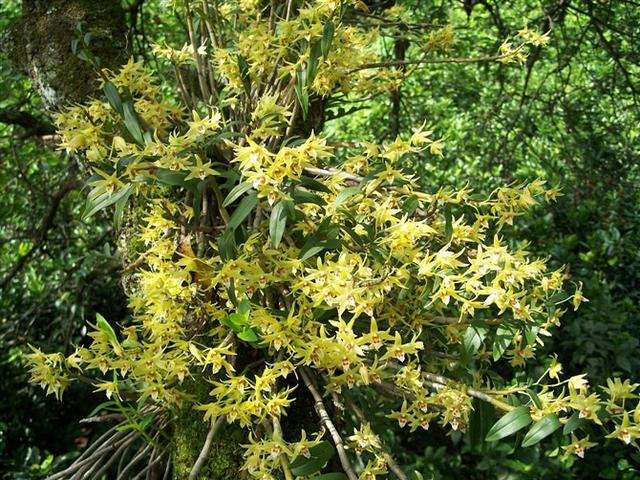
Dendrobium officinale
If tree trunks are selected as the host, broadleaf tree species with dense crowns, herbaceous or waxy leaves, thick bark with many longitudinal grooves, high water content, and frequent growth of moss plants should be selected as the host for Dendrobium officinale production.
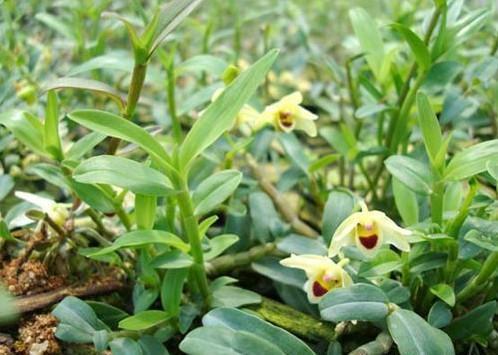
If a shade shed is selected for cultivating Dendrobium officinale, it should be chosen under a relatively shady and moist grove. Mix humus soil, fine sand, and crushed stone evenly and pile them into ridges 15 cm high, with the surface leveled flat, and build a shade shed 100-120 cm high for Dendrobium production.
Dendrobium officinale
If pine needles are selected for cultivating Dendrobium officinale, greenhouse cultivation should be chosen. First, build seedbeds 50-100 cm high inside the greenhouse, then install shade nets on the surface of the greenhouse film, install automatic rotating sprinklers inside the greenhouse, and then dry and ferment the pine needles. Then put them into nutrient cups and transplant the seedlings for production.
2. Site selection and land preparation
You can choose a place you consider suitable for tree cultivation, wall cultivation, pot cultivation, or planting in stone crevices, on rock walls, and on artificial cultivation substrates for Dendrobium officinale planting.
Dendrobium officinale
(3) Planting Methods for Dendrobium officinale
For planting Dendrobium, it is best to choose March-April in spring or August-September in autumn, and spring planting is especially easier than autumn planting. This mainly makes full use of March, when the climate warms up, the wind is gentle and the sun is warm, and there are spring rains. It is truly the golden season for all things to revive. Suitable conditions of temperature and humidity, sunlight, and rainfall help stimulate the axillary buds at the base of Dendrobium stems to sprout rapidly, while also growing aerial roots for the young buds to absorb nutrients and water, achieving the growth goal of roots first and buds afterward. Autumn planting uses the suitable temperatures of autumn to trigger root growth, but the quality, quantity, and growth speed of the roots are not as good as in spring. In places where moist conditions are met and shade conditions are good, some roots and young buds can also grow in summer. After all preparatory work before planting is done, the best planting season can be selected to vigorously develop Dendrobium production.
At present, the methods for planting Dendrobium officinale include
1. Shade shed planting method
Mix small gravel with a small amount of fine sand to make raised beds 40 cm wide, 120 cm long, and 17 cm high. After dividing the Dendrobium seedlings, plant them in the beds at a density of one clump per 20 x 20 cm, then cover with 7-10 cm thick fine sand or small gravel and press firmly. Build a 1.7 m shade shed over the beds, and hang a straw curtain on the sunny side to help regulate temperature and humidity and allow fresh air circulation, and keep the bed surface moist regularly.
Dendrobium officinale
2. Greenhouse planting
After drying and fermenting pine needles, mix them evenly with fermented organic fertilizer and put them into 13*15 nutrient cups, then place them neatly on the seedbeds. Plant the Dendrobium seedlings in the nutrient cups at 6-8 plants per clump, then cover with a little West sand and press the roots firmly. Then lay a shade net over the greenhouse film, provide shading, cooling, and light avoidance when the temperature is high or the light is strong, install water carts or rotating sprinkler facilities, and replenish water and fertilizer on time.