A detailed guide to cherry cultivation methods that even beginners can easily learn
Cherry cultivation is actually quite difficult. The reason cherry trees are hard to grow is mainly determined by the characteristics of the cherry root system. Cherry roots are shallow and afraid of drought; they have a high demand for oxygen and are afraid of waterlogging. Therefore, the ancient Chinese often said: cherries are delicious, but the tree is hard to grow. Below is a share of cherry cultivation methods.
I. Soil management
First, the cherry production site should be selected in an agricultural production area with good ecological conditions, far from pollution sources, and with sustainable production capacity.
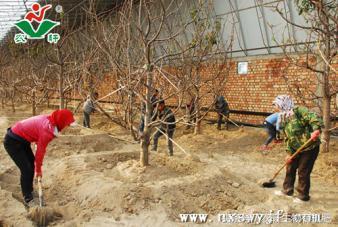
Soil management
1. Deep plowing to improve the soil. This is divided into trenching and whole-orchard turning. For mountain orchards, trenches should be opened before planting, with a trench width of 100cm and a depth of about 60cm; backfilling can be done right after trenching. When backfilling, mix in cherry organic fertilizer, place the topsoil at the bottom layer and the subsoil at the upper layer, then irrigate thoroughly so the soil settles. Whole-orchard turning is generally carried out in autumn together with the autumn application of base fertilizer, with a depth of about 20cm as appropriate.
2. Intertillage. In clean-cultivation orchards, after rainfall or irrigation during the growing season, carry out timely intertillage and loosening of the soil to keep the soil loose and free of weeds. The intertillage depth is 5cm-10cm, which helps regulate temperature and conserve moisture.
3. Mulching with grass and burying grass. Mulching is carried out after spring fertilization and irrigation. The mulching material can be wheat straw, wheat chaff, corn stalks, hay, etc. Spread the mulch under the tree canopy to a thickness of 10-15cm, press a small amount of soil on top, and after 3-4 consecutive years of mulching, shallow-turn once. Grass can also be buried in large trenches in combination with deep plowing to improve soil fertility and water storage capacity.
4. Planting green manure and growing grass between rows. Plant clover, alfalfa, etc. between rows to increase soil organic matter.
II. Fertilization
1. Fertilization principles. Mainly use organic fertilizer, supplemented by chemical fertilizer, to maintain or increase soil fertility and soil microbial activity. The fertilizers applied should not have adverse effects on the orchard environment or fruit quality.
2. Types of fertilizers allowed for use. (1) Commercial organic fertilizers, including organic fertilizer, fruit tree organic fertilizer, cherry bio-organic fertilizer, foliar fertilizer, etc. (2) Fully decomposed farmyard manure, including compost, barnyard manure, green manure, cake fertilizer, etc. The use of fertilizer products that have not obtained registration approval is prohibited.
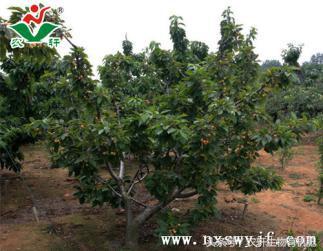
Cherry tree
3. Fertilization methods and amounts
(1) Base fertilizer. Mainly fruit tree organic fertilizer, mixed with a small amount of nitrogen fertilizer. The fertilization amount is calculated as 1.5kg-2.0kg of fruit tree organic fertilizer per 1kg of fresh fruit; generally, an orchard in full fruit period applies 2000kg-3000kg of fruit tree organic fertilizer per mu. The application method is mainly trench application or broadcast application, and other fruit tree fertilization methods can also be referred to according to the actual situation of the fruit trees.
(2) Topdressing. Three times a year: the first time before and after bud break, mainly nitrogen fertilizer; the second time during flower bud differentiation and fruit swelling, mainly phosphorus and potassium fertilizer, with nitrogen, phosphorus and potassium used in combination; the third time in the late stage of fruit growth, mainly potassium fertilizer. The fertilization amount is determined by local soil conditions and fertilization characteristics. Bearing trees generally require topdressing of 1.0kg nitrogen, 0.5kg phosphorus and 1.0kg potassium for every 100kg of sweet cherries produced. The fertilization method is to open trenches under the tree canopy to a depth of 15cm-20cm, and irrigate promptly after topdressing. The last topdressing should be carried out more than 30 days before the fruit harvest period.
(3) Foliar spraying. 4-5 times a year; generally 2 times in the early growth stage, mainly nitrogen fertilizer; 2-3 times in the later stage, mainly phosphorus and potassium fertilizer, and trace elements needed for fruit tree growth and development can be supplemented. Common fertilizer concentrations: urea 0.3%-0.5%, monopotassium phosphate 0.2%-0.3%, borax 0.1%-0.3%. The last foliar spraying should be carried out more than 20 days before the fruit harvest period.
III. Training and pruning
Mainly adopt modified spindle-shaped or spindle-shaped training and improve training and pruning techniques. During winter pruning, cut off diseased and pest-infested branches and remove diseased and mummified fruit; strengthen pruning during the cherry growing season, bend branches to open angles, and promptly thin out upright vigorous branches, densely growing branches and sprouting branches at pruning and saw cuts within the canopy, so as to increase ventilation within the canopy.
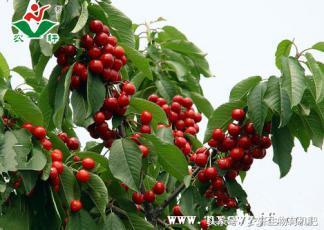
IV. Flower and fruit management
Focus on pollination during the flowering period, flower and fruit thinning, understanding common freezing damage to fruit trees and its prevention and control methods, and scientific watering, etc. Place honeybees or mason bees during the flowering period, and use a feather duster for manual supplementary pollination. Flower thinning can be carried out in combination with winter pruning and re-pruning during the flowering period, and fruit thinning is generally carried out after physiological fruit drop.
In addition to the above cultivation methods, pest and disease prevention and control for cherry trees should be done well in ordinary times. Now, by managing cherry cultivation well in winter, cherries can have a good harvest the following spring, making cherry tree cultivation no longer difficult.