Detailed Explanation of Tomato Cultivation Techniques and Water and Fertilizer Management Methods
This article provides a detailed introduction from transplanting tomatoes to later-stage management, and elaborates on the light requirements and water and fertilizer characteristics of tomatoes, offering a reference for tomato cultivation and management.
Preparation Before Transplanting
(1) Land preparation.The field for cultivating tomatoes should undergo autumn plowing and soil sunning, with a plowing depth of about 30 cm. Sunning the soil can improve soil structure, enhance water retention capacity, reduce soil-borne diseases and pests, and create favorable conditions for root growth. Deep plowing can improve soil aeration, promote soil microbial activity, and facilitate the decomposition of soil nutrients. Even when crop rotation is frequent and sunning the soil is difficult, deep plowing should still be carried out immediately after the previous crop is harvested, to strive for as long a soil-sunning period as possible.
(2) Making beds (ridges). Tomato transplanting beds include four types: high beds, flat beds, furrow beds, and ridge beds. Locally, deep-furrow high beds are mostly used. Generally, the bed width (including furrow) is 1.3-1.7 m, with a furrow width of 0.3-0.5 m. The bed (ridge) orientation should preferably be north-south, so that plants receive more uniform light.
(3) Applying sufficient base fertilizer. Apply 5000 kg of decomposed organic fertilizer per mu, along with 50 kg of superphosphate, mixing fertilizer and soil thoroughly during plowing, with a plowing depth of 25-30 cm. Open-field cultivation mostly uses high beds or ridge cultivation. Protected cultivation uses plastic-mulched high beds, with dark irrigation under the film or drip irrigation under the film. For high-bed cultivation, a furrow can be opened in the center of the bed to bury high-quality barnyard manure, along with 2000-3000 kg of farmyard manure and 200 kg of plant ash; for flat beds, transplanting furrows are later opened on both sides of the high bed, and then 200 kg of high-quality fertilizer or 20-25 kg of compound fertilizer is applied in the furrows.
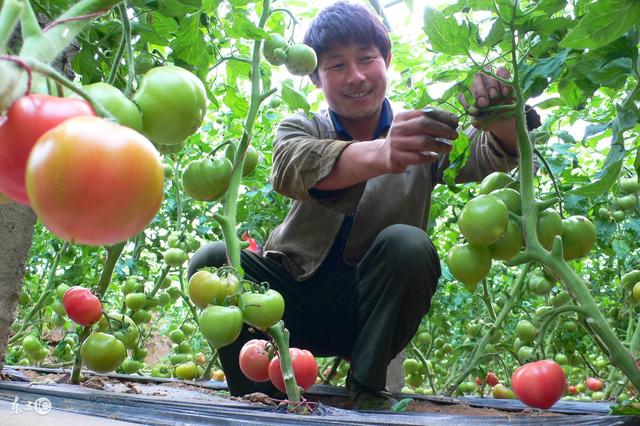
Tomato plants have an absorption rate of 40-50% for nitrogen and potassium, and 20% for phosphorus. Phosphorus fertilizer plays an important role in the development of tomato fruits and seeds, and also has a great influence on cultivating strong seedlings. Nitrogen fertilizer can promote the growth and development of stems, leaves, and fruits, and is especially important in the early stage of plant growth. Potassium fertilizer can promote the transport of carbohydrates to the fruits, enhance the plant's disease resistance, delay plant senescence, extend the fruiting period, and also has a good effect on improving fruit quality.
Tomatoes are very responsive to fertilizer, and high fertilizer with sufficient water can achieve high yields. The type of fertilizer also greatly affects tomato yield and quality. The order of superiority among various farmyard manures is: chicken and duck manure, sheep and rabbit manure, horse manure, cow manure. Human excrement and urine should be used in combination with other fertilizers. Regardless of the type of farmyard manure, it needs to be fully fermented and decomposed; never apply raw manure as a top dressing, to prevent root burn and infection by diseases and pests.
(4) Seedling disinfection:Before transplanting, spray the seedlings with a 600-fold solution of 75% chlorothalonil wettable powder or 75% mancozeb wettable powder.
Planting Methods and Plastic Film MulchingTransplanting is best done on a windless sunny day, when the temperature is high, soil moisture evaporation is low, and seedlings recover easily.
1. Planting methods. Seedling planting methods include flat planting, furrow planting, and hole planting. According to the order of irrigation, they are also divided into "dry planting" (planting seedlings first, then irrigating) and "water-settled seedlings" (irrigating first, then planting seedlings). When planting seedlings, do not plant too deep or too shallow. If planted too deep, the soil temperature is lower, which is not conducive to root growth and slows seedling recovery; if planted too shallow, although higher soil temperature favors root growth, the roots are not firmly established, and seedlings are easily washed away by irrigation or blown down by strong winds. Generally, the planting depth should be level with the soil ball and the ground surface, or slightly deeper. If improper seedbed management or delayed transplanting causes leggy seedlings, during transplanting the seedling stem can be laid horizontally toward the south in a boat-bottom shape, with the stem tip exposed above the soil sloping slightly southward, to reduce the height of the seedling above ground, prevent sunscald and wind damage, and promote adventitious root growth.
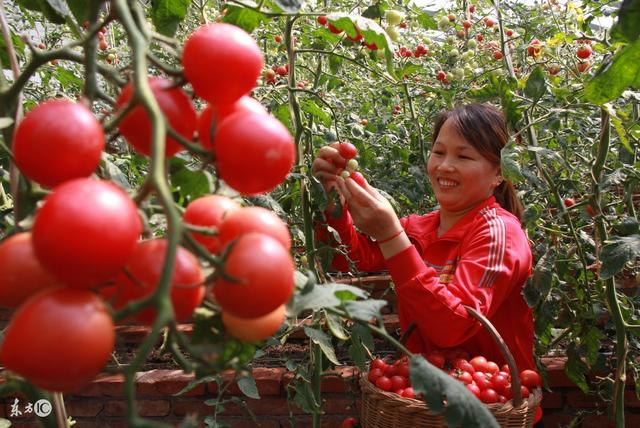
2. Plastic film mulching.In recent years, plastic film mulching has been widely adopted in tomato cultivation. It can increase soil temperature, reduce soil moisture evaporation, suppress weed growth, and keep the soil loose, thereby speeding up seedling recovery after transplanting and promoting root growth. For the film-mulched transplanting method, locally the film is generally laid first and then seedlings are planted. The specific procedure is: first lay the plastic film on the prepared high bed, cover the edges with soil, then dig holes according to the plant spacing and plant the seedlings, and cover the soil firmly around each seedling.
Transplanting density:
1. Open-field short-trellis early-maturing cultivation:Row spacing 40-50 cm, plant spacing 23-26 cm, about 5000 plants per mu; short-trellis mid-maturing cultivation, row spacing 50 cm, plant spacing 26-33 cm, about 4000 plants; tall-trellis long-growing-season cultivation, row spacing 66 cm, plant spacing 33 cm, about 3000 plants.
2. Protected cultivation:Short-trellis early-maturing cultivation with 2-3 trusses of fruit and pinching, row spacing 50 cm, plant spacing 27 cm, 5000 plants per mu; short-trellis mid-maturing cultivation with 3-4 trusses of fruit, row spacing 50 cm, plant spacing 30 cm, 4400 plants per mu; tall-trellis long-growing-season cultivation without pinching (such as Dutch indeterminate varieties), row spacing 80 cm, plant spacing 40 cm, 2000 plants.
Water and Fertilizer Management for Tomatoes
1. Water management
At transplanting, water thoroughly and cultivate and loosen the soil frequently. After 5-7 days, water once to help seedlings recover, then carry out continuous cultivation 2-3 times, and practice appropriate water restriction for seedling strengthening according to variety, seedling age, soil type, soil moisture, and seedling growth. For self-topping early-maturing varieties, older seedlings, aged seedlings, dry soil, and sandy soil, the water-restriction period should be shorter, ending when the first truss fruit is the size of a pea; otherwise it should be longer, ending when the first truss fruit is the size of a table tennis ball.
After entering the fruiting stage, keep the soil moist, with soil moisture content reaching 80%. In low-temperature seasons, water once every 6-7 days; in high-temperature seasons, water once every 3-4 days. Irrigate evenly, avoiding alternating drought and flooding. In protected cultivation, water in the morning on sunny days, and increase ventilation after watering.
Relative air humidity should be controlled at 45-65%.
2. Formula fertilization
For short-trellis cultivation with 2-3 trusses of fruit, apply top dressing once when each truss fruit reaches the size of a table tennis ball. For tall-trellis cultivation with many fruit trusses, apply top dressing once when the first, third, fifth, and seventh truss fruits reach the size of a table tennis ball. Combined with irrigation, apply 1000 kg of decomposed manure per mu each time, or 50 kg of decomposed cake fertilizer, or 100 kg of plant ash, or 25 kg of potassium sulfate, or 25 kg of calcium magnesium phosphate; it is best to alternate the above fertilizers. Spray leaves once every 10-15 days with 0.2% potassium dihydrogen phosphate and 0.3% urea solution, or 3-5% calcium chloride solution. In protected cultivation, apply carbon dioxide gas fertilizer at a concentration of 800-1200 mL per cubic meter.
Practical Techniques for Tomato Cultivation and Management
Tomato is a warm-season vegetable with semi-drought-tolerant physiological characteristics: it prefers warmth and fears cold, prefers light and fears heat, prefers dry air and fears excessive air humidity, and prefers water and fears waterlogging. Appropriately adjusting the temperature, humidity, water, light, and nutrient supply and other living conditions suitable for vegetable growth according to the local cultivation environment, and promptly preventing and controlling various possible diseases and pests, are of great significance for increasing tomato yield and raising vegetable growers' economic income.
Tomato's Temperature Requirements:
Tomatoes have different temperature requirements at different growth stages. The most suitable temperature for seed germination is 25-30°C, the minimum germination temperature is 11°C, and the maximum is 35°C. During the seedling stage, 20-25°C is suitable during the day and 15-20°C at night; during the fruiting stage, 25-30°C during the day and 13-17°C at night. Below 15°C or above 35°C is unfavorable for flowering and fruit set.
Tomato's Light Requirements:
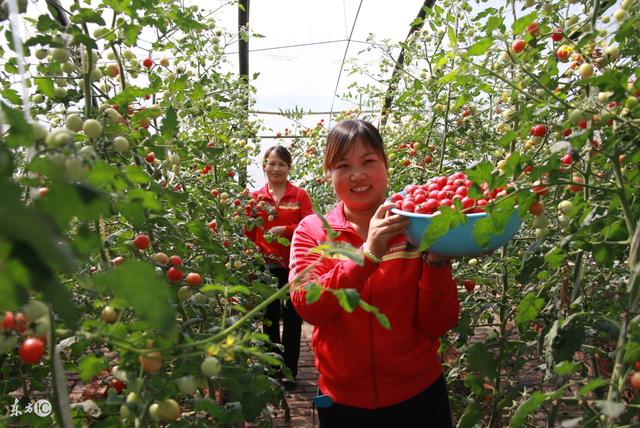
Tomatoes have different light requirements at different growth stages. The germination stage does not require light. During the seedling stage, sufficient light is required for seedlings to develop well; insufficient light will affect flower bud differentiation and flower pollination. During the fruiting stage, sufficient light results in more fruit set and faster fruit enlargement; insufficient light results in fewer fruit set and affects yield, while too strong and prolonged light will cause sunscald on the fruit.
Tomato's Water Requirements:
Tomatoes have a well-developed root system and strong water absorption capacity, and their leaves transpire water strongly. They are a drought-tolerant crop, both drought-tolerant and requiring large amounts of water. During the seedling stage, growth is fast, so the soil should not be too wet and watering should be controlled; during the flowering and fruiting stage, frequent watering is needed. Generally, ensure watering about once every 10 days, but do not use flood irrigation, which can cause root rot and plant death. During the flowering and fruit-setting stage, if watering is not timely or watering is overly controlled, it can cause large-scale blossom-end rot; overly dry soil can also cause physiological leaf rolling.
Tomato's Soil Requirements:
Tomatoes are not strict about soil. Loam with deep soil layers, good drainage, and strong soil permeability, sandy loam, and improved alkaline soil can all be used to grow tomatoes.
Tomato's Nutrient Requirements:
The required ratio of the three main elements nitrogen (N), phosphorus (P), and potassium (K) for tomatoes is 2:1:2. Nitrogen plays an important role in stem and leaf growth and fruit development. From flowering and fruit setting to the fruit enlargement stage, the plant's nitrogen absorption gradually increases, reaching a peak during the full fruiting stage. Therefore, nitrogen fertilizer must be supplemented to the plant in time for deep roots and lush leaves. Tomatoes require relatively little phosphorus; applying more phosphorus fertilizer during the seedling stage promotes flower bud differentiation and flower development. Tomatoes are a potassium-loving crop and have the highest potassium requirement, especially during the fruit enlargement stage, when it can promote fruit development, enlargement, and coloring.