Detailed Explanation of High-Yield Eggplant Cultivation Techniques
Eggplant, as a vegetable, is currently grown by many farmers, and as a food, eggplant can be made into potato-braised eggplant, fish-fragrant eggplant, minced pork roasted eggplant, and so on. Moreover, the economic price of eggplant is fairly decent, and farmers growing eggplant can increase their income, improve farmers' living standards, and advance the progress of rural supply-side reform. Today we bring you high-yield eggplant cultivation techniques.
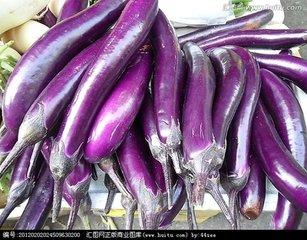
I. Grafting and Seedling Raising
1. Seed Soaking and Germination
Soak eggplant seeds in 50% carbendazim or Jiamin Jindian for 1-2 hours; or soak the eggplant seeds in 55°C warm water for 15 minutes to disinfect, then cool to room temperature, and soak in Jiamin Jindian for 6-8 hours. Keep at 25-30°C for 16 hours, then cool to 20°C for 8 hours, or 30°C for 8 hours and 20°C for 16 hours, alternating repeatedly. Turn the seeds twice each morning and evening, and spray water appropriately when they look dry. After sprouting, lower the temperature to 16-25°C for hardening.
2. Sowing
Mix virgin soil that has never grown solanaceous crops with Hongli and diammonium phosphate plus plant ash to make seedling soil, then water thoroughly. When sowing, cover with a 1cm layer of nutrient soil Hongli. The most suitable temperature for eggplant germination is around 30°C.
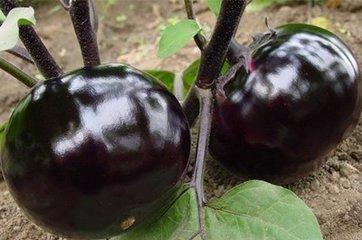
II. Field Planting
1. Land Preparation and Fertilization
Irrigate with sufficient bottom water 10-15 days before planting. Generally, apply more than 9000 kg of decomposed farmyard manure per mu. More than 150-200 kg of oil residue, 30 kg of diammonium phosphate, 30 kg of potassium sulfate, 80-100 kg of superphosphate. Mix evenly, spread two-thirds onto the ground and deep-plow to form ridges, and apply the remaining one-third concentrated at the bottom of the ridges. The ridge height is 15-20 cm, the ridge width is 80 cm, and the furrow width is 50 cm.
2. Greenhouse Disinfection
Per mu, use 2-3 kg of sulfur powder plus 0.25 kg of dichlorvos, mix well with sawdust, pile it up and light it, keep the greenhouse closed for 24 hours, then ventilate and plant.
3. Planting Density
The planting density of eggplant is generally around 2200-2500 plants per mu.
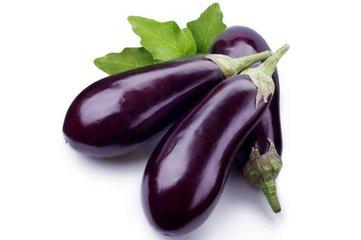
III. Management After Planting
1. The seedling recovery period after planting generally takes 7-10 days, with daytime temperature around 30°C, nighttime around 20°C, and soil temperature around 25°C. Relative humidity is occasionally 75%, the root system is strong, and the seedlings are stocky. After the seedling recovery period, prune in time, remove old leaves, diseased leaves, yellow leaves, deformed fruits, etc. This not only saves nutrients and prevents diseases, but also facilitates ventilation and light transmission.
2. Fertilizer and Water Management
The watering temperature is around 20°C. Generally, dark irrigation under the film is used, adhering to the principle of small amounts and multiple applications with fertilizer and water applied together. Generally, about one week after planting, apply Jiamin at 5-10 kg/mu by flushing 1-2 times, and at the same time use fulvic acid organic fertilizer and medium and trace nutrient elements Jinli for root irrigation to increase soil temperature and soil buffering capacity and promote flower bud differentiation. About six weeks after planting, eggplant enters the flower bud stage, with vegetative growth and reproductive growth proceeding simultaneously. Apply Jiamin flush fertilizer at 15-20 kg per mu 2-3 times, and spray 2-3 times with fulvic acid and medium and trace nutrient elements such as Jiamin Jinpin to increase the pollination rate, preserve flowers and fruits, and prevent and control nutrient deficiency diseases.
Apply fruit-harvesting fertilizer frequently. When the first eggplant is harvested, the second and third layer fruits are also expanding and growing, and the upper ones are successively flowering and setting fruit. Apply Jiamin flush fertilizer at 20-25 kg per mu, then apply once every 10-15 days thereafter, and spray fulvic acid and medium and trace nutrient elements such as boron and calcium 2-3 times.
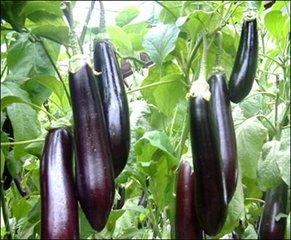
IV. Harvesting
The standard for harvesting eggplant is when the ring band where the calyx connects to the fruit becomes indistinct or disappears, indicating that the fruit has stopped growing; at this time, both yield and quality are relatively good when harvested. When harvesting, use scissors to cut off the fruit stalk, avoiding pulling and damaging the plant by hand.