Do balcony vegetables need fertilizing? Practical tips for water and fertilizer management
This year the price of scallions and cilantro has been rising day by day, and in some places scallions and cilantro have become absurdly expensive, so whether to save money or for decoration, why not grow some vegetables on the balcony while also growing flowers? Vegetables you grow yourself taste different, and always seem fresher and more fragrant than those bought at the vegetable market or supermarket, probably the satisfaction of providing for yourself by your own hands!
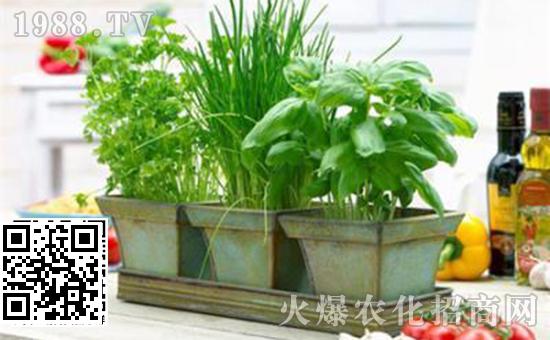
1. Watering tips for small scallions
On your own balcony, growing a pot of small scallions is not only attractive, as a green potted plant to admire, but also edible, as a seasoning for stir-fries, truly endless fun.
From sowing small scallions until the leaves appear, the soil must be kept moist.
When small scallions grow to about 15 cm, sufficient water must be ensured to promote rapid growth of the small scallions.
In the middle stage of growth, the amount of water can be appropriately reduced.
2. Fertilizing tips for small scallions
For growing small scallions, fertilizer can be applied once every ten days. The fertilizer can be ordinary compound fertilizer, or flower fertilizer.
***The most economical and practical fertilizer is rice-washing water. Rice-washing water is not only environmentally friendly, but also provides both water and nutrients, making it very suitable as fertilizer for small scallions.
Balcony vegetable growing: vegetables suitable for sandy soil
If I asked you what essential elements plant growth requires? I believe this would certainly not stump you. They include: water, sunlight, temperature, soil, nutrient elements, air, and so on. Then if I asked you again, do you know which vegetables are suitable for growing in sandy soil, I think if you are not professionally trained you would certainly feel a bit at a loss. Today China Vegetable Garden Network will introduce to you those vegetables suitable for growing in sandy soil.If soil is classified according to its texture, it can be divided into: loam, clay, and sandy soil. For home balcony vegetable growing, most people choose loam; among these three classifications, loam has relatively good fertility and workability, and the conflict between water and air in it is balanced, it is permeable and aerated, its fertility supply is moderate, its workable period is long, it is drought-tolerant and waterlogging-tolerant, has strong stress resistance, and has a wide suitable planting range, making it the most ideal agricultural soil.
Clay is sticky and heavy in texture, unfavorable for cultivation, with small gaps between soil particles and relatively poor water permeability and aeration. It has a strong retention rate for water and fertilizer, and the fertility in the soil is not easily lost, but it contains fewer nutrients, the decomposition of organic matter is relatively slow, and its ability to decompose harvested and discarded plant residues is relatively poor. Because of this low-efficiency decomposition performance, crops grown in this kind of soil show no obvious effect after fertilizing; fertilizer is absorbed slowly, but once absorbed, its nutrient loss is relatively small, and its fertility has strong staying power, which can cause waste of fertilizer.
Sandy soil has characteristics exactly opposite to those of clay. The clay particle content in sandy soil is generally less than 30%, while the sand particle content is generally higher than 50%. Therefore, the gaps between soil particles are relatively large, which also leads to poor water retention and poor drought tolerance. But at the same time, its permeability is relatively good, making cultivation easier. Compared with clay, sandy soil decomposes organic matter faster, and after fertilizing the effect appears quickly, but nutrient loss is also relatively serious, so when fertilizing, the amount should be small and the frequency low, so that crops will not surge for a time because of a single heavy fertilizing and then lack fertility later.
The above is a brief introduction to the three soil textures. After understanding this, let us look again at the characteristics of sandy soil and see exactly which vegetables are more suitable for growing in it. China Vegetable Garden Network points out that sandy soil is suitable for growing tuber-type crops that develop underground, such as: potatoes, ginger, carrots, onions, sweet potatoes, peanuts, sweet potatoes, taro, and so on.
For more content about balcony vegetable growing, you are welcome to keep following the balcony vegetable growing channel of China Vegetable Garden Network.
Teach you to grow balcony taro as a vegetable potted plant
Taro is one of the earliest vegetable potted plants grown on balconies, because taro can be grown both as a vegetable and as an ornamental plant. Its form resembles calla lily and Alocasia macrorrhizos, and placed at home it is a beautiful scenic line.
Taro management is relatively extensive, with no strict requirements for soil, water, fertilizer, or light, almost no pests or diseases, a long ornamental period, and edible parts and harvest time that are also long, making it very suitable for friends who want to try balcony vegetable growing.
The seed taro was edible taro bought at the supermarket, using self-mixed potting soil, with no further fertilizing after planting. It received only one to two hours of scattered light a day, and sometimes was placed in the living room for several days before being taken out to get some sun. But it cannot lack water; water once or twice a day, and also spray water on the leaves and around it from time to time. The first pot of taro was planted shortly after the Beginning of Spring, in a white-based blue-flowered porcelain pot, with holes at the bottom, 30 cm in diameter and 26 cm high.
Fill the pot with 2/3 potting soil, place the taro with the sprouts facing up, cover with soil and water, keep it moist after sprouting, and the growth is gratifying. The focus of later management is watering. Since there are holes at the bottom, the amount of water each time is limited, so in midsummer it must be watered twice a day.