Balcony Planting Methods and Precautions for Pak Choi
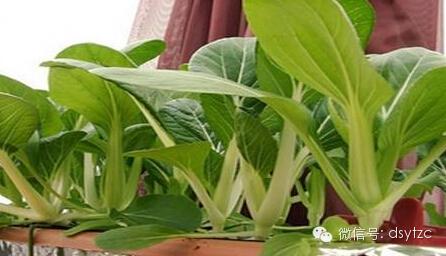
Also known as non-heading Chinese cabbage or green vegetable, called cabbage in English. Native to our country, it is distributed throughout the north and south, and is very widely cultivated in our country. It belongs to the genus Brassica in the family Cruciferae. Pak choi is a cultivated plant of the genus Brassica, with edible stems and leaves, a biennial or annual herbaceous plant, often grown as an annual. The plant is relatively short, with a shallow root system and well-developed fibrous roots. The leaves range from light green to dark green, obovate or elliptical, smooth or wrinkled, with a few having fine hairs. The leaf stalks are thick and fleshy, white or green. It does not form a head. The flowers are yellow and the seeds are nearly round. According to measurements, pak choi is the vegetable richest in minerals and vitamins.
Step 1 of balcony planting pak choi: Material preparation. Materials needed: seeds, garden soil, leaf mold, organic fertilizer, growing container, bamboo skewer, spray bottle, small rake
a. Variety selection: Generally, any variety of Chinese cabbage can be used for pot cultivation.
b. Selection of growing soil: The nutrient soil should be loose, breathable, and good at retaining water and fertilizer. Generally, garden soil and leaf mold are mixed with organic fertilizer in a certain proportion.
c. Growing container: A shallow flower pot, wooden basin, styrofoam box, etc. can be used. Generally, the container depth for planting a single plant is 15-20 cm. A cultivation trough can also be built with bricks on the rooftop.
Step 2 of balcony planting pak choi: Sowing and raising seedlings
a. Pak choi can be sown directly or transplanted after raising seedlings. The seeds can first be soaked in warm water at 50-55°C for 15 minutes, then placed in room-temperature water to soak for 6-8 hours.
b. When the seeds are almost done soaking, put the nutrient soil into the container and level it, water thoroughly with a spray bottle, then evenly scatter the seeds on the surface of the soil, and then cover with a layer of 1 cm fine soil.
Step 3 of balcony planting pak choi: Potting
a. For those that need thinning and transplanting, transplant into pots when the seedlings have 4 leaves.
b. Before potting, wash the flower pot clean, place a tile at the bottom of the pot, and fill with nutrient soil to 3-4 cm below the rim. Dig holes 5-7 cm deep at intervals of about 10 cm.
c. Carefully dig out the pak choi seedlings with a bamboo skewer. When planting, keep the root system vertical and spread it out in the hole, straighten the plant, and cover with soil.
d. After planting, water thoroughly to settle the soil.
Step 4 of balcony planting pak choi: Daily management
a. Light conditions: Pak choi likes a warm and humid environment. When growing, it can be placed in sunny places such as rooftop terraces and balconies.
b. After transplanting and before the seedlings recover, keep moist, warm, and shaded. After 4-5 days, gradually expose them to sunlight, and they will recover.
c. Fertilization management: During the growth period, apply topdressing 2-3 times along with watering, preferably with a nitrogen-phosphorus-potassium compound fertilizer.
d. It can be harvested for eating 20-40 days after sowing.
Step 5 of balcony planting pak choi: Precautions
a. Watering is best done in the morning and evening. Do not water at noon when it is too hot. After watering, wait until the water seeps into the soil and it is no longer sticky, then loosen the soil with a small rake.
b. In the south, it can be sown all year round, but high summer temperatures are not suitable for growth, so sowing in spring and autumn is best; in the north, it can be sown in spring, summer, and autumn, and it can also be grown indoors in winter, but the growth period will be longer.
(Caiba Editor: caiba_org)