Detailed Explanation of the Key Points of Purple Chinese Cabbage Cultivation Techniques
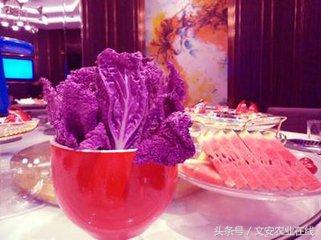
Purple cabbage is a precious variety newly bred in recent years. The outer leaves are purple, the inner leaves are bright red-purple, the head shape is straight and cylindrical, the leaf stalks are thin, the dry matter content is high, and the single head weighs 1.5-2 kg. The main characteristic of this Chinese cabbage is that it tastes more crisp and juicy, and also has a faint sweet fragrance.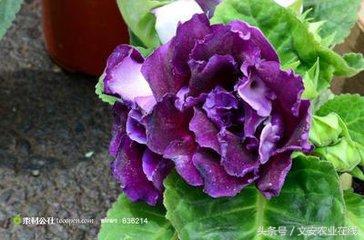 Purple cabbage is rich in nutrients. Every 100 grams of cabbage contains 4.1 grams of protein, 2.6 grams of crude fiber, and more than 60 mg of vitamins, which is more than twice the average nutrient content of ordinary Chinese cabbage. It is also rich in various trace elements such as silicon, manganese, zinc, and selenium. Purple cabbage also contains abundant anthocyanins, calcium, vitamin C, vitamin E, and other elements beneficial to the human body, and is very helpful for patients with osteoporosis, diabetes, and other diseases. It has the effect of improving immunity and preventing and fighting cancer, and has huge market potential.
Main cultivation methods: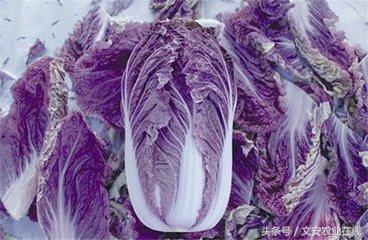 1. Sowing and raising seedlings.To plant 1 mu, 65-80 sq m of seedbed is needed, and 50-60 grams of seed are used. Apply 3 kg of decomposed organic fertilizer per sq m, finely prepare the land, and makebeds6-8 m long and 1.5 m wide, open furrows for sowing at a row spacing of 10 cm, cover with soil, and water. After emergence, thin the seedlings 1-2 times,3 true leavescombine with intertillage and loosening of the soil to finalize the seedlings, with a plant spacing of 8 cm. The seedbed temperature should be 18-22°C during the day and 10-12°C at night. After 3 true leaves, topdress and water in time, and maintain sufficient light. When there are 5-7 true leaves, they can be transplanted. For direct sowing in summer and autumn, 100-150 grams of seed are used per mu.
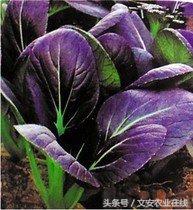
2. Land preparation and transplanting.Clear the residues of the previous crop and weeds, gather them for harmless treatment, apply 2-3 cubic meters of decomposed and finely crushed organic fertilizer per mu, and after plowing and harrowing level, make raised tile-ridge beds at a spacing of 50-55 cm (make flat beds for sandy soil), with a bed length of 6-8 m. Plant 2 rows per bed, with an average row spacing of 45-55 cm and a plant spacing of 23 cm, 3000-35000 plants per mu. At transplanting time, the nighttime temperature should be 13°C to prevent early bolting. Be careful not to plant too deep, and water promptly after planting.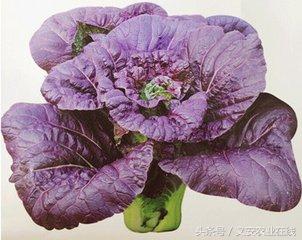
3. Field management.Greenhouse and plastic tunnel cultivation can be used, and open-field cultivation in autumn, winter, and spring can also be used. In the early stage, fertilizer and water should be properly controlled to avoid excessive air humidity caused by high density, which can breed pathogens. During the heading stage, water frequently in small amounts to meet the water supply. Topdressing is carried out in two applications. After seedling establishment, dig holes and apply 500 kg of decomposed organic fertilizer per mu. After entering the head-forming stage, dig holes again or apply 25 kg of organic fertilizer per mu with irrigation. During the growth period, spray fertilizer on the leaves three times. After seedling establishment, during the seedling stage of the direct-sowing method, and after the film is removed from the small arch tunnel, intertillage and loosening of the soil should be carried out in time, and weeds should be removed at any time. When using plastic tunnel cultivation, pay attention to ventilation and cooling (25°C during the day, 13°C at night) and reducing humidity inside the tunnel.
From the Wen'an Agriculture Online WeChat public account