A detailed guide to comprehensive Phalaenopsis cultivation techniques: mastering the key points of growing and care
Comprehensive Phalaenopsis Cultivation Techniques(Part 1)
This article briefly analyzes how a series of physiological metabolic processes, including nutrient uptake and utilization, photosynthesis and respiration, affect the growth of Phalaenopsis. Plant growth is a comprehensive process in which no single condition can be missing.
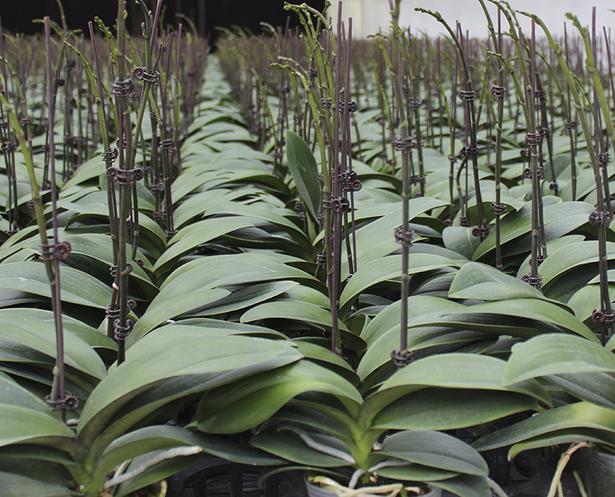
Nutrient uptake
The roots and leaves of Phalaenopsis are the organs that absorb nutrients. Leaves absorb fertilizer in a different way from roots: their surface has a special tissue called "stomata", and fertilizer sprinkled on the leaves enters the various cells of the plant through the stomata to carry out its work. The cuticle of the leaf epidermis can also absorb fertilizer through osmosis, but the amount absorbed is very small, so when spraying foliar fertilizer, try to spray it on the underside of the leaves. Why mention "stomata" here? It is actually related to the photosynthetic form of Phalaenopsis. Phalaenopsis is a CAM plant (a plant with the crassulacean acid metabolism pathway); it avoids the daytime when radiation and transpiration potential are very high, and opens its stomata on cool nights to absorb the carbon dioxide needed for photosynthesis, so in the cool spring and autumn seasons, Phalaenopsis grows fastest. During the day, because the stomata are closed, the photosynthetic efficiency of Phalaenopsis declines or even stalls, so if you want to spray foliar fertilizer, it is best to do so after 4:30 p.m. when the temperature drops, as the stomatal absorption of fertilizer is then at its best. This low photosynthesis of CAM plants causes Phalaenopsis to grow more slowly than other flowers, so in the north the months when Phalaenopsis grows fastest are March to July and August to October; in the hot summer and in winter, when average light levels are low, Phalaenopsis grows slowest.
According to statistics from some growers, fertilizer absorbed by Phalaenopsis roots accounts for 70% to 80%, and fertilizer absorbed by leaves accounts for 15% to 20%, so the condition of the root system directly affects the health of the Phalaenopsis plant. Roots mainly absorb ionic compounds such as nitrogen, phosphorus and potassium dissolved in the water of the medium, but the vast majority of the nutrients plants need for growth are not obtained through fertilizer uptake by roots and leaves; rather, they are produced through the plant's own photosynthesis, and more than 90% of the dry matter in the orchid plant is accumulated through photosynthesis.
Therefore, in winter in the north, Phalaenopsis grows noticeably more slowly than in the south, precisely because, apart from the temperature that should be provided, light in the south is clearly better than in the north. No matter how high the temperature is raised in a northern winter greenhouse or how large a proportion of fertilizer is used, it has no practical effect when light is insufficient.
Since roots are the main organ through which Phalaenopsis absorbs fertilizer, the degree of wetness or dryness of the medium, the pH value and the EC value all directly affect the absorption of various elements. The medium for Phalaenopsis is acidic, which favors the absorption of various elements; when the pH value is between 4.5 and 6, fertilizer efficiency is at its best, and iron, copper, manganese and zinc in particular are absorbed best when the pH value is below 6; however, if the pH value is too low (below 4), it will hinder the absorption of some elements and damage the epidermal cells of the roots. The best time to fertilize is before 10 a.m. and after 4 p.m.; in normal Phalaenopsis care there is no very strict time requirement, but try not to fertilize when light is strong or when it is cloudy and raining. Because most growers now use water purification equipment, water quality is basically not a problem.
The following is a brief analysis of the effects of macroelements, secondary elements and microelements on Phalaenopsis. Macroelements include nitrogen, phosphorus, potassium, carbon and hydrogen, among which carbon comes from carbon dioxide in the air and hydrogen comes from water, while the remaining elements must be absorbed through roots and leaves. Secondary elements are mainly magnesium, calcium and sulfur. Microelements include iron, zinc, manganese, copper, boron and chlorine, etc.
Nitrogen is a basic constituent of various substances (proteins, chlorophyll, nucleic acids, etc.). For Phalaenopsis, during the seedling stage, nitrogen fertilizer can be appropriately increased to boost leaf growth; but for 3.5-inch mature-stage plants, there is basically no need to supplement nitrogen fertilizer specially. If nitrogen fertilizer is excessive, the orchid seedlings grow vigorously with dark green leaves and are very prone to leggy growth, which causes the spacing between flowers to lengthen during the flowering period of Phalaenopsis and the number of flowers to decrease noticeably (inhibiting vernalization). During the small and medium seedling stages, if nitrogen fertilizer is excessive, it will lead to severe pests and diseases and cause symptoms of potassium, calcium, magnesium and boron deficiency in the plants. Therefore, growers sum it up this way: nitrogen fertilizer grows leaves, potassium fertilizer strengthens stems and roots, and phosphorus fertilizer promotes flowering and fruiting.
Phosphorus is a component of nucleic acids, adenosine phosphate and phytic acid; adenosine phosphate is an energy carrier, and phytic acid enables plants to form reproductive organs such as seeds and fruits, so phosphorus can promote the vernalization of plants. Using high-phosphorus fertilizer one and a half months before flower forcing can prompt Phalaenopsis to enter vernalization and improve the flowering quality of Phalaenopsis. During the seedling stage of Phalaenopsis, phosphorus fertilizer can promote root growth (phosphorus mainly promotes the division and proliferation of cells at root growth points), but if phosphorus fertilizer is excessive, it will lead to deficiency of elements such as iron, zinc, magnesium and copper and affect the upward transport of Phalaenopsis hormones, thereby inhibiting flower bud formation, causing Phalaenopsis to mature early and ultimately leading to a reduction in flowering. When phosphorus fertilizer is deficient, it will cause poor root growth, stunted plants and thin, elongated leaves and stems in Phalaenopsis.
Potassium promotes the transport of nutrients such as sugars, promotes photosynthesis, and promotes the conversion of small molecules such as sugars and amino acids into large molecules such as cellulose, lignin and proteins, increasing nutrient accumulation. Therefore, when producing Phalaenopsis, appropriately increasing potassium fertilizer can promote upright, thick leaves, thick sturdy stems (together with an appropriate light intensity) and vivid flower colors, significantly improving product quality. Potassium fertilizer can resist lodging, drought and cold; if potassium fertilizer is used excessively, it will cause Phalaenopsis to be insensitive to low-temperature stimulation during the flower-forcing period and lead to deficiency of nutrients such as calcium and magnesium. Therefore, Phalaenopsis growers in Taiwan, China now intentionally increase the amount of potassium fertilizer used for large, medium and small seedlings as well as during the flowering period.
Some growers believe that phosphorus fertilizer is merely a medium that prompts the vernalization of Phalaenopsis, and that in directly affecting the flowering quality of Phalaenopsis, potassium fertilizer plays a greater role than phosphorus fertilizer. Therefore, in the early seedling stage of Phalaenopsis, use 10-45-15 and 15-10-30 fertilizers alternately; before the flower-forcing period, use 10-30-20 and 15-10-30 fertilizers; after the flower spike emerges, use 20-20-20 and 15-10-30 fertilizers alternately. Potassium deficiency will cause slow growth and underdeveloped mechanical tissues in Phalaenopsis, especially in the stem, where the cell walls become thin and the plant is very susceptible to various diseases, leading to reduced disease resistance and yellowing and scorching at the leaf edges, etc.
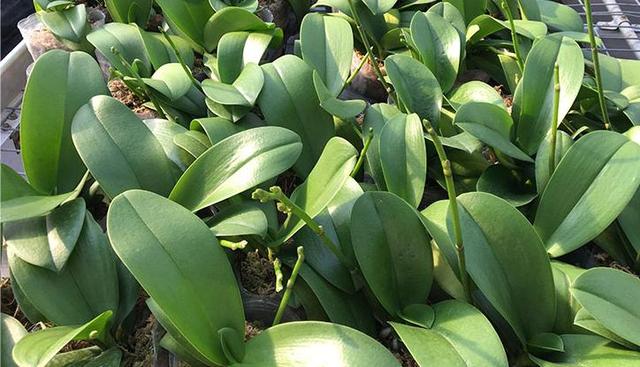
Magnesium is the main mineral element of plant chlorophyll and directly affects plant photosynthesis and the synthesis of sugars and proteins. Therefore, in months when photosynthesis is relatively strong, especially in summer, magnesium fertilizer 15-5-15+Ca+Mg should be appropriately increased.
Calcium is one of the main components making up the plant cell wall and cell membrane. Calcium stabilizes the cell wall, strengthens cell structure, enhances plant disease resistance and regulates the pH value inside cells, etc.; its specific use is the same as that of magnesium.
Sulfur participates in the synthesis and metabolism of proteins and fats and also affects chlorophyll synthesis in Phalaenopsis. Generally, growers do not specially supplement sulfur, as the fertilizers used can meet the plant's growth needs.
Iron is a component of enzymes such as iron-sulfur proteins and plays an oxidation-reduction role in the two important metabolic processes of photosynthesis and respiration. When iron is excessive, the plant shows the following symptoms: brown spots appear at leaf margins and leaf tips, leaf color becomes dark green, the root system turns grayish black and is prone to rot.
Zinc plays an important role in plant photosynthesis, respiration, protein synthesis and hormone synthesis, and can promote auxin synthesis (indoleacetic acid), protect the root surface and internal cells, and improve the plant's drought resistance. After excess zinc, the young green tissues of Phalaenopsis lose their green color and turn grayish white, brown spots appear on the stems, petioles and the base of the leaves, and the root system is short and sparse.
Manganese is a component of the synthesis of many enzymes and can promote the oxidative decomposition of indoleacetic acid; excess manganese inhibits plant growth and hinders the absorption of iron and calcium, causing the leaf margins of the plant to turn white or purple, new leaves to curl, the root system to turn brown and few new roots to form.
Copper is a component of many enzymes, participates in protein and sugar metabolism, stabilizes chlorophyll, prevents premature destruction of chlorophyll, and participates in respiratory metabolism and the formation of nitrogen-fixing root nodules. When copper is excessive, it causes iron deficiency in the plant.
Boron can promote the transport of sugars and auxins and promote the development of the plant's reproductive organs; boron and calcium work together to form the intercellular cementing structure, maintain the integrity of the cell wall structure, and enhance the plant's cold resistance and disease resistance. Excess boron will cause potassium deficiency symptoms in the plant.
Chlorine maintains charge balance with cations, maintains pH value, maintains cell expansion, and together with potassium regulates stomatal closure and balances photosynthesis and water transpiration. Excess chlorine will cause the plant to grow slowly and become stunted, with small yellow leaves, scorched leaf margins curling upward like a tube, and death of old leaves and root tips.
Various elements play different roles in the growth process of Phalaenopsis; the concentration of fertilizer used in production should be controlled at the discretion of each orchid nursery according to its environment, seedling size and variety characteristics.
Since all plants have "stress resistance", how to "force roots" in Phalaenopsis production is a fairly typical example of this stress resistance. Just after repotting, the wetness or dryness of the medium should be intentionally controlled to prompt Phalaenopsis seedlings to split more new roots, facilitating healthy growth later on. However, the amount of free ions in the water of the medium affects the absorption of various fertilizer elements, so just after repotting, try to use fertilizer at a high dilution, preferably 4000 to 5000 times, because during this period the fertilizer absorption efficiency is relatively low; if the concentration is too high, it may cause the EC value in the medium to become too high, adversely affecting the growth of the orchid seedlings.
Comprehensive Phalaenopsis Cultivation Techniques(Part 2) Continued