Winter greenhouse planting methods and techniques for Chinese toon sprouts
Winter greenhouse planting of Chinese toon actually means transplanting one- to two-year-old Chinese toon seedlings grown in the open field into a greenhouse in winter, densely heeled in to overwinter, and then moving them out of the greenhouse when open-field toon sprouts hit the market in spring, staggering the normal market season while increasing yield and improving economic returns. It is a relatively commonly used planting technique nowadays. The following is a brief introduction to this technique. Since the editor's main business is mainly seedling cultivation, it may not be entirely comprehensive. If any expert finds shortcomings, corrections are welcome!
I. Building the greenhouse
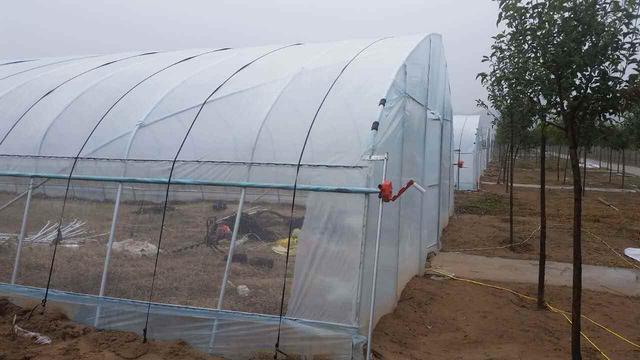
Greenhouses are all much the same, basically higher in the north and lower in the south, covered on top with plastic film and straw mats. As for size, it depends on each household's situation. The growers around the editor basically use sizes about 20 m long and about 7 m wide.
II. Transplanting into the greenhouse
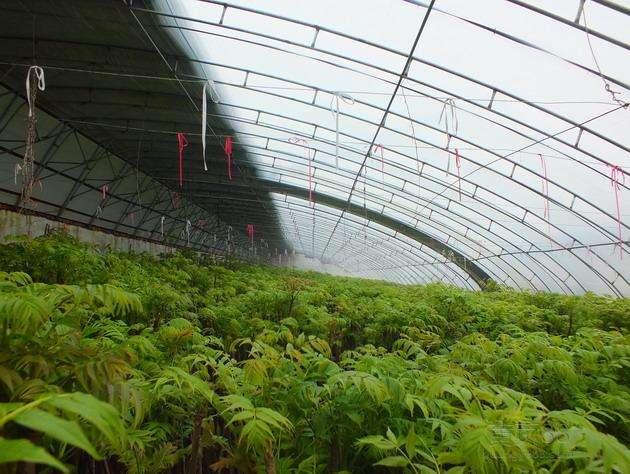
During the period from Frost's Descent to the Start of Winter, generally around November, when open-field Chinese toon has basically shed its leaves, transplant it into the greenhouse. Dig deep trenches about 30 cm deep in the greenhouse, running east-west, leaving a passage about 40 cm wide every three or four trenches, place the Chinese toon seedlings bundle by bundle into the trenches, and cover the root systems with backfilled soil. Because the Chinese toon seedlings are actually in a heeled-in state at this time, the density can be very high, averaging 80,000 to 100,000 plants per mu! What should be noted here is that for Chinese toon trees to sprout, they must go through a period of low-temperature dormancy, about 20 days or so. That is to say, they can only enter the greenhouse at least 15 days after leaf drop. If the leaves have not yet fallen when selecting seedlings, the leaves need to be stripped off, and they must be heeled in outdoors for more than half a month before they can enter the greenhouse. Otherwise, after entering the greenhouse, either the germination rate will be poor or they will simply not sprout. After entering the greenhouse, fertilization is generally not needed, but after planting in the greenhouse, a heavy watering should be given so that the Chinese toon seedlings store enough water.
III. Temperature and humidity
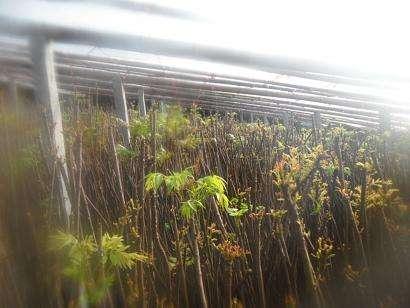
About 10 days after planting, keep the greenhouse temperature at 15-20°C during the day and 14°C at night, then gradually raise the temperature. Generally, the temperature inside the greenhouse is 29-30°C during the day and maintained at about 14°C at night. After the terminal buds sprout, the temperature should be lowered appropriately, with proper ventilation to reduce it to about 25°C, ensuring a day-night temperature difference greater than 10°C, and the relative air humidity is best kept at 80%-90%.
IV. Harvesting
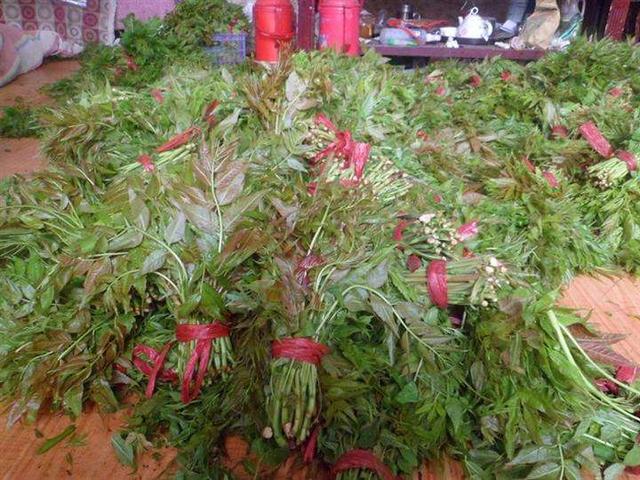
Generally around the Start of Spring, the toon sprouts in the greenhouse can be harvested, at about 20 cm or so. Pick off the terminal buds. If they are not to be sold immediately, it is best to stand them in 2 to 3 cm of water to prevent wilting.
When harvesting continues into March and April, and the normal harvest and market season for Chinese toon sprouts arrives, move the densely planted Chinese toon trees out of the greenhouse and replant them back into the field. The survival rate of Chinese toon trees is very high, so frequent transplanting is not a problem. What should be noted is that, for convenience of harvesting the next year and to increase yield, the terminal buds can be removed and chlormequat used to achieve dwarfing. Most of those who buy young Chinese toon seedlings from the editor plant them in greenhouses, with high yield and good returns. Of course, this also depends on the region. After all, no industry is guaranteed to make money. We are sharing techniques here, not promoting anything.
Welcome to follow, and thank you for reading!