A Detailed Guide to Rosemary Cultivation and Growing Methods
Rosemary prefers a warm climate, but in the flatlands of Taiwan, China it grows slowly during the high-temperature period, and temperatures in winter without cold snaps are more suitable for its growth. As for water supply, since the leaves of rosemary are themselves leathery and relatively drought-tolerant, soil rich in sand that drains well is more conducive to its growth and development. It is worth noting that rosemary grows slowly, which also means its regenerative capacity is not strong, so special care must be taken when pruning and harvesting. In particular, old branches lignify very quickly, and a single overly drastic hard pruning often causes the plant to be unable to sprout again. The safer approach is never to cut off more than half the length of a branch at each pruning.
Although small buds appear at the leaf axils of every rosemary plant, and in the future as the branches extend these axillary buds will also develop into branches, once they grow larger the entire plant, with branches growing out sideways, not only looks messy, but poor ventilation also easily makes it a habitat for pests and prone to disease. Therefore, regular pruning and shaping are very important. When upright varieties are planted in the field, they easily grow very tall. To facilitate management and increase harvest yield, the tips should be cut off when growth begins after planting, and after the lateral buds sprout, prune another 2 to 3 times. Only in this way will the plant stay low and neat.
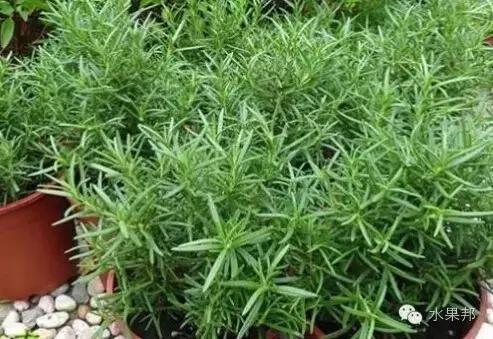
Propagation and Cultivation
When rosemary is propagated from seed, germination is slow and the germination rate is low. According to literature records, if the germination temperature is between 20°C-24°C, the germination rate is below 30%, and the germination time is as long as 3 to 4 weeks. However, if germination is first carried out at 20°C-24°C for 1 week and then treated at 4.4°C for 4 weeks, the germination rate can be raised to 70%. Therefore, unless new varieties are introduced from abroad, propagation by cuttings is a fast and safe method. Simply buy a few pots to serve as mother plants, fill a 50-cell plug tray with new potting soil, and take tip cuttings for rooting. To speed up rooting, dip the base in some rooting powder before inserting the cutting. Before inserting, first make a small hole with a bamboo stick and then insert the cutting, so that the rooting powder is not rubbed off by the potting soil. Place it in a shady spot, and after about one month it can be transplanted. For creeping varieties, you can use a lying branch, wound it first where it touches the soil, then bury it shallowly. After about one month, cut it away from the mother plant, and it becomes another rosemary plant, but the procedure is rather troublesome. Sow seeds in March-April or September, but the germination rate is relatively low and the germination time is long. Therefore, cutting propagation is mostly used. The cutting time is March-April or October, under conditions of 16°C-20°C, and roots can form in 20-30 days. Layering can also be used for propagation in March-April, with field planting in May, at a plant-to-row spacing of 30×50 cm, and water thoroughly after transplanting. During the growing season, pay attention to loosening the soil, weeding, drainage and preventing waterlogging. After rosemary has been planted for several years, the plant's shape will become lopsided, the lower leaves will fall off, and the roots will shrink, so renewal pruning from the root crown should be carried out in October-November or February-March.
Preventing Pests and Diseases
1. The plant must be able to get ventilation and stay cool.
2. Sunlight must be sufficient (pests and diseases often occur in unventilated, hidden spots that sunlight cannot reach).
3. Avoid high-temperature, high-humidity climates and environments.
4. Cut off excessive and aged dead branches and leaves, and pick up dead branches and leaves that fall on the surface of the potting soil, so as to avoid attracting pests and diseases to take up residence.
Fruit Bang (WeChat ID: shuiguobangv)
Introducing various potting techniques for fruits, flowers and more, as well as all kinds of home creativity. We advocate green, ecological and environmentally friendly living, and being urban farmers!