How to grow strawberries in pots? A planting method beginners can learn too
Strawberry belongs to the Rosaceae family and is a perennial herbaceous fruit plant. Strawberry fruit contains a large amount of ellagic acid and crude fiber, and has anti-cancer, laxative and intestinal-moistening effects.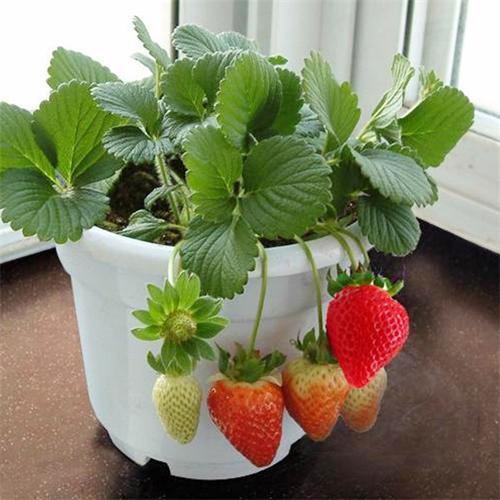
Strawberry is a cool-loving plant, and its propagation method is mostly tissue culture propagation.
Acclimatization of tissue-cultured seedlings: First, take the tissue-cultured seedlings outdoors for natural light treatment so they can adapt to the external environment. When the temperature is high, shade them to prevent excessively rapid water evaporation from affecting the survival rate of the seedlings. Then remove the preliminarily acclimatized strawberry seedlings from the culture medium and wash them, cleaning the sugar-containing culture medium off the surface of the strawberry roots to prevent bacterial infection of the strawberry roots. During washing, be sure not to rub the roots; simply rinse them, so as to avoid damaging the roots through excessive rubbing.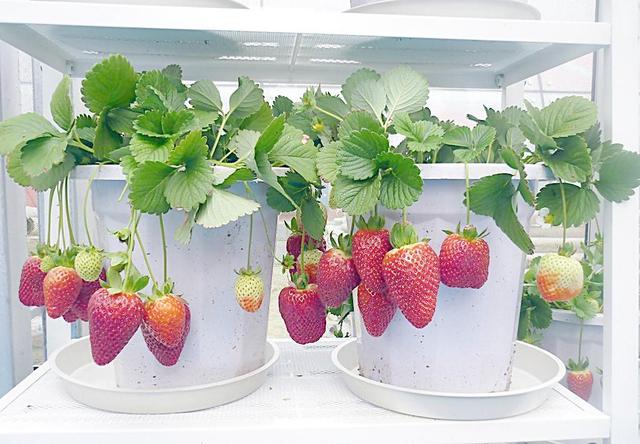
Prepare the substrate: Mix peat soil with fully fermented cow manure and organic fertilizer made from castor cake evenly, spray with hymexazol for sterilization, and put it into trays for later use.
Then they can be transplanted. Transplant the washed strawberry seedlings into the seedling trays filled with the prepared substrate. Water thoroughly and then spray with Pulike for sterilization.
Seedling-stage care: The main diseases of strawberry seedlings are damping-off and seedling blight, and simply applying fungicide is enough. When the seedlings grow to 3 leaves and 1 heart, they can be transplanted into pots.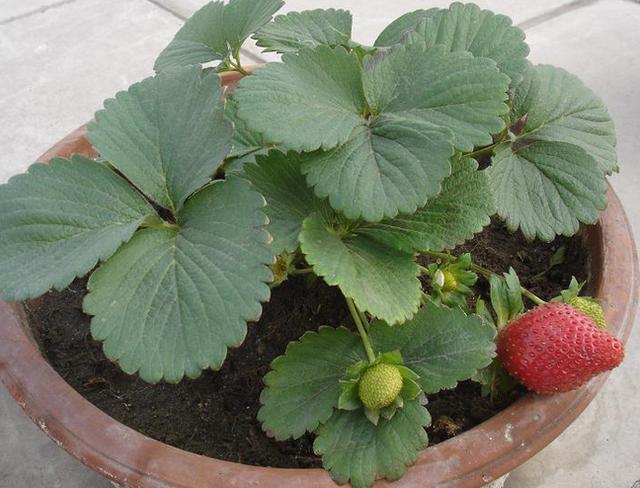
Choice of flower pots: Generally, round pots are used, with a diameter of 25-32 cm and a height of 20-25 cm. Plant 3 plants per pot.
Management after potting: The management of potted strawberries, first, is timely bud thinning, leaf removal, and removal of runners. That is, properly thin out the ineffective high-level flowers during the bud dispersal stage. Remove old leaves, damaged leaves, diseased leaves and excess runners to reduce nutrient consumption and improve fruit quality. Second is fruit support and shaping. That is, use wire or bamboo skewers to make fruit supports of different shapes, place them in the flower pot to prop up the fruit clusters, promote ventilation and light penetration for the fruit clusters, make the fruit color evenly, prevent soil from contaminating the fruit, and reduce pest and disease damage. At the same time, runners can also be used for artistic shaping to improve ornamental value. Third, corresponding integrated control measures should be adopted to prevent and control pests and diseases.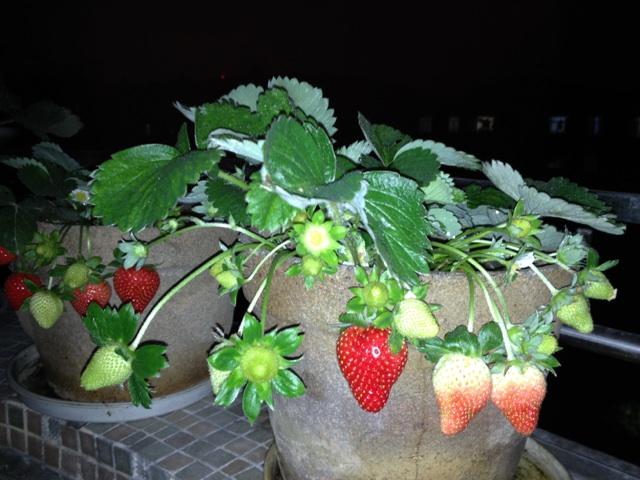
Fertilizer and water management.Strawberries can bloom and bear fruit multiple times and consume a lot of nutrients, so nutrient supplementation should be strengthened. Organic fertilizer, soybean cake, castor cake, sesame oil residue, etc. can be used, added with water for thorough decomposition and fermentation, and composted into liquid fertilizer water. Generally, apply topdressing once a week. Water once each in the morning and evening every day. When watering, the water should be warmed in the sun beforehand before use, and never directly use well water or tap water for irrigation.