What is the best time to plant water spinach?
Water spinach, also known as water convolvulus, tong cai, and other names, is an annual herbaceous plant in the genus Ipomoea of the family Convolvulaceae. Water spinach is one of the vegetables that everyone loves very much, with a crisp texture and a very delicious taste. At the same time, besides being eaten as a vegetable, water spinach can also be used medicinally and has high cultivation value. So, when is it suitable to plant water spinach? How do you grow it? The planting time and methods for water spinach are introduced below.
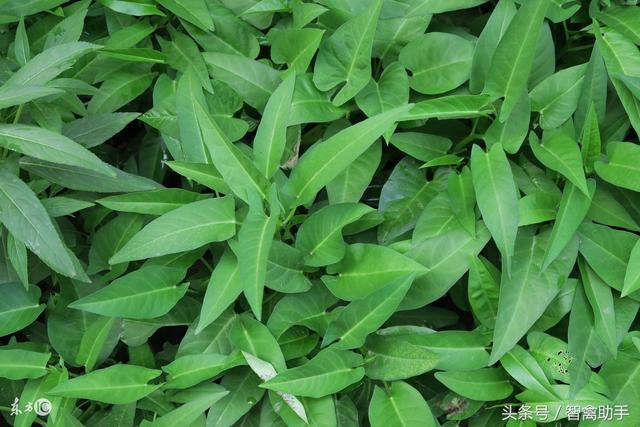
Image: Water spinach
1. The planting time of water spinach
Water spinach is usually planted from April to July each year. It likes sufficient light, but it is also fairly adaptable to dense planting. It is not strict about soil conditions, but because it likes fertilizer and water, soil that is relatively sticky and heavy with strong water- and fertilizer-holding capacity is still best. Its leaf tips grow in large amounts and rapidly, so it has a high fertilizer demand, is strongly tolerant of fertilizer, and has an especially large demand for nitrogen fertilizer.
2. The planting methods of water spinach
1. Land preparation and fertilizing:Water spinach grows quickly and has strong branching ability, so it needs more fertilizer and water. It is advisable to apply sufficient base fertilizer. Generally, 1500-2000 kg of decomposed organic fertilizer and 100 kg of plant ash are applied per mu, fully mixed with the soil, and raised into beds 500 cm high and 130-3750 cm wide (including trenches).
2. Seed soaking and sprouting:The seed coat of water spinach seeds is thick and hard. If sown directly, germination will be slow because of low temperature, and if there is prolonged low-temperature rainy weather, the seeds will rot, so sprouting is advisable. Soak in warm water at 50-60°C for 30 minutes, then soak the seeds in clean water for 20-24 hours. After scooping them out and washing them clean, place them at a temperature of about 25°C to sprout. During sprouting, keep them moist and rinse the seeds with clean water once a day. Once the seeds split open and show a white point, they can be sown. When 50%-60% of the seeds show white, they can be sown.

Image: Water spinach
3. Sowing and fertilizing:Before sowing, deeply turn the soil, apply 2500-3000 kg of decomposed organic fertilizer or 1500-2000 kg of human manure and urine, and 50-100 kg of plant ash per mu, mix evenly with the soil, then rake it level and fine. Water spinach can be broadcast sown or drilled. The seeding rate is 1.5-2.0 kg per mu. After broadcast sowing, cover with fine soil about 25 cm thick. For drilling, draw a shallow trench 2-75 cm deep across the bed surface, with a trench spacing of 375 cm, then evenly scatter the seeds into the trench and cover with fine soil. Then cover the bed surface with film and add insulation material, and remove the covering once the seedlings emerge.
4. Fertilizer and water management:Water spinach is a crop harvested multiple times, so in addition to applying sufficient base fertilizer, it must be topdressed several times in stages to achieve high yield. During the seedling stage, 10-15% dilute human manure and urine can be used for watering, with an amount of 1000-1500 kg per mu. When the seedlings have 3-4 true leaves, apply a mixture of 15-20 kg of compound fertilizer and 2-4 kg of urea. During the harvest period, topdress with 5-8 kg of compound fertilizer (per mu) after each harvest. Water spinach has a relatively large water requirement, so it should be watered frequently to keep the soil surface moist. During the growth period, timely cultivating and weeding should be carried out; after the rows close, there is no need to weed or cultivate.
5. Pest and disease control:The main pests and diseases of water spinach include white rust, ring spot, aphids, diamondback moth, and leaf roller, etc. For specific control methods, please read the article "Pest and Disease Control Techniques for Water Spinach."
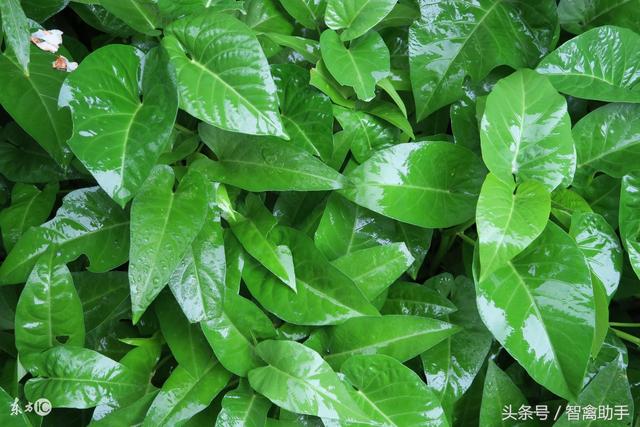
Image: Water spinach
6. Harvesting method:Water spinach is generally harvested by pinching. The first harvest is when the plant is above 30 cm, leaving the lower 9-12 cm and harvesting the tender shoots above it. Afterward, when the new shoots growing from the leaf axils reach 15 cm, the second harvest begins, but 2-3 leaves should be left at the lower part to encourage more new shoots and ensure a high yield. After the third harvest, only 1-2 leaves are left below each harvested new shoot to prevent too many new shoots from causing early aging of the plant. At the same time, thin out the excessively numerous and dense branches at the base of the plant to achieve renewal and maintain a reasonable population.
[Editor's concluding remarks]Water spinach likes a warm, moist climate. It tolerates heat but not frost, and special attention is needed during cultivation. The above has introduced the planting time and methods of water spinach for everyone, and we hope it will be helpful to you!