Mint Planting Time and Methods: How Many Days for Seeds to Germinate
Mint, also known as wild mint, night-rest fragrance, etc., is a perennial herbaceous plant of the genus Mentha in the Lamiaceae family. Mint is one of the commonly used traditional Chinese medicines in China, with effects such as refreshing the mind and dispersing wind-heat, and has high edible and medicinal value, attracting many farmers to grow it. So, when is the best time to plant mint? The planting time and methods of mint are introduced below. Germination: germinating in soil is very slow, taking 7 to 15 days!
I. Planting Time of Mint
The planting time of mint mainly depends on the climatic conditions of each region. In provinces such as Guangdong and Hainan, it can be cultivated all year round; in the Jiangsu-Zhejiang area, around "Qingming" (early April). When the temperature rises, there is often rain and high humidity, so it is easy to survive after planting. In the southwestern region, planting is best after the rainy season begins. In North China and Northeast China, a combination of open-field cultivation and protected cultivation can be adopted. Plant once, and you can harvest continuously for 2-3 years.

Image: Mint planting
II. Planting Methods of Mint
1. Site selection and land preparation: Mint has low soil requirements and can be cultivated in any soil except those that are too acidic or too alkaline. Choose scattered land with drainage and irrigation conditions and sufficient sunlight, such as beside ponds, houses, and water channels, with fertile soil and flat terrain being best. Sandy soil, and land with insufficient sunlight, drought, or easy water accumulation, are not suitable for planting. Land that has previously grown mint must lie fallow for about 3 years before it can be planted again. This is because residual underground roots affect yield. Prepare the land by deep plowing, apply decomposed compost, farmyard manure, superphosphate, bone meal, etc. as base fertilizer at 37500-45000 kg per hectare, rake fine, shallow hoe once, turn the fertilizer into the soil, break up clods, rake level, and make beds 200 cm wide.
2. Seedling raising and propagation: (1) Rhizome propagation. Cultivate seed roots in late April or late August. In the field, select robust plants free of pests and diseases as mother plants, and plant them at a spacing of 20 x 10 cm. After harvesting the aboveground stems and leaves in early winter, the rhizomes remain in place as seed stock; (2) Division propagation. When mint seedlings are about 15 cm tall, thin and fill in seedlings. Use the thinned seedlings for division and transplanting; (3) Cutting propagation. In May-June, cut aboveground stems and branches into 10 cm long cuttings, and insert them in the prepared seedling bed at a row spacing of 7 x 3 cm for rooting and raising seedlings, then transplant to the field for cultivation after rooting and sprouting.
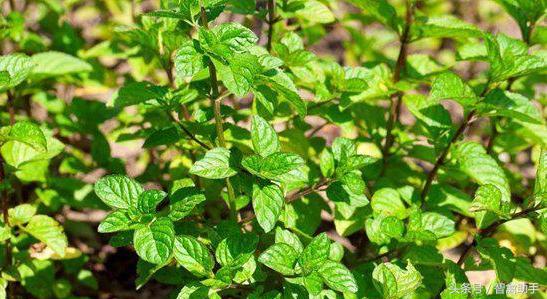
Image: Mint planting
3. Transplanting method: Transplant mint in early spring of the second year before it has sprouted; early planting means early sprouting, a long growth period, and high yield. When planting, dig up the rhizomes, select thick, short-internode, disease-free rhizomes as seed roots, cut them into 7-10 cm segments, then on the prepared bed surface open furrows 10 cm deep at a row spacing of 25 cm. Place the seed roots diagonally in the furrows at a plant spacing of 10 cm, cover with fine soil, press firm, and water.
4. Field management:
(1) Check seedlings and fill in gaps. After the field has basically full seedlings, check the seedlings promptly and fill in missing or sparse spots and patches;
(2) Intertillage and weeding. After full seedlings, carry out intertillage and weeding between rows and manual weeding between plants, to preserve soil moisture, increase (soil) temperature, eliminate weeds, and promote seedling growth. Carry out intertillage and weeding 2-3 times before canopy closure. Before harvest, pull out all weeds in the field to prevent the odor of other weeds from affecting the quality of mint oil;
(3) Pinching and topping. In May, when the plants are growing vigorously, promptly remove the terminal buds to promote the growth of side branches, stems, and leaves, which is beneficial for increasing yield;
(4) Timely topdressing. When seedlings are 10-15 cm tall, open furrows and apply topdressing at 10 kg of urea per mu; after canopy closure, spray twice per mu with 5 ml of PenShiBao + 150 g of potassium dihydrogen phosphate + 150 g of urea;
(5) Scientific watering. Mint needs more water in the early and middle stages, especially in the early growth stage when the root system has not yet formed, so it needs more water. Generally water about once every 15 days, and water 4-5 times from emergence to harvest. After canopy closure, water lightly and appropriately to avoid excessive stem and leaf growth and lodging, which can cause lower leaves to fall off and reduce yield. Stop watering 20-25 days before harvest.
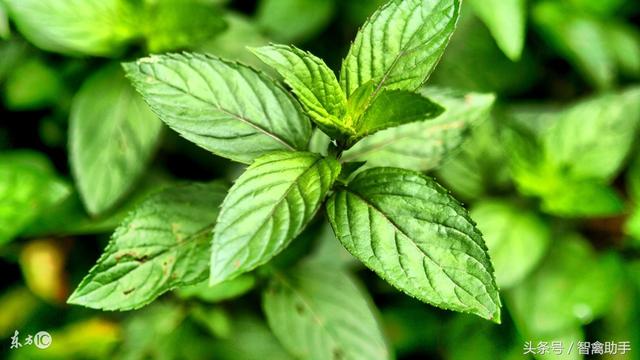
[Editor's Conclusion] Mint is a long-day crop and likes sunlight, so special attention must be paid during planting and care. The above has introduced the planting time and methods of mint for everyone, and we hope it can help you!