How to grow sweet potatoes? An introduction to efficient sweet potato cultivation techniques
Sweet potato is what we usually call digua, and its scientific name is sweet potato (Ipomoea batatas). It is an annual herbaceous plant. Sweet potato is rich in starch, protein, vitamins, amino acids and various nutritional elements, and is a food people often eat in daily life. In addition, sweet potato is a crop with high and stable yield. It has the characteristics of wide adaptability, strong stress resistance, drought tolerance, tolerance to poor soil, and relatively few diseases and insect pests. It is suitable for planting in places with better water and fertilizer conditions. So, how should sweet potatoes be grown for better results? What are the ways to grow sweet potatoes?
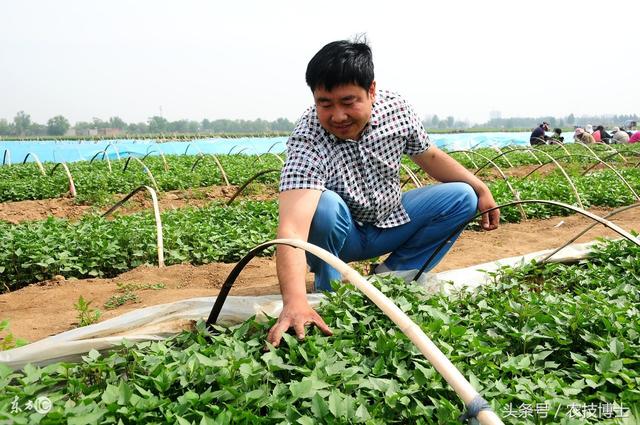
Introduction to sweet potato cultivation techniques
I. Seedbed seedling raising
Sprout promotion and seedling raising is an important part of the entire off-season cultivation. The seedling raising time should be appropriately advanced to mid-February, when seed potatoes are moved into a protected seedbed for seedling raising. The seedbed uses double-layer film protection. The seed potatoes are arranged neatly. After covering with a layer of fine soil, a layer of plastic film is laid flat, and then a layer of film is placed over an arch frame to increase the seedbed soil temperature. Timely punch holes in the flat-laid plastic film to guide out the seedlings, so as to avoid burning the tender seedlings at high temperatures on sunny days. In the first month of the seedbed, spray water once every 7 days. After 1 month, spray water and fertilizer plus Xingaozhimo twice a week to prevent pathogen infection and protect the seedlings' healthy growth. (When the plant height reaches 15 cm) cut a batch every 7-10 days. Starting from the first cutting, spray water and fertilizer twice a week, appropriately increasing the concentration, to ensure the nutrient supply for regenerated seedlings.
II. Apply sufficient base fertilizer
Choose loam soil and select sandy plots. In early spring, together with plowing, apply 2-3 tons of farmyard manure, 15 kg of urea, and 20 kg of phosphate fertilizer per mu.
III. Plastic film mulching
Plastic film mulching can increase temperature and preserve moisture, and at the same time can improve the physical and chemical properties of the soil and increase the diurnal temperature difference in the soil. For planting sweet potatoes, generally a high-ridge mulching method with two staggered rows can be used. The full ridge spacing is 60 cm, the mulched width is 50 cm, the small row spacing is 40 cm, plants are staggered between rows, the plant spacing is 33 cm, and about 4,000 plants are kept per mu. The ridge height should be moderate. If the planting period is too dry, flat covering and flat planting can be used to help the seedlings grow.
IV. Early planting at the right time
Plant early at the right time and use rational close planting: mid-April is the suitable period for transplanting seedlings. At this time, the temperature in early spring has generally warmed up and is basically stable. The suitable planting period is when the 10 cm soil temperature reaches above 15°C after the late frost ends, and then planting can begin. In the previous winter or early that year, plow early to expose and whiten the soil, and when planting, form ridges and prepare beds again. The bed width is 50 cm. In early to mid-April, according to the seedling emergence speed in the seedbed, cut seedlings successively for transplanting, using the line flat transplanting method, increasing the number of nodes of the sweet potato seedlings entering the soil to increase the number of tubers set. Plant 3,500-4,000 plants per mu, with a plant spacing of about 33 cm. The transplanting time should not exceed April 20, otherwise the harvest time will be delayed, which will affect the transplanting season of the subsequent late rice crop.
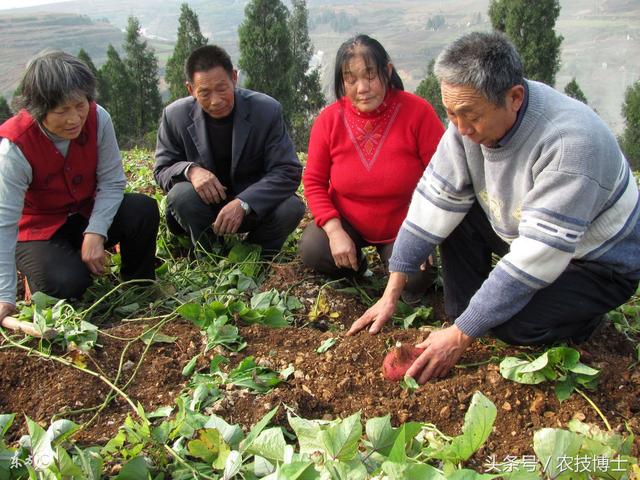
Early planting at the right time is the key to increasing sweet potato yield. Under suitable conditions, the earlier the planting, the longer the growth period, the earlier tubers are set, the more tubers are set, the longer the tuberous roots expand, and the higher the yield and better the quality. If planting is too late, the growth period is shortened, the sweet potatoes are fewer and smaller, and the yield is low and the quality poor. The suitable planting period is when the 10 cm soil temperature reaches above 15°C after the late frost ends (around mid-April). Plastic film mulching can appropriately advance this, and then planting can begin. To improve planting quality and ensure vigorous seedlings, when planting, remove "old hard seedlings" and weak diseased seedlings, and select strong seedlings for transplanting. When planting, it is best to grade large and small seedlings and plant them separately so that they grow evenly. To prevent sweet potato black spot disease, use a 1000-fold dilution of 50% thiophanate-methyl to soak the base of the seedlings 2-3 cun for 10 minutes. Sweet potatoes should be planted as shallowly as possible on the basis of ensuring survival. The planting depth is generally 5-6 cm. When transplanting, the soil must be firmed closely and the depth should be consistent, so that the leaves are exposed above the ground and do not get covered with mud when watering. The seedling tops should be upright, and the seedlings should not be exposed too long, to prevent strong winds from whipping the seedlings and affecting survival.
V. Field management
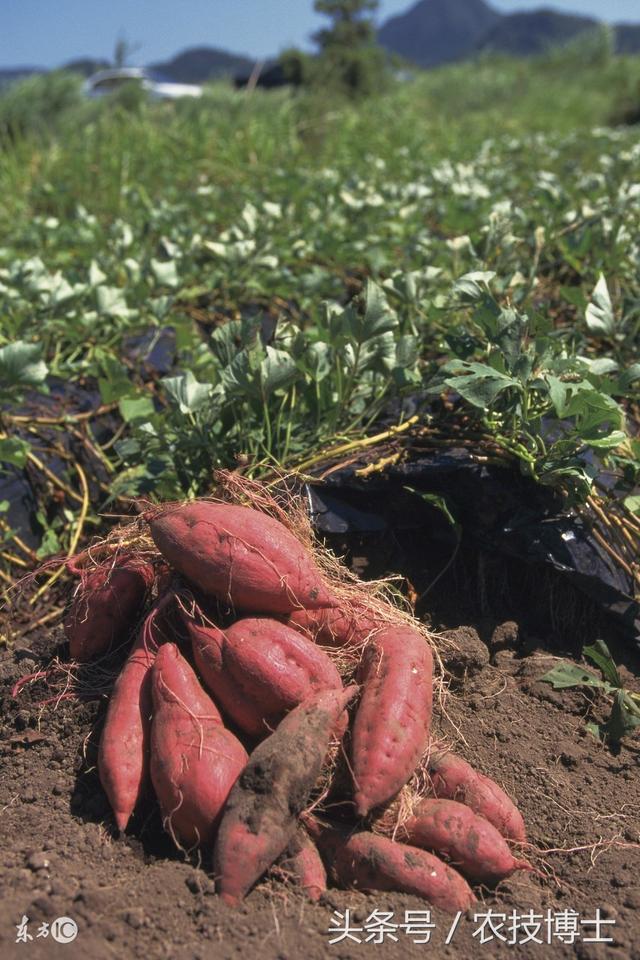
1. Management during the rooting and seedling recovery stage
The rooting and seedling recovery stage lasts from the growth of new roots after planting to the beginning of tuberous root formation, about 1 month. After sweet potatoes are planted, check for missing plants and replant in time to ensure a full stand. After planting, if there is severe drought, water promptly to help seedling recovery, so as to facilitate rooting and survival. Generally, after transplanting, water once, and afterward cultivate once every 10-15 days to loosen the soil, raise the temperature, and eliminate weeds. Spray Xingaozhimo at the right time to promote rapid plant growth and help root formation.
2. Management during the branching and tuber-setting stage
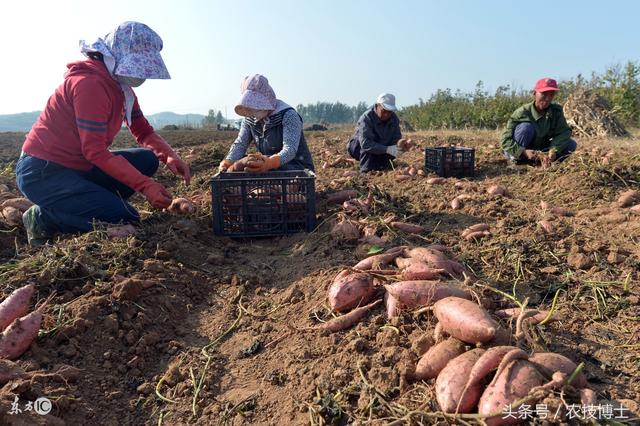
30-40 days after transplanting, as the temperature rises, stem and leaf growth accelerates and tuberous roots continue to form and expand. Water and fertilizer management should be strengthened in time. If there is drought, apply 5-8 jin of urea per mu with water. After watering, cultivate and loosen the soil early to preserve moisture.
3. Management during the stage of vigorous stem and leaf growth and tuberous root expansion
From the first ten days of July to the latter part of August, during this period the stems and leaves grow vigorously and the tuberous roots expand, and the leaf area index reaches its maximum. Generally, during this period, it is necessary to achieve promotion within control and control within promotion. This period coincides with the rainy season, with high temperatures and rapid plant growth. To prevent excessive vine growth, use 50 PPM paclobutrazol solution plus Diguo Zhuangdiling and spray evenly in the field. It is best when the leaf surface is covered with the solution without dripping. This can promote fruit development and make sweet potatoes high-quality and high-yield. During this period, the underground tuberous roots expand rapidly. If there is summer drought, watering is needed, but the amount of water should not be too large. To promote tuber expansion, use one bag (12) g of expansion agent per mu mixed with 15 kg of water and spray once every 7-10 days, for two consecutive sprays.
4. Management during the stage of stem and leaf decline and tuberous root expansion
After mid-to-late August, in the late growth stage of sweet potatoes, stems and leaves grow slowly until they stop; nutrients are transported to the tuberous roots, and the growth center shifts from aboveground to underground. In management, it is necessary to protect stems and leaves, maintain normal physiological functions, and promote rapid tuberous root expansion. Management measures: ensure soil moisture content at 60-70% of the maximum field water-holding capacity. If the weather is dry for a long time without rain and the soil is dry, stems and leaves will prematurely decline, affecting the formation and accumulation of carbohydrates and causing yield reduction. Therefore, water lightly in time, but do not water within 20 days before harvesting sweet potatoes. If there is autumn waterlogging, drain promptly to prevent hard heart and rot. Around End of Heat, sweet potato leaves enter the vine-returning period. To prevent premature decline, prolong and enhance photosynthesis in the leaves, and promote tuber enlargement, carry out foliar fertilization. Use half a jin of potassium dihydrogen phosphate per mu mixed with 30-40 kg of water plus 800-fold Xingaozhimo solution for spraying, once every 15 days for a total of two sprays. If used together with expansion agent, the effect is better.
5. Top removal
When the main stem of the sweet potato grows to 50 cm, choose a sunny morning to remove the terminal bud; when the branches grow to 35 cm, continue to remove the terminal buds. This method can inhibit excessive growth of stems and vines, avoid nutrient consumption, and promote tuberous root expansion, and can increase yield by 20%-30%.
6. Crack fertilization
When sweet potatoes enter the tuberous root expansion period, cracks will appear in the surface soil. At this time, use 750-1,000 kg of clear water and manure fertilizer per mu, add 500 g of potassium dihydrogen phosphate (or 5 kg of superphosphate and 50 kg of plant ash, respectively soaked in water and filtered), mix into the manure fertilizer, and apply along the cracks in the morning or evening. After application, fill the cracks with soil, and at the same time spray Diguo Zhuangdiling to prevent deformed fruits and cracked fruits, which can increase yield by 20%-30%.
VI. Timely harvest
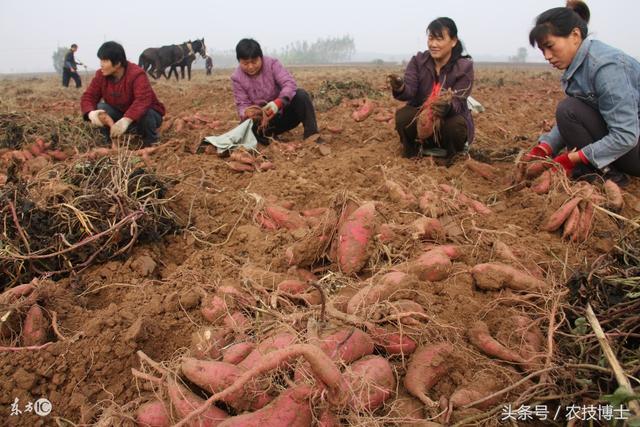
The tuberous roots of sweet potatoes are vegetative reproductive organs and have no obvious maturity standard or harvest period, but the timing of harvest is closely related to sweet potato yield, seed retention, storage, processing and utilization, and crop rotation. Harvesting too early will reduce yield, and harvesting too late will be affected by low-temperature cold damage. The suitable harvest period for sweet potatoes is generally to begin digging when the temperature drops to 15°C, and to finish digging before the killing frost when the temperature is above 10°C or the soil temperature is above 12°C. Generally, digging is finished around Cold Dew.
The above is an introduction to sweet potato cultivation techniques. From the above, we know that the methods of growing sweet potatoes are also not simple. Although their ability to adapt to the environment is relatively strong and the yield is relatively high, growing sweet potatoes still needs to be carried out step by step in accordance with its steps. Only in this way can it conform to the growth pattern of sweet potatoes, and the sweet potatoes grown will be large and sweet.