High-Yield Sunflower Cultivation Techniques_100 Questions on Sunflower Cultivation Techniques, Question 5
23 Why is it said that hybrids have drought resistance and lodging resistance?
Sunflower hybrids have relatively strong drought resistance and lodging resistance. According to tests, during nearly 40 days of drought around flowering, when the soil moisture content at 0-20 cm, 20-40 cm and 40-60 cm was 8.8%, 15.12% and 19.6% respectively, sunflowers still grew normally. One reason is that the root system is well developed and penetrates deep into the soil, enabling it to absorb and use water from deep soil layers; second, the stem is filled with sponge-like pith, which can store relatively more water; third, the stem is densely covered with bristles and the leaf surface has a waxy layer, which can reduce water transpiration.
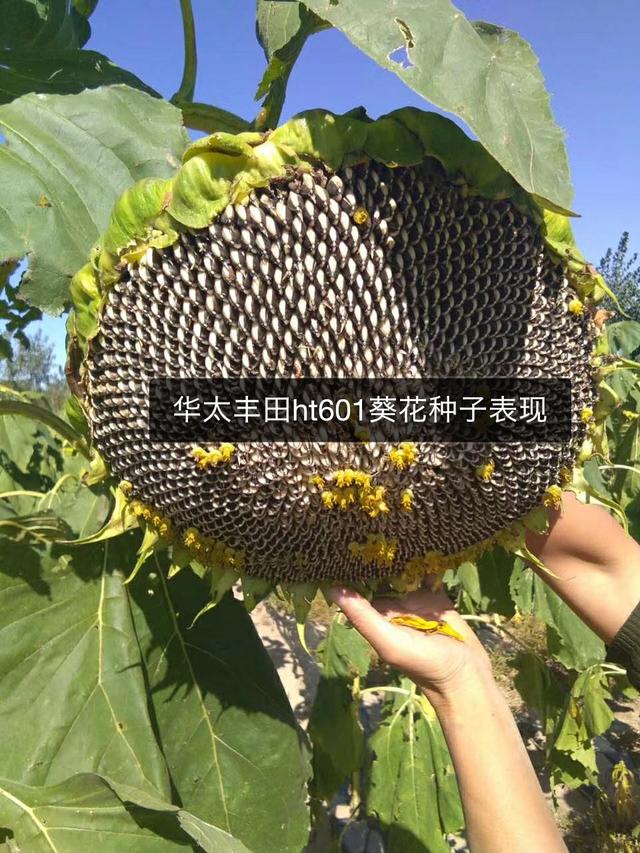
24 Which environmental conditions affect the increase in oil content of oil sunflower seeds?
(1) Moisture is the leading factor in oil formation, and the level of oil content mainly depends on the supply and utilization of moisture. Insufficient moisture not only leads to lower oil content, but also causes changes in oil composition, affecting the nutritional value of edible oil. The grain-filling stage is the key period for oil formation. At this time, sufficient moisture can promote the conversion of plastic substances into oil and is not conducive to their conversion into protein, thereby increasing oil content.
(2) During the oil-forming period, the temperature should preferably be 21-24°C, and the day-night temperature difference should remain stable, neither too high nor too low. Within the suitable range, a slightly larger day-night temperature difference is beneficial to the oil-forming process. A high daytime temperature can increase photosynthetic intensity and increase photosynthetic products; a lower nighttime temperature can reduce respiratory consumption and increase oil content. If the day-night temperature difference is too large, exceeding 50%, that is, when the difference between the maximum and minimum is more than half, it is very unfavorable to oil formation. If the temperature difference is too small, it means the nighttime temperature is high, respiration is strong, more nutrients are consumed, and less oil is accumulated, thereby reducing oil content.
(3) At the same geographical latitude, areas with higher altitude have higher oil content; at the same altitude, areas with higher latitude have higher oil content, and altitude has a greater effect than latitude.
(4) For the same variety, summer-sown oil sunflower has a higher oil content than spring-sown oil sunflower. With different sowing dates, the temperature during the oil-forming period differs, and the oil content also differs.
(5) The type and amount of fertilizer have a direct impact on oil formation. Nitrogen is the main component in protein synthesis. If too much nitrogen fertilizer is applied, especially when nitrogen fertilizer is sufficient in the later stage, more plastic substances are converted into protein, and the seed oil content is relatively reduced; phosphorus is an intermediate product in the conversion of carbohydrates into oil, and increasing phosphorus fertilizer can raise seed oil content. In particular, phosphorus deficiency during flowering and pollination has an even greater impact on oil formation.
Planting density has a certain relationship with oil content, and appropriately dense planting can increase oil content. This is because with dense planting the leaves are larger, nitrogen fertilizer is consumed by stems and leaves, and relatively less enters the seeds, which is beneficial to increasing oil content.
In summary, corresponding technical measures should be actively adopted in production to do everything possible to increase oil content.
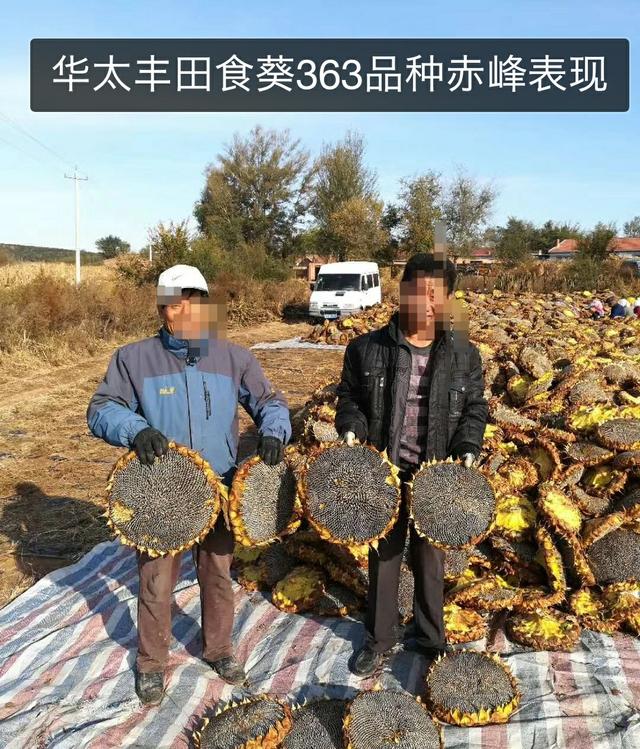
25 Which conditions affect the increase in seed-setting rate of confectionery sunflower hybrids?
(1) Drought. It is well known that sunflower is a drought-resistant and salt-alkali-tolerant crop, but this does not mean that sunflower does not need water for growth and development or needs only relatively little water. On the contrary, sunflower is a crop with relatively high water demand. According to measurements, for every 1 kg of dry matter produced, sunflower needs 469-569 kg of water. From emergence to bud stage, sunflower has the strongest drought resistance, but from bud stage to the end of flowering, sunflower has the greatest water demand, accounting for about 60% of the water requirement of the entire growth period. If water is lacking during this period, pollination may be poor or abortion may occur after pollination, causing an increase in empty and shriveled grains and a decline in yield.
(2) Neglect of management. In some areas, sunflowers are mostly planted as catch crops or crops beside dwellings. Farmers only manage planting and harvesting, without other basic farming operations such as watering, fertilizing, and pest and disease control, resulting in water and fertilizer shortage during the sunflower growth period, especially during key growth stages, blocked growth and development, increased empty and shriveled grains, and reduced yield.
(3) Lack of pollinators. The male and female organs of sunflower florets are positioned differently, with stamens maturing first and pistils maturing later, and they have incompatibility, so self-pollination does not set seed. Sunflower is a cross-pollinated crop and mainly relies on insects for pollination. If pollinators are lacking, pollination and seed setting will be affected, causing an increase in empty and shriveled grains. In recent years, due to the large-scale use of chemical pesticides, the number of pollinating insects has decreased, which is also one reason for the low pollination rate of sunflower and the increase in empty and shriveled grains.
(4) Variety factors. According to foreign research, the seed-setting rate of sunflower is negatively correlated with stem thickness and head diameter, that is, the thicker the stem and the larger the head, the more empty and shriveled grains there are. In some areas, the planting density of sunflower is too low and the stems are thick, which is also a reason for the increase in empty and shriveled grains.
(5) Climatic factors. If the flowering and pollination process encounters low-temperature overcast and rainy weather, flowering is often delayed, the number of florets opening decreases, and the maturation time of stamens and pistils is postponed. When encountering high temperature, drought, and dry weather, flowering is advanced, pollen amount decreases, viability weakens, the fertilization process cannot proceed normally, and some florets cannot be pollinated. On overcast and rainy days, pollen becomes moist or forms clumps, bees stop activity, and ultimately yield and quality decrease.
26 What are the components of sunflower yield?
The components of sunflower yield are the number of plants per mu, the number of grains per head, and 1000-grain weight. Therefore, in production, rational dense planting is required, the optimal ratio of grains per head and 1000-grain weight should be regulated, the seed-setting rate should be increased, and sunflower yield should be raised.
27 Why should sunflower be watered well three times: at bud stage, flowering stage and grain-filling stage?
According to experiments, the water requirement of sunflower from emergence to bud stage accounts for 21.94% of the total for the entire growth period, with a daily average of 0.51%; the water requirement from bud stage to flowering accounts for 45.41% of the total water requirement, with a daily average of 1.82%; the water requirement from flowering stage to maturity accounts for 32.65% of the total water requirement, with a daily average of 0.84%. From this it can be seen that the peak water demand period is from bud stage to flowering stage (consistent with the peak fertilizer demand period). So exactly how many times is it best to irrigate? According to experiments by the Agricultural Science Station of Youyi Township, Jinzhou, Liaoning Province: irrigating once at bud stage gave a yield of 105.5 kg per mu; irrigating once each at bud stage and flowering stage gave 130 kg per mu; irrigating once each at bud stage, flowering stage and grain-filling stage gave 159 kg per mu, while no irrigation gave 70 kg per mu. Three irrigations increased yield by 127% compared with no irrigation, by 22.3% compared with two irrigations, and by 50.7% compared with one irrigation. Therefore, irrigating well three times at bud stage, flowering stage and grain-filling stage is the key to ensuring high yield.
28 Why do seeds on the same flower head gradually become smaller from the outside toward the center?
This phenomenon is entirely due to the distribution characteristics of vascular bundles in the flower head and their relationship with the transport of water and nutrients. On the same flower head there is a competitive gradient, and the seeds around the edge of the head more easily obtain water and nutrients transported from the leaves. The vascular bundle system supplying nutrients to the head first extends from the stem into the periphery of the head, where it is densely distributed, and then extends throughout the entire head. The center of the head is often filled with pith parenchyma cells lacking vascular bundles. Therefore, the florets around the periphery of the head directly obtain nutrients from the abundantly distributed vascular bundle system, while the florets in the center obtain nutrients from secondary vascular bundles or absorb nutrients through the diffusion effect of pith cells. Thus the seeds in the middle do not develop as well as those around the edge.
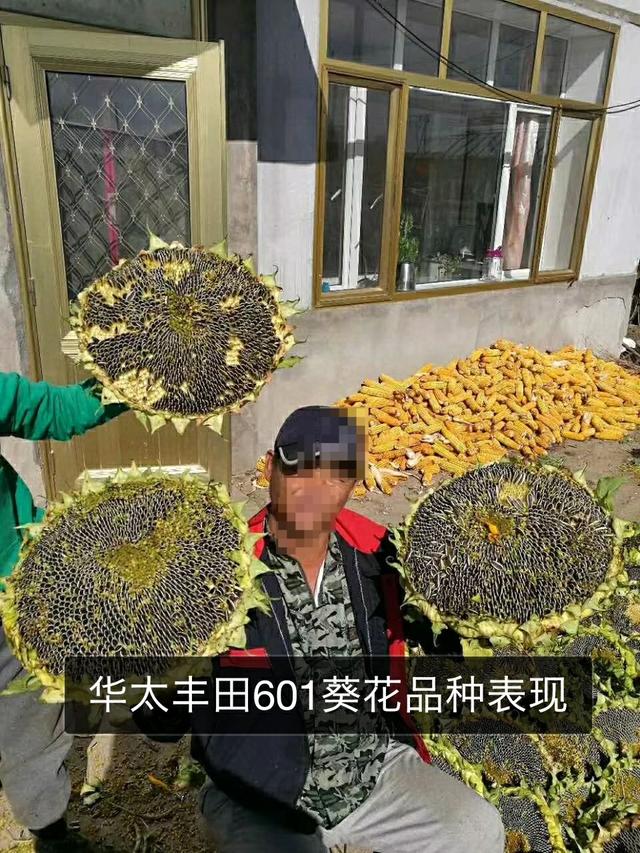
29 Why is there a phenomenon of flowers without seeds in the middle of the flower head?
Biological experiments prove that when the flower head forms, it becomes a transport sink for nutrients. Nutrients are first transported through vascular bundles to the periphery of the head, and being closest to the source, they are obtained first, so the seeds around the periphery can absorb nutrients earlier and in greater amounts, while the seeds in the center of the head have fewer nearby vascular bundles and therefore fewer opportunities to obtain nutrients. Especially when planting is too dense, the atmosphere is dry, and the supply of water and fertilizer is insufficient, the inner-ring seeds obtain too little water and nutrients and cannot pollinate and set seed normally. It can be seen that rational dense planting must be carried out, ensuring that each plant occupies a reasonable nutritional area, and timely irrigation should be given at flowering stage to prevent drought.
30 What nutrient elements does sunflower growth require?
Sunflower requires many nutrient elements throughout its life: major nutrient elements such as carbon, hydrogen, oxygen, nitrogen, phosphorus and potassium; secondary nutrient elements such as calcium, magnesium and sulfur; and trace nutrient elements such as iron, boron, manganese, copper, zinc, molybdenum and chlorine. However, the elements required in the largest amounts are nitrogen, phosphorus and potassium.
To produce 100 kg of sunflower seeds, confectionery sunflower requires nitrogen (N) 6.22 kg, phosphorus (P2O5) 1.33 kg, and K2O 14.6 kg, with N:P2O5:K2O being 1:0.2:2.3; oilseed sunflower requires nitrogen (N) 7.44 kg, phosphorus (P2O5) 1.86 kg, and K2O 16.6 kg, with N:P2O5:K2O being 1:0.3:2.3.
Gansu Huatai Fengtian Agricultural Technology Co., Ltd. mainly deals in high-quality vegetable seeds: confectionery sunflower, oil sunflower, seed-type squash; TY-resistant red-fruit tomato, pink-fruit tomato, cherry tomato; protected and open-field sweet pepper; various premium watermelons; watermelon rootstock, cucumber rootstock; heat-tolerant and cold-tolerant spinach, coriander, head lettuce, etc.