How to grow passion fruit in a greenhouse? Detailed explanation of the key planting techniques
In recent years, with the promotion of protected agriculture, growing passion fruit in greenhouses has become a trend. Using greenhouses to grow passion fruit helps retain water and fertilizer, avoids deformed fruit and sparse fruit, and helps increase the yield and quality of passion fruit.
I. Seedling selection
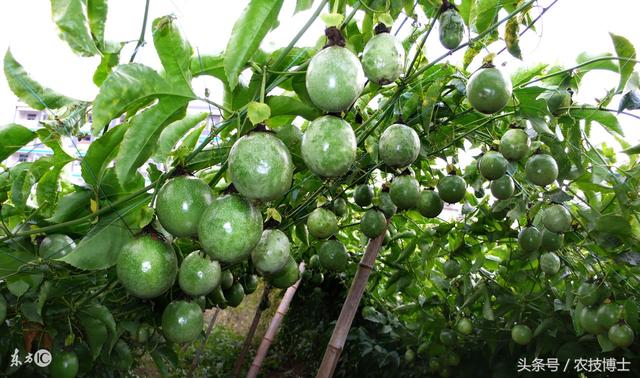
When planting, choose healthy, vigorous seedlings free from pest and disease damage. Standards for vigorous seedlings: seedling height 30cm, stem diameter 0.6-0.8cm at 3cm above the soil surface, well-developed root system with many white roots, leaf color fresh green but not dark green.
II. Bed preparation
Prepare beds along the direction of the greenhouse construction, with a bed width of 3m; dig a drainage ditch of 30cm x 20cm between beds; in the middle of the bed, form ridge boxes along a straight line, with the base of each ridge box 60cm wide and 40-50cm high, spacing between ridge boxes of 3.0-3.5m, and dig 40cm-deep planting holes in the ridge boxes.
III. Planting
In greenhouses, planting in February and March each year is preferable. Apply 20-30kg of decomposed organic fertilizer and 1.0-1.5kg of compound fertilizer per planting hole as base fertilizer; cover the base fertilizer with the surface topsoil dug out when making the hole, to a thickness of 15-20cm; place the seedling on the topsoil for planting. When planting, take the seedling out of the nutrient bag or seedling tray; the nutrient bag must not be buried in the soil. When planting, straighten the root system, fill soil in layers, and tramp firmly and compact it; the root crown of the seedling should be slightly 8-10cm above the planting surface, ensuring the graft union is exposed above the soil surface; water thoroughly with settling water promptly after planting. Planting spacing is 3.0m x 3.5m, with 60-70 plants per 667 sq m.
IV. Bud removal
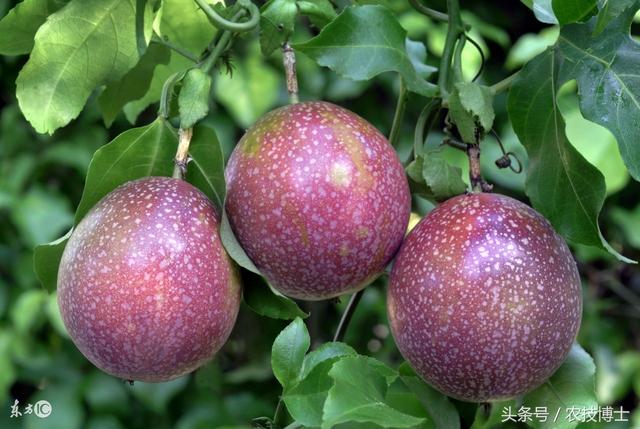
After the plants survive planting, remove axillary buds promptly to promote rapid and thick growth of the main vine, removing buds once every 5-7d.
V. Vine training
When the main vine grows to 40-50cm, insert supports promptly to guide the main vine onto the trellis. After the main vine is on the trellis, frequently guide the side vines to twine and grow on the wire trellis; once the side vines fill the trellis, pinch off the tips and tie them. The side vines should run one branch per side, which helps produce fruiting branches sooner.
VI. Shaping
The main vine and side vines are the main vegetative branches, and the secondary side vines growing from the side vines are the main fruiting branches, so cultivating strong fruiting vines is an important part of increasing yield. When the main vine grows to 1.5m high, let it produce side vines growing to both sides.
VII. Pruning
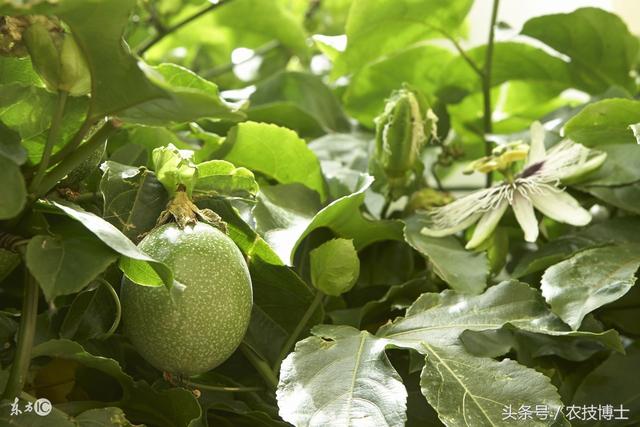
Passion fruit dislikes heavy pruning; excessive pruning can easily cause the main vine to gradually wither, and in severe cases the whole plant dies. Generally, after each batch of fruit matures and is picked, prune promptly back to 2 or 3 nodes to encourage new side vines to grow. In summer, thin out overly dense and downward-hanging branches and leaves to maintain good light and ventilation; cut off downward-hanging branches at 30-40cm above the ground. After the last batch of fruit is harvested in winter, cut off all fruiting branches from the base to prevent excessive vegetative growth or overly dense branches and leaves the following year.
VIII. Weeding
Before the fruiting mother branches fill the trellis, weed the orchard at irregular intervals to prevent weeds from competing with the seedlings for nutrients and from breeding pests and diseases. The removed weeds can be buried in deep trenches dug in the planting area, or removed from the orchard and burned.
IX. Scientific water management
Passion fruit is relatively drought-tolerant, but overly dry soil affects vine and fruit development; in severe cases the branches appear withered, the fruit does not develop, and fruit drop occurs. Irrigate when the soil turns white and during drought. In the rainy season, pay attention to drainage to prevent waterlogging from causing root rot.
X. Scientific fertilization
Apply base fertilizer heavily and topdressing frequently; the amount of fertilizer increases as the seedlings grow. The ratio of nitrogen, phosphorus, and potassium should be 2:1:4; in the early stage, mainly nitrogen fertilizer, and in the later stage, mainly phosphorus and potassium fertilizer; never overapply or apply only nitrogen fertilizer. For topdressing, dig shallow trenches 40cm around the tree roots and broadcast the fertilizer in the trenches, or apply it as a foliar spray; apply compound fertilizer (15-15-15) once every 15-20d or so. Seven days after planting, foliar fertilizer can be sprayed, applying 0.1%-0.3% monopotassium phosphate and 0.1%-0.3% urea, and applying 0.5-1.0kg of micronutrient fertilizer per 667 sq m to promote early growth and rapid development; within 15d after flowering is the period of rapid fruit enlargement, so increase the amount of potassium fertilizer to promote rapid fruit enlargement, applying 0.5kg of compound fertilizer and 0.05kg of potassium fertilizer per plant; once entering the fruiting period, increase the application of phosphorus and potassium fertilizers to promote flower bud differentiation, applying 0.25kg of compound fertilizer and 0.05kg of potassium fertilizer per plant, along with 1.0-1.5kg of monopotassium phosphate.
XI. Building the trellis
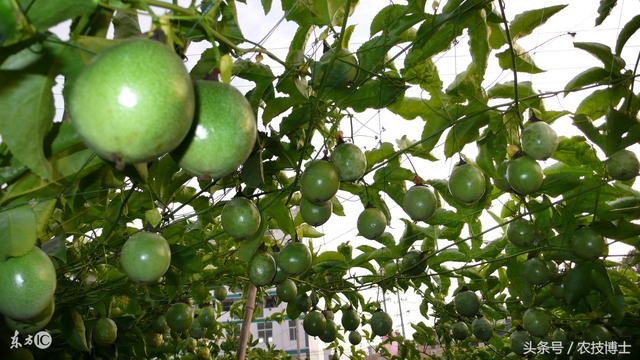
When the main vine grows to 40-50cm, start building the trellis. To make the entire trellis load-bearing, stable, durable, safe, convenient for cultivation, and able to ensure good light and ventilation, use reasonable construction methods and trellis materials. Trellis types include flat-top, fence-style, and inverted-V style; trellis materials include concrete posts, hot-dip galvanized pipes, moso bamboo, wooden stakes, wire, and so on. The trellis in the greenhouse experimental demonstration planting area of Kanto Village, Heping Town, Shaowu City uses flat-top construction, with a trellis height of 2m; the upright posts use hot-dip galvanized water pipes with a diameter of 32, buried 50cm into the soil, with a post spacing of 3m x 3m; the main load-bearing bars at the top of the posts use hot-dip galvanized water pipes with a diameter of 25; the posts and main load-bearing bars must be fixed so they cannot shift or slide; between the main load-bearing bars, 14-gauge (2mm diameter) wire is used to lay a 40cm x 50cm grid wire mesh.
XII. Manual supplementary pollination
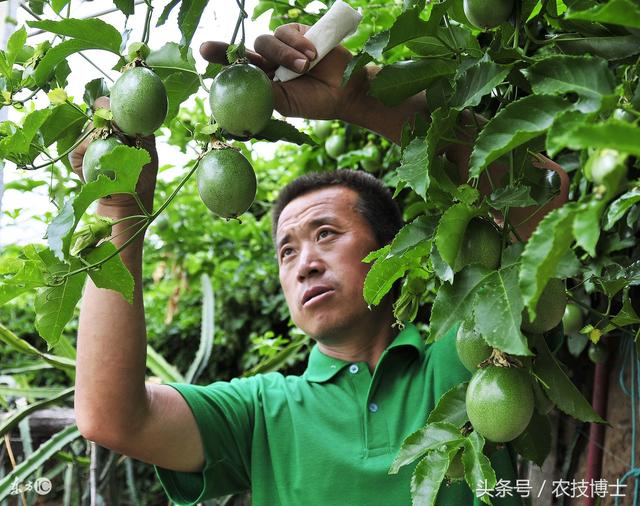
Passion fruit grown in greenhouses mainly relies on manual supplementary pollination, which can achieve uniform fruit size, good quality, a high fruit-setting rate, full contents, and few deformed fruits. Purple passion fruit varieties bloom at around 10:00 a.m. each day; carry out manual supplementary pollination promptly after flowering and complete the pollination work before 17:00 in the afternoon. There are two methods of manual supplementary pollination: one is to use a writing brush to evenly smear pollen onto the 3 stigmas of the pistil; the other is to use 5 fingers to touch the pollen and pull back in the same motion, smearing the pollen on the fingers onto the 3 stigmas of the pistil; when touching the pollen, make sure the fingers are clean and do not touch foreign matter.
XIII. Timely harvest and storage
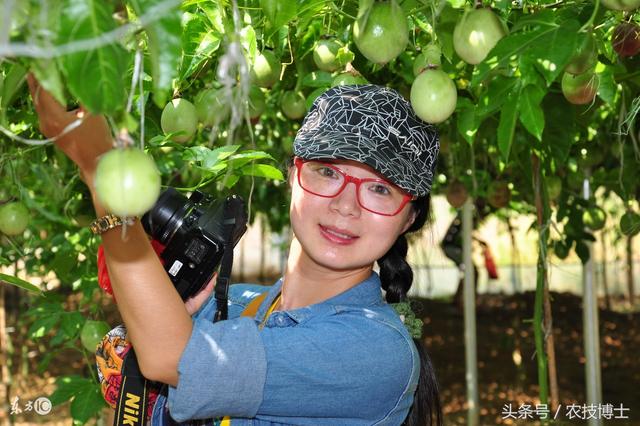
After passion fruit flowers, the peel gradually changes color over 60-80d. To ensure fruit quality, harvest 10d before fruit drop, when the fruit color turns purple and there is a slight fragrance; immature fruit on the vine whose peel is still green should not be harvested, as immature fruit after ripening has high acidity and low fragrance. When harvesting, handle gently and never shake vigorously, to prevent the pulp from separating from the protective membrane. Before sale, mature fruit can be stored in a fresh-keeping warehouse to maintain moisture and avoid peel wrinkling caused by lack of moisture, which affects quality.
[Editor's conclusion]Using greenhouses to grow passion fruit is an important measure for achieving yield and economic benefits in passion fruit cultivation, and it has far-reaching significance.