Key Points of Pollution-Free, High-Yield Cultivation Techniques for Daikon Radish
Daikon radish is a plant of the genus Raphanus in the Brassicaceae family, and it is a common root vegetable in daily life. Daikon radish has fine, dense flesh, a sweet and juicy taste, and rich nutrition. It has high edible value, is well favored by the market, and has good cultivation value, attracting many farmers to grow it. So, how is daikon radish grown?
I. Soil Selection
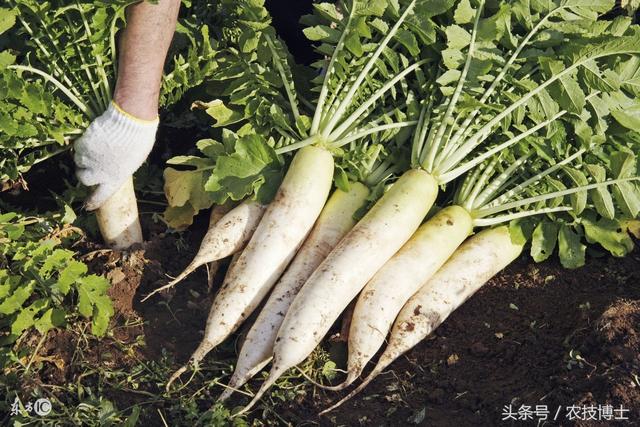
It is advisable to choose loose, fertile sandy loam, loam, and light clay soil rich in organic matter.
II. Fine Land Preparation
After the previous crop is harvested, remove residual leaves and weeds, pick out stones and clods, and plow deeply to break up the soil.
1. Pure cropping:Carry out deep plowing to a depth of more than 30 cm, and sun-dry the soil in raised beds for 5-7 days. Apply 1500-2000 kg of decomposed farmyard manure, 30 kg of calcium superphosphate, 10-15 kg of potassium sulfate, and 0.5-1 kg of borax per mu.
2. Intercropping:After more than half of the flue-cured tobacco plants have been harvested and cured, turn and combine two tobacco ridges into one, with a ridge width of about 2 m and a plant-to-row spacing of 35-40 cm. Apply 5-8 kg of compound fertilizer per mu as seed fertilizer, scattering it into the planting holes.
III. Sowing
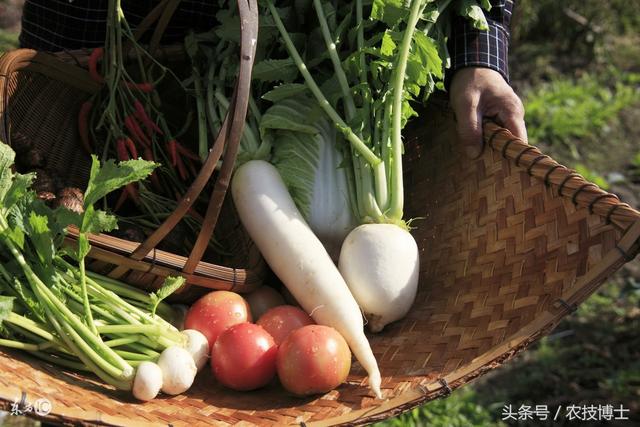
1. Seed treatment:Before sowing, select the seeds carefully, remove weeds, and expose them to the sun for 2-3 hours.
2. Sowing techniques:Before sowing, water thoroughly to provide sufficient bottom water. Sow 3-4 seeds per hole, and sow the seeds at a moderate density. Use 0.3-0.4 kg of seed per mu. After sowing is completed, mix 500-1000 kg of fine manure soil per mu with 15-20 kg of calcium superphosphate, 15-20 kg of potassium sulfate, 0.5-1 kg of borax, and 3 kg of sulfur-phosphorus granules, mix them evenly, and cover the holes.
IV. Thinning and Final Singling of Seedlings
The principle of "thin early, set late" should be followed. For the first thinning, when there are 2-3 leaves, remove small, diseased, and weak seedlings, leaving 2-3 robust seedlings per hole. When there are 5-6 leaves, carry out final singling, leaving only one plant per hole. When singling, according to the overall growth of the field, remove small weak seedlings and larger seedlings so that the plants grow uniformly and consistently.
V. Intertillage, Weeding, and Hilling
Daikon radish should undergo 2-3 intertillages throughout the production period, first deep and then shallow, first near and then far, to avoid damaging the roots. Stop intertillage after the rows close. During the last intertillage, place the soil from the furrows onto the ridge surface to prevent lodging.
VI. Watering
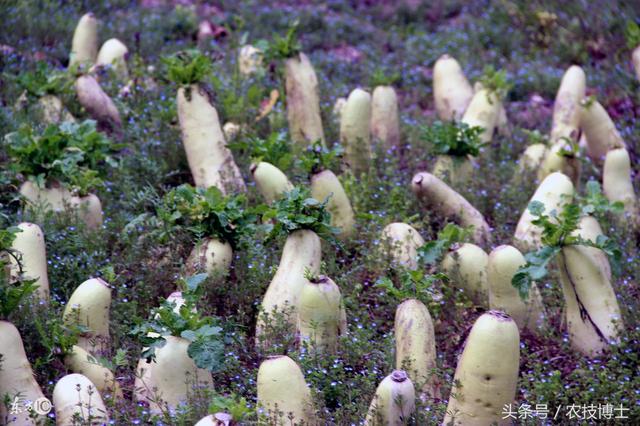
Watering should be determined according to the crop's growth stage, rainfall, temperature, soil texture, groundwater level, and air and soil moisture conditions. Generally, during the seedling stage, water less to promote deeper root growth; during the vigorous leaf growth stage, more water is needed, so irrigate appropriately, but not excessively, to avoid excessive vegetative growth; during the rapid fleshy root enlargement stage, irrigate evenly to promote the growth of the fleshy root and make it plumper and more tender; stop irrigation half a month before harvest to improve quality and storability.
VII. Scientific Fertilization
Determine the timing of topdressing according to soil fertility and growth conditions, generally carried out twice during the seedling stage, leaf growth stage, and vigorous fleshy root growth stage. During the seedling stage and vigorous leaf growth stage, nitrogen fertilizer should be the main topdressing, applying 10 kg of urea and 15 kg of NPK compound fertilizer; during the vigorous fleshy root growth stage, more phosphorus and potassium fertilizer should be applied, applying 15 kg of calcium superphosphate, 10 kg of urea, and 25 kg of nitrogen-phosphorus-potassium compound fertilizer, while also adding 0.5-1 kg of borax. Quick-acting nitrogen fertilizer should not be used within 20 days before harvest.
VIII. Integrated Pest and Disease Control
The plant protection policy of "prevention first, integrated control" should be followed, giving priority to agricultural control, physical control, and biological control, combined with scientific and rational use of chemical control. When using chemical control, scientifically use new pesticides that are efficient, low-toxicity, and low-residue, so that chemical control of pests and diseases is accurate, early, and at a small scale, and reasonably mix, rotate, and alternate medications.
IX. Timely Harvest
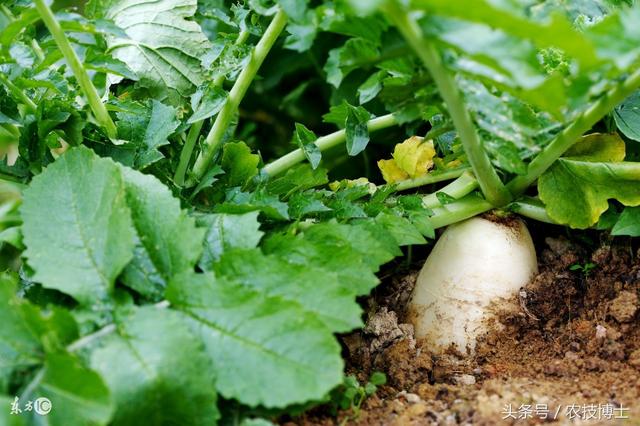
When the fleshy root of daikon radish has fully expanded, the leaf color turns dark and begins to yellow, and coarse lines appear on the root crown, harvest promptly. This is generally about 70 days after sowing. According to market demand, process it into shredded or strip-shaped daikon radish, dry it in the sun, and store it for sale.
[Editor's Conclusion]Daikon radish is a common vegetable that can be eaten raw or cooked, and it also has certain medicinal value and very high benefits.