A Detailed Guide to Round Cabbage Cultivation Techniques and Fertilizer and Water Management Methods
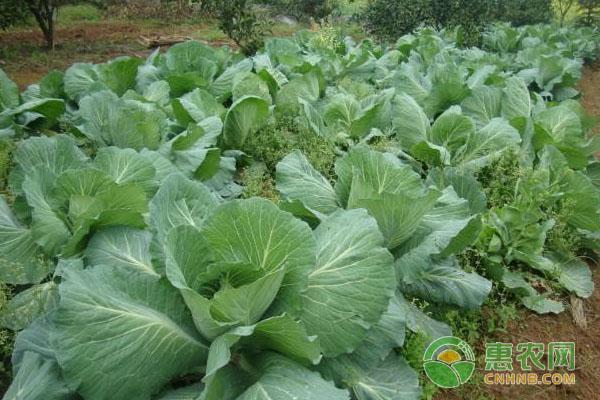
Round cabbage, which is the common cabbage, Korean cabbage, cole, or bao cai that we often see, and also has the elegant name kale, belongs to annual or biennial herbaceous plants and is a relatively common vegetable in our daily lives. Now the editor will talk about the cultivation techniques and fertilizer and water management of round cabbage.
I. Cultivation Conditions
Round cabbage likes a mild climate and can tolerate both high temperatures and severe frost. During the head-forming stage, round cabbage can adapt to temperatures within 7-25 degrees, and of course the optimal temperature is 15-20 degrees. Seedlings can endure temperatures within -15 to 35 degrees. When cultivating round cabbage, it is necessary to ensure sufficient soil moisture and air humidity, otherwise excessive drought will affect head formation and reduce round cabbage yield. Moreover, round cabbage is also a vegetable that likes fertilizer, absorbs a large amount of fertilizer, and tolerates fertilizer well. During the seedling stage and rosette stage, it needs relatively more nitrogen, while during the head-forming stage it needs relatively more phosphorus and potassium fertilizer. During the growth period, the ratio of absorbed nitrogen, phosphorus, and potassium is about 3:1:4. On the basis of applying sufficient nitrogen fertilizer, appropriately applying phosphorus and potassium fertilizer is beneficial for increasing round cabbage yield.
II. Seedling Raising Techniques
Round cabbage cultivation requires seedling raising and transplanting. The seedbed should be selected from a field with convenient irrigation and drainage and loose, fertile soil. Then deep plowing should be carried out, and an appropriate amount of decomposed organic fertilizer and ternary compound fertilizer should be applied. Before sowing, water should be poured thoroughly, and when the soil moisture content reaches a certain level, the seedbed surface should be leveled. When leveling the seedbed surface, sow 300 to 400 grams per mu, press the soil slightly firm, spray 500 times diluted 50% carbendazim solution, and use a small arch shed or greenhouse with shade net covering. When the seedlings grow to have three or four true leaves, carry out one temporary planting. During the seedling raising period, use a shade net for shading from 9 a.m. to 3 p.m. on sunny days.
III. Timely Transplanting
Timely transplanting helps promote root growth. The seedling stage is 20-25 days for early-maturing varieties and 25 to 30 days for mid-maturing varieties. Transplant timely when the seedlings have grown four or five true leaves. Before planting, prepare the land and make beds, expose the soil to whitening, and apply 1,000 to 2,000 kg of organic fertilizer and 30 to 50 kg of ternary compound fertilizer per mu as base fertilizer. When making beds, apply 2 to 3 kg of boron fertilizer and 20 to 30 kg of potassium magnesium sulfate. The bed width, including ditch depth, is 1.0-1.2 m, using double-row planting, with each plant spaced about 30 to 40 cm apart, and 4,000 to 5,000 plants planted per mu. When cultivating round cabbage in late autumn, severe winter, and spring, cover the ground with plastic film to improve water retention and heat preservation capacity.
IV. Fertilizer and Water Management
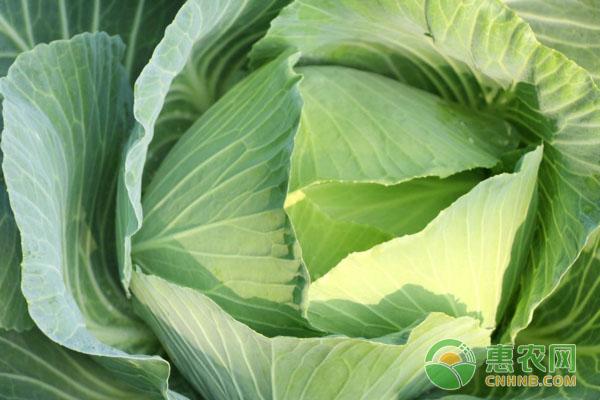
The growth period of round cabbage is relatively long, so more thin fertilizer should be applied in the early growth stage, especially more nitrogen fertilizer during the rosette stage. One week after planting, apply one topdressing with 1% compound fertilizer or urea water, then apply thin fertilizer once every other week. During the rosette stage, the amount of fertilizer should account for 50% of the total fertilization amount for the whole period, and according to the growth condition, appropriately increase the amount of phosphorus and potassium fertilizer, applying 30 to 50 kg of high-quality ternary compound fertilizer per mu. After that, topdress once every other week, and gradually increase the topdressing amount. Immediately after topdressing, water thoroughly, which helps the plants absorb fertilizer and keeps the soil moist.
V. Pest and Disease Control
The main insect pests of round cabbage include cabbage caterpillar, beet armyworm, cabbage webworm, and diamondback moth, which can be controlled with chlorantraniliprole; diseases include black root disease, damping-off, viral disease, black rot, and seedling blight. Pesticides can be applied before planting, which can effectively improve the pesticide effect. First use hymexazol together with rooting water to irrigate once or twice, then apply pesticides sequentially according to each disease.
VI. Timely Harvest
When the top of the round cabbage head becomes flat, it can be harvested. At harvest, leave two or three old leaves at the lower part of the head to protect the head, prevent damage to the head caused by squeezing during transportation, and help improve the commercial value of the head.
(Don't know about preferential agricultural policies? Not clear about market conditions? Don't understand agriculture, rural areas, and farmers hot topics? Follow the Henan Science and Technology News "New Agriculture, Rural Areas and Farmers" WeChat public account: hnkjbxsn, and all agriculture, rural areas and farmers information is within your grasp.)
Operator: Wang Yue MZ015