A complete guide to common pesticide classifications: understand them before you buy, and you won't lose out
Pesticides
The unified English name is pesticide, meaning "killing agent." Its general definition refers to a general term for a class of drugs used in agricultural production to protect and promote the growth of plants and crops, including insecticides, fungicides, and agents that kill harmful animals (or weeds). Specifically, it refers to agents used in agriculture to prevent and control pests and diseases, regulate plant growth, control weeds, and so on. Common pesticides can generally be divided by different uses into seven types: insecticides, acaricides, fungicides, herbicides, plant growth regulators, nematicides, and rodenticides. The author will introduce one by one, for farmers, the classification, names, mechanisms of action, and effects of several common types of pesticides used in agricultural production.
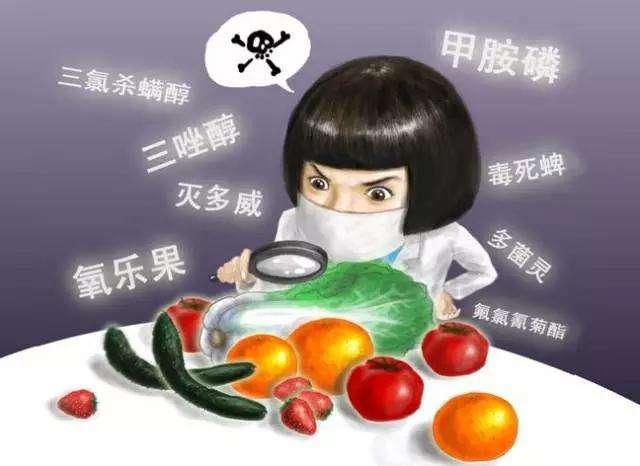
Insecticides and acaricides
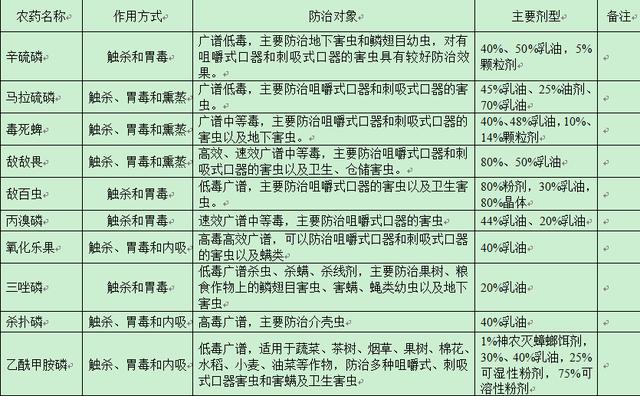
Organophosphates
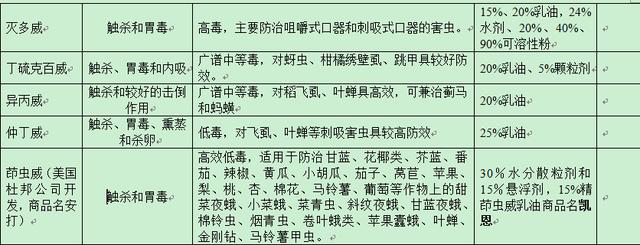
Carbamates
Pyrethroids
Nereistoxin analogues

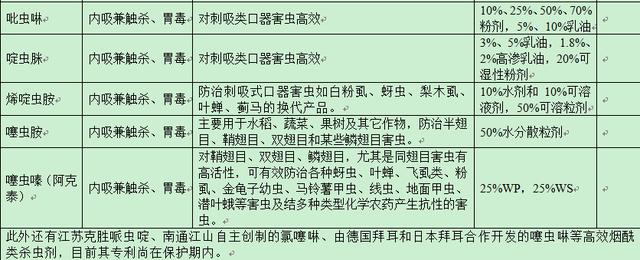
Neonicotinoids
Insect growth regulators
Other insecticides
Fungicides
Copper formulations
Sulfur formulations
Benzimidazoles and thiophanates
Sterol biosynthesis inhibitors
Other fungicides