How to Grow Cherry Trees? A Detailed Guide to Greenhouse Cherry Cultivation Techniques
In recent years, with the development of protected agriculture, the cultivation area of greenhouse cherry trees has also been continuously expanding. Because greenhouse cherry trees have the characteristics of low input and high output, they are a production method deeply loved by fruit growers and can achieve relatively considerable economic benefits. So, how do you grow cherry trees?
I. Choosing a Suitable Orchard Site
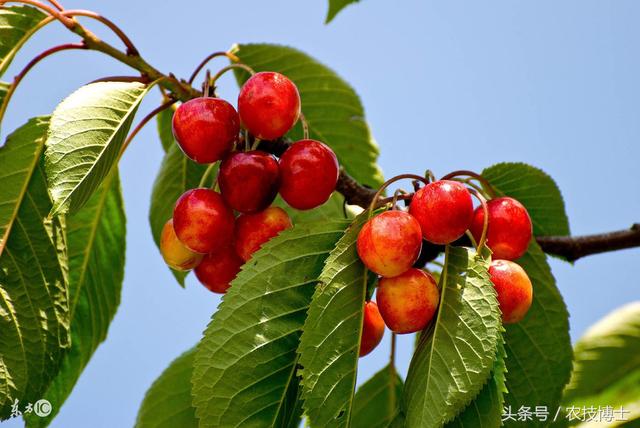
1. Building the greenhouse:When building the greenhouse, choose loam or sandy loam that is sheltered from the wind and facing the sun, with sufficient light, flat terrain, convenient drainage and irrigation, and loose soil. According to the heat dissipation conditions of the greenhouse, a greenhouse area of 300-400 sq m is appropriate.
2. Covering the greenhouse at the right time:Generally, it should be built as an east-west oriented single-slope greenhouse. To reduce costs, the north wall can be made of earth, with the east and west walls 3 m high, and a height of 3.5 m at 2 m from the north wall. Use gypsum strips (with steel bars inside) for support. The south wall is 2.5 m high, and the east and west walls each have a working door and ventilation windows. The windows are 1.5 m above the ground, and the inner sides of the north and south walls are both sealed with mud coating (except the windows). This is used for cold protection and insulation. Inside the greenhouse, gypsum strips (with steel bars inside) serve as the main pillars. The row spacing and pillar spacing are 3.5 m. Above the pillars, moso bamboo is used as the frame, connecting the south wall and the north wall, tied into 50 cm square grids, covered with drip-free film. On top of the film, a layer of straw curtains is laid. The timing for covering the greenhouse should be between late December and early January.
II. Variety Selection
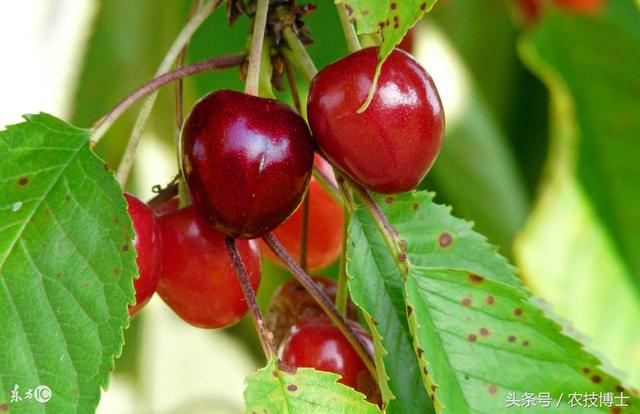
1. The purpose of establishing a greenhouse cherry orchard is to bring cherries to market earlier and obtain higher economic benefits, so in variety selection, excellent varieties with early maturity and a high self-pollination fruit-setting rate should be chosen. Such as Red Light, Big Red, Cinnabar, Pointed Leaf, and other varieties. At the same time, pollinator trees should be arranged at a ratio of 4:1 (such as Lapins or Stella). This prevents situations such as low self-fruitfulness and poor quality.
2. Use strong seedlings or strong trees for dense planting cultivation: in order to use land more economically and see benefits earlier. Cherry tree seedlings should be selected with strong root systems, many fibrous roots, thick and robust seedlings, and plump buds, or 5-8 year old relatively short trees with more inner-canopy branches that have just begun bearing fruit. The rootstock should be mountain cherry seedling rootstock, and dwarfing rootstock (such as Laiyang dwarf cherry) should be used as an interstock. For strong trees that have already fruited, spray an appropriate amount of paclobutrazol to inhibit their growth. The planting density of strong seedlings in the greenhouse should be controlled at a plant spacing and row spacing of 2 m x 3 m or 1 m x 2 m, and strong seedling trees can be controlled at 3 m x 4 m.
III. Training and Pruning
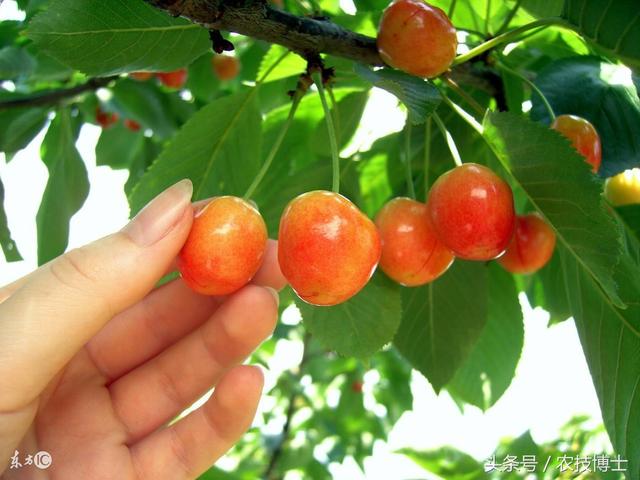
1. For convenience in training and pruning, mainly use the natural open-center form or the free spindle form. These tree forms have small crowns, are suitable for dense planting, and are easy to train and bear fruit early. Cherry trees grow vigorously and have an upright posture that is not easy to spread open. In spring, when sap flows, or after August-September in autumn, use the apple branch-bending method. The opening angle is generally 50-80 degrees, to moderate tree vigor and increase flower formation. To promote branching and help flower bud differentiation, before spring bud break, shorten the growing branches to encourage new shoots and expand the canopy. For branchless positions or lateral buds on long branches, make notch cuts to promote new shoots and increase fruiting branches. In summer, pinch the new shoots; when the extended long branch of the main branch and the central leader branch grow to 30-40 cm, the terminal shoot can be cut off by 10 cm, while the remaining branches and the upward main branches should be heavily shortened to 5-10 cm. Vigorously growing branches can be pinched a second time, and strong upward branches can be pinched continuously to promote the formation of fruiting branch groups.
2. Applying paclobutrazol. In 2-3 years after planting, when the tree body has a relatively large number of branches, apply paclobutrazol, and the flower-promoting effect is significant. The application method can be soil application or spraying, and the suitable time is late April to late May. Generally, for 2-3 year old trees, apply 1.5 g per plant; for strong trees, apply 3 g per plant.
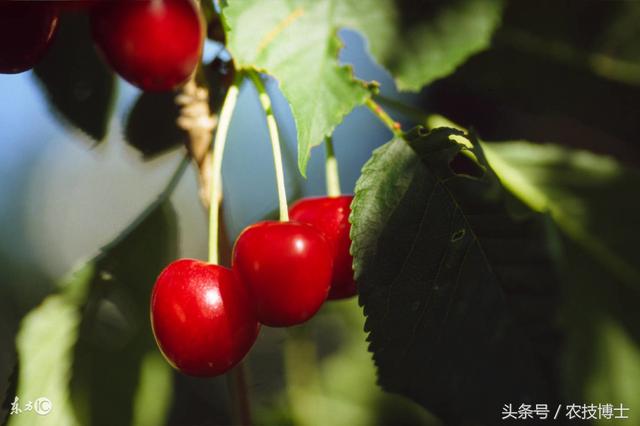
3. Improve the fruit-setting rate and fruit quality. Because the temperature in the greenhouse is relatively high and ventilation is poor, auxiliary pollination during the flowering period is very important. Bees can be released or artificial pollination can be used to increase the fruit-setting rate. At the same time, spray 0.3% urea + 0.3% borax or 0.5% potassium dihydrogen phosphate solution every 10 days to increase the fruit-setting rate. In the early stage of fruit coloring, appropriately remove leaves that block light; lay reflective film under the canopy; for single-slope greenhouses, pull reflective screens along the north wall, and at the same time spray "Hongguo 88" twice to promote fruit coloring and early ripening.
IV. Soil, Fertilizer, and Water Management
Cherries are very sensitive to soil moisture conditions; they are neither drought-resistant nor waterlogging-tolerant. Therefore, it is necessary to choose soil with good looseness and air permeability, use less quick-acting chemical fertilizer, and use more organic fertilizer. Cherry watering does not require large-volume flooding; it only requires "water passes and the ground surface becomes wet." Apply one round of fertilizer before bud break, mainly nitrogen fertilizer. In February-March, apply special fertilizer for fruit trees, with 0.2-0.4 kg per plant. At the same time, according to actual conditions, carry out 1-2 foliar fertilizer sprays during the flowering and fruiting period. After fruit harvest, mainly use phosphorus and potassium fertilizers to promote flower bud differentiation. Apply base fertilizer in autumn, mainly farmyard manure, with 2000 kg of farmyard manure per mu. Each of the above fertilization applications should be followed by one watering.
V. Temperature Regulation in the Greenhouse
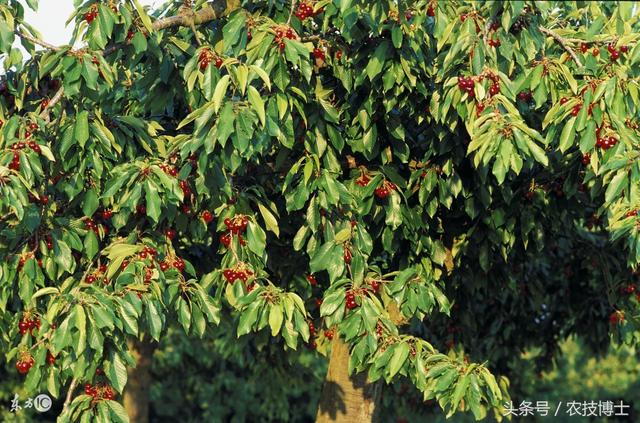
Temperature regulation in a greenhouse cherry orchard is very critical. Once it is not controlled reasonably, freezing injury may occur, causing low fruit-setting rates, fruit and leaf rot, and other phenomena. Therefore, after covering the greenhouse, special attention should be paid to temperature regulation. Within 3-4 days after covering the greenhouse, the working doors and ventilation windows should be fully open. From 3-10 days, gradually close the working doors and ventilation windows. After 10 days, gradually cover all straw curtains at night and raise the temperature. When the temperature rises to 16 degrees C, ventilate and exchange air every day from 10:00 to 17:00. After 17:00, close the ventilation windows and cover the straw curtains (uncover the straw curtains after the sun comes out each day. From after covering the greenhouse to before flowering, the temperature in the greenhouse should be controlled by covering plastic film. The suitable humidity is 70%-80%, and the suitable humidity during the flowering period is 50%-60%, which can be controlled by placing moisture absorbents. The suitable humidity from young fruit to the coloring stage is 60%-70%, which can be controlled by ventilation and air exchange. From coloring to harvest, the suitable humidity is 60-70%, and ventilation is needed until the film is gradually removed. After the harvest period, the film can be completely removed, and fertilizer and water are needed, strengthening underground management.
VI. Pest and Disease Control
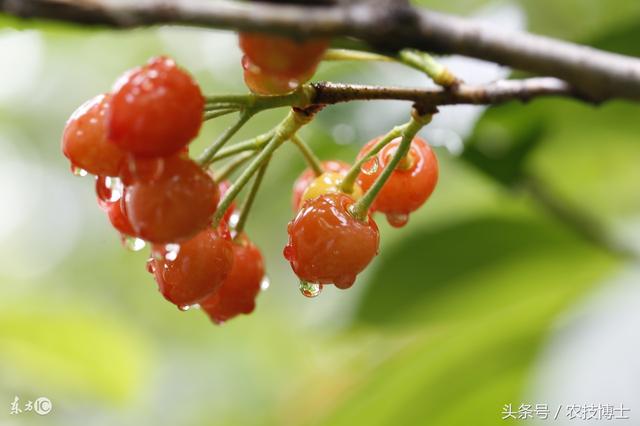
The main diseases of cherry trees are peach bacterial shot hole and cherry leaf spot. Before bud break, spray the whole tree once with 5 degrees Baume lime sulfur mixture. In late June and late July, spray the leaves once each with 200 times lime excess Bordeaux mixture, which can also control leaf-eating pests such as slug moths.
[Editor's Conclusion]Using greenhouses to grow cherry trees in early spring can bring cherries to market earlier and has relatively high economic value.