New Methods and Key Technical Points for Scientific Konjac Cultivation
The main diseases in konjac growth and development are soft rot, southern blight, and root rot. The most damaging are soft rot and southern blight. Konjac soft rot is a bacterial disease, and there is currently no effective control method; it is a worldwide problem. The main factors behind outbreak epidemics of konjac disease are: a high-temperature, high-humidity environment (high temperature and rainy weather conditions) and the accumulation of pathogens (pathogen carryover in continuously cropped soil and in infected seed corms).
In konjac disease control, the principles are to give priority to agricultural control with chemical control as a supplement, and to focus on prevention with integrated control. At present, the strategy for soft rot control is: through cultivation measures, create environmental conditions suitable for vigorous konjac growth and unfavorable for pathogen survival, infection, and epidemic spread, supplemented by chemical control, to reduce disease occurrence and production losses. Production practice has proven this to be a relatively effective control approach.
I. Adhere to the cultivation technical approach of disease prevention and plant health:
Select the most suitable areas, improve cultivation techniques, promote intercropping and relay cropping models, establish a crop rotation system, and apply a high-quality, high-yield cultivation technical approach including fine soil preparation, fertilizer application according to need, soil disinfection, seed corm treatment, timely sowing, rational close planting, and integrated control of pests, diseases, and weeds. Through self-propagation, self-supply, and self-planting, establish a superior cultivation population mechanism with excellent populations, strong individuals, high accumulation, and strong stress resistance.
II. Carry out the key cultivation technical steps for disease prevention and plant health:
1. Select good plots and prepare soil finely
Choose altitudes of 800-1000 m, with loose and fertile soil, deep soil layers, shady and cool conditions, and gently sloping sandy loam land that does not accumulate water for planting konjac. Absolutely avoid planting konjac on flat land, waterlogged land,
yellow clay land, paddy fields, and dry slope land with thin soil layers; plots where large amounts of herbicides were used on the previous crop are also unsuitable for planting konjac.
Plots planned for konjac cultivation must be finely prepared, with deep plowing done more than twice. This includes deep plowing before winter for freezing and weathering, and one plowing and harrowing before spring sowing, breaking up clods, picking out stones, weeds, and crop residues, leveling the soil surface, and opening furrows and making beds in preparation for sowing.
For continuously cropped plots, soil disinfection must be done well. First, reduce the pathogen base in the soil; second, kill underground pests. Soil disinfection should be timed 10 days before sowing. For the disinfection method, apply 50-100 kg of quicklime per mu evenly and plow it into the soil. For plots with many underground pests, use 3% phoxim powder or 3% carbofuran powder, 3 kg per mu mixed with 15 kg-25 kg of fine sand and spread evenly, then plow into the soil to control underground pests.
2. Crop rotation and intercropping
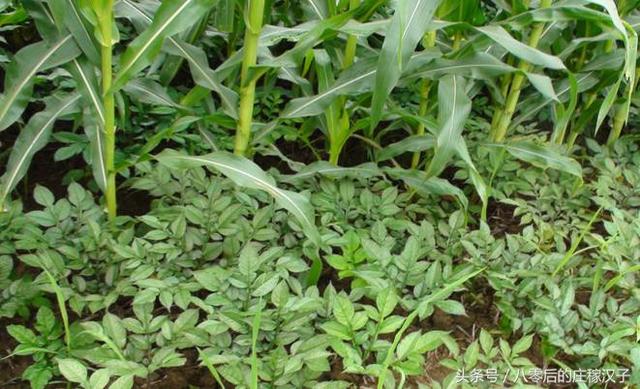
Konjac continuous cropping must not exceed 3 years; after 3 years, rotation is mandatory. Konjac should especially avoid cruciferous crops and ginger, which are susceptible to soft rot, and eggplant, which is susceptible to southern blight. Generally, following gramineous crops is relatively safe. Usually, konjac-maize intercropping is more suitable.
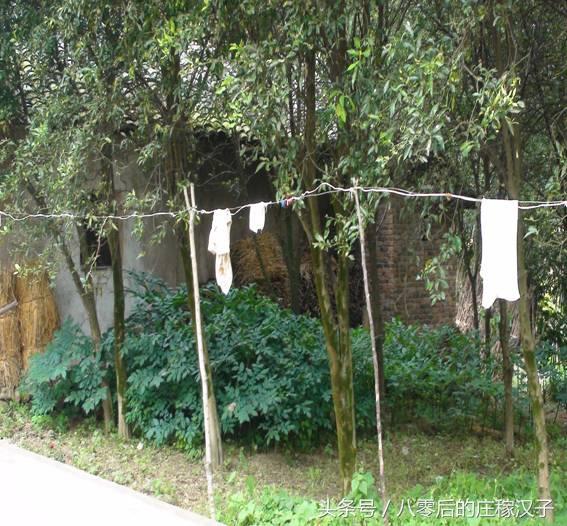
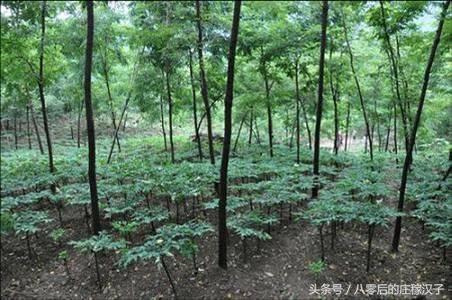
① In areas above 800-1000 m altitude and on shady slope plots at 800-1000 m altitude with less than 8 hours of sunshine, konjac should be planted as a sole crop.
② On sunny slope plots at 800-1000 m altitude, use konjac-maize intercropping, with a 2 m strip pattern, 2 rows of maize and 4-6 rows of konjac.
③ In planting areas below 800 m altitude, use a 1.5 m strip pattern, with 2 rows of maize intercropped with 2-4 rows of konjac.
3、Do a good job in seed selection, seed preparation, and seed corm treatment.
(1) Seed corm selection. In areas below 1000 m altitude, use Qingjiang flower konjac and local flower konjac as the main cultivars, with Anxian flower konjac as a companion planting; in areas above 1000 m altitude, use local flower konjac as the main cultivar, with Qingjiang flower konjac and Anxian flower konjac as companion plantings. In seed corm selection, choose those with proper shape, no digging injuries, no bruising, no mold or rot, no disease or pest damage, and with a flat top, small bud hollow, thick and strong buds, and a mortar-shaped form as seed corms. In terms of specific specifications, use seed corms of about 30 g for seed corm propagation, and healthy seed corms of 250-500 g for commercial corm production. Resolutely remove diseased, damaged, and rotten seed corms.
(2) Seed preparation. For seed corm propagation, use 30 g seed corms, plant 5000-7000 plants per mu, and prepare 150-200 kg of seed per mu. For commercial corm production, use 250-500 g seed corms, plant 1600-2800 plants per mu, and prepare 700-800 kg of seed per mu.
(3) Seed corm disinfection: Before sowing, first dry the seed corms in the sun for 2-3 days, and carry out seed corm disinfection together with sun drying. ① For each kilogram of seed corms, use 2 mL of 40% formaldehyde + 1 g of potassium permanganate for sealed fumigation for 24 hours. ② Use 72% agricultural streptomycin at 500 times and 53.8% Kocide at 500 times, alternating spray disinfection 2-3 times.
4. Timely sowing and rational close planting。
(1) Sowing period. The suitable sowing period for konjac in our county is March 20-April 10; high-altitude areas are slightly later, and low-altitude areas are slightly earlier. At sowing, seed corms should be graded by size and cultivated by category.
(2) Sowing density. Use 6 times the seed corm diameter as the row spacing and 4 times the seed corm diameter as the plant spacing. Generally, for seed corms below 50 g, plant spacing 15-20 cm, row spacing 20-25 cm, and 5500-7500 plants per mu; for seed corms 50-100 g, plant spacing 30 cm, row spacing 45 cm, and 4500-5000 plants per mu; for seed corms 100-200 g, plant spacing 35 cm, row spacing 55 cm, and 2800-3800 plants per mu. For seed corms 200-400 g and above, plant spacing 40-45 cm, row spacing 55-60 cm, and 1600-2800 plants per mu.
(3) Planting method. Use deep furrows and high beds (ridges), with ridge cultivation, keeping ridge furrows at least 35 cm and bed width 40-120 cm. Large seed corms should be cultivated in ridges, with 1-2 rows per ridge; small seed corms should be cultivated in beds, with 3-5 rows per bed. When placing seed corms, place the main bud upward at a 45-degree slant, and cover with 10-15 cm of soil after sowing. Small seed corms should be slightly shallower, and large seed corms slightly deeper. When planting, pay attention to "shallow planting and deep hilling."。
5. Scientific fertilization
The overall fertilization principle for konjac production is to mainly use farmyard manure with chemical fertilizer as a supplement, and mainly use base fertilizer with topdressing as a supplement.
(1) Base fertilizer. Apply 2500-5000 kg of farmyard manure per mu, 40 kg of potassium sulfate compound fertilizer per mu, or 40 kg of potassium sulfate compound fertilizer per mu plus 50 kg of ecological organic fertilizer. Farmyard manure can be broadcast or applied in furrows; if broadcast, spread all farmyard manure before spring plowing and turn it into the soil. Apply compound fertilizer in furrows, place seed corms slantwise on both sides of the fertilizer furrow, apply base fertilizer between the two seed corms, and finally form ridges and cover the seed with 15-20 cm of soil. During fertilization, strictly keep fertilizer and seed separate to avoid "burning seedlings." Farmers with the conditions can spread corn stalks or other straw and leaves in the sowing furrow and place seed corms on both sides, which gives a better effect.
(2) Topdressing. Topdressing methods are divided into bed surface topdressing and foliar topdressing. Before konjac branches and spreads its canopy (leaf expansion stage), combine with intertillage and hilling; first open a small furrow between two rows of konjac or dig a small hole in the middle of four konjac plants, and apply 5-10 kg of potassium sulfate compound fertilizer per mu. For foliar topdressing, combine with spraying for disease prevention, apply 30-50 g of potassium dihydrogen phosphate per mu, dilute with 50 kg of water, and mix with pesticide for foliar spraying. When topdressing, fertilizer should be applied between two rows of konjac plants, and after fertilization carry out hilling and covering; do not let it contact the konjac plants to avoid "burning seedlings."
6. Konjac weeding, intertillage, and hilling
(1) Bed surface mulching with grass. At sowing, promote grass mulching on the bed surface, "using grass to control grass." Bed surface grass mulching helps preserve moisture, maintain temperature, suppress weed growth, and reduce disease occurrence. Use rice straw, wheat straw, rapeseed hulls, or mountain weeds for mulching; the time is best after sowing and before canopy spreading, with a thickness of 5-10 cm.
(2) Weeding: Summer is a high-incidence season for weed growth, and weeds compete with konjac for fertilizer and water, seriously affecting normal konjac growth. Before emergence, choose a sunny day and shallow hoe 2-3 cm. After emergence, only hand pulling is allowed; use of farm tools for hoeing is prohibited. If there are a small number of weeds in the middle and later stages of konjac growth, as long as they do not affect normal konjac growth, weeding can be stopped.
(3) Clear furrows and drain water, hill soil around roots. Konjac likes moisture but fears waterlogging; poor drainage easily leads to poor aeration and lodging of konjac. After konjac emerges, promptly open furrows for drainage, clear silt and remove excess moisture, reduce soil water content, and enhance konjac's wind resistance and lodging resistance.
(4) Ridge cultivation. Konjac likes a moist environment but fears waterlogging. Through ridge cultivation, a relatively dry soil environment can be created for konjac during rainy seasons, reducing disease occurrence.
7. Focusing on soft rot control, carry out konjac diseasesprayingcontrol
The main diseases of konjac are soft rot, southern blight, and root rot. Among them, the most damaging are soft rot and southern blight. Disease control for konjac should adhere to prevention first, with chemical control as a supplement, and implement integrated physical and chemical control. Start chemical control when the emergence rate reaches 10%; in terms of pesticide selection: (1) 150 times Bordeaux mixture of equal proportions. (2) 72% agricultural streptomycin at 2500 times. (3) 53.8% Kocide at 1000 times. (4) 50% Bixiudan (chloroisobromine cyanuric acid) at 1000 times. Begin spraying from emergence and greening; first spray 1-2 times with 150 times Bordeaux mixture of equal proportions, then spray 72% agricultural streptomycin at 2500 times or other pesticides, choosing any one each time, spraying once every 7-10 days, alternating sprays 3-4 times. Spray after 4 p.m. to avoid phytotoxicity. Promptly pull out the central diseased plants that have already become diseased, and disinfect with quicklime to avoid infecting other healthy plants.