Shepherd's purse cultivation offers high returns, and large-scale growing techniques are the key
From "growing whatever we eat" to "growing whatever we want to eat" - the "transformation" of wild shepherd's purse offers a lesson for agricultural supply-side reform
What was once a fresh wild vegetable growing along ditches and roadsides, favored by consumers' palates, soon sparked large-scale cultivation in the fields, which in turn helped large numbers of farmers increase their incomes. The splendid "transformation" of a single wild shepherd's purse plant reflects how agricultural production in some regions is upgrading from "growing whatever we eat" to "growing whatever we want to eat," and it has become a vivid footnote to the current agricultural supply-side reform.
Shepherd's purse (Capsella bursa-pastoris), also known as hùshēngcǎo, jīxīncài and jìngchángcǎo. Because shepherd's purse is rich in nutritional value, it attracts many consumers to buy it. Driven by strong market demand, the number of farmers growing shepherd's purse has gradually increased. For beginners growing shepherd's purse, when to plant it and what cultivation methods to use are the most commonly asked questions. Below, the editor gives a detailed introduction:
When to plant shepherd's purse
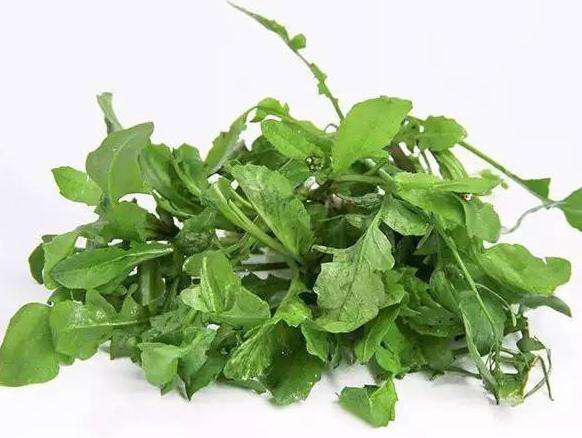
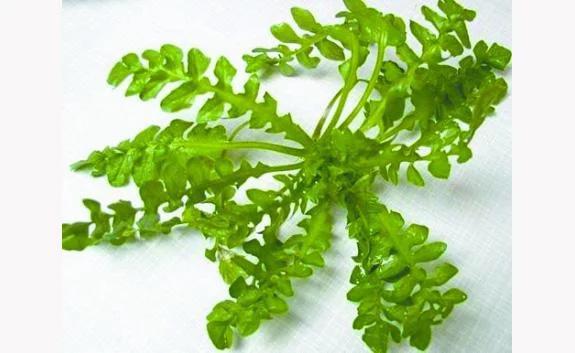
Artificial cultivation is mainly based on the broadleaf shepherd's purse and the loose-leaf shepherd's purse, and it can be done in all three seasons of spring, summer and autumn. For spring cultivation, sow from late February to late April; for summer cultivation, sow from early July to late August; for autumn cultivation, sow from early September to early October. In North China, two-season cultivation is possible: for spring cultivation, sow from early March to late April; for autumn cultivation, from early July to mid-September. When using plastic tunnels or solar greenhouses for cultivation, sowing can be done at any time from early October to early February of the following year.
Field management
Under normal climate conditions, spring-sown shepherd's purse can achieve full emergence in 5-7 days; summer and autumn sowings can achieve full emergence in 3 days. Before emergence, water little but often to keep the soil moist, so as to promote emergence. After emergence, pay attention to appropriate irrigation, keeping it moist as the standard, and do not let it dry out; in the rainy season, pay attention to drainage to prevent waterlogging. If mud splashes onto the leaves or hearts of the plants during the rainy season, rinse the mud off in the early morning or evening so as not to affect the growth of shepherd's purse. For autumn-sown shepherd's purse, watering should be appropriately controlled before winter to prevent excessive vegetative growth and help it overwinter safely.
For spring- and summer-cultivated shepherd's purse, because the growing period is short, generally 2 topdressings are applied. The first is at the 2-true-leaf stage; the second is after an interval of 15-20 days. Each time, apply 22500 kg of decomposed human excrement and urine per hectare, or 150 kg of urea. Autumn-sown shepherd's purse has a longer harvest period, and after each harvest it should be topdressed once, for a total of 4 topdressings, with the same application rate as for spring-sown shepherd's purse.
Shepherd's purse plants are relatively small and easily grow mixed with weeds, making weeding difficult. For this reason, plots with fewer weeds should be chosen for cultivation as much as possible, and during management, cultivation and weeding should be done frequently, ensuring weeding is done early, while the weeds are small, and thoroughly, rather than waiting until the weeds are large enough to suppress the seedlings or pulling large weeds and damaging the seedlings.
Harvest time
Spring-sown and summer-sown shepherd's purse grows relatively quickly, and the number of days from sowing to harvest is generally 30-50 days, with 1-2 harvests. Autumn-sown shepherd's purse takes 30-35 days from sowing to harvest, after which it is harvested successively 4-5 times, and in the Yangtze River basin this can continue until the following spring.
At harvest, select large plants with 10-13 true leaves and dig them out with the roots. Leave the medium and small seedlings to continue growing. At the same time, be careful to harvest the densely planted plants first and the sparsely planted areas later, so that the remaining plants are evenly distributed. Water promptly after harvest to help the remaining plants continue growing. The yield is 37500-45000 kg per hectare.
Shepherd's purse cultivation methods
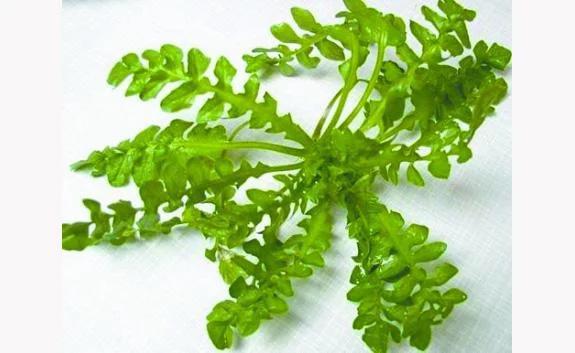
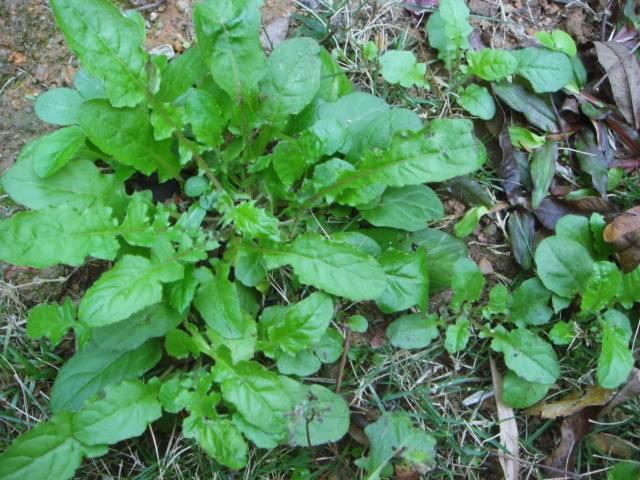
I. Varieties. Wild shepherd's purse varies in shape from region to region and has no fixed variety. At present, the cultivated varieties of shepherd's purse mainly fall into two types: broadleaf shepherd's purse and mosaic-leaf shepherd's purse. Broadleaf shepherd's purse, also called large-leaf shepherd's purse, has thick leaf heads, and its leaves are large and thick; it is tolerant of both cold and heat, grows quickly, matures early, and has good commercial appearance; however, its winter habit is weak, and spring planting easily bolts, so it is generally cultivated in summer and autumn. Mosaic-leaf shepherd's purse, also called small-leaf shepherd's purse or broken-leaf shepherd's purse, has narrow, short and small leaves with abundant fuzz on the leaf surface; it is relatively tolerant of heat and drought, has a strong winter habit, and can be cultivated in both spring and autumn.
II. Cultivation techniques
(1) Site selection and land preparation: Shepherd's purse is highly adaptable. Besides using prepared land for block planting, it can also be grown on field ridges, in idle plots behind windbreaks, and at the edges of fields. If planting in blocks, it is best to choose plots with fewer weeds, and the previous crop should be tomato, cucumber, corn or garlic sprouts; continuous cropping should be avoided. When preparing the land, plow 15 cm deep, apply sufficient base fertilizer, break up the soil finely and level it, and make beds 2 m wide (including ditches), with a bed height of 15 cm, to facilitate irrigation and drainage.
(2) Sowing: Broadcast sowing is generally used, with 0.75-1 kg per 667 sq m for spring sowing, 2-2.5 kg for summer sowing, and 1-1.5 kg for autumn sowing. Spring sowing is from late February to late March; summer sowing from late July to mid-August; autumn sowing from early September to early October. When broadcasting, strive for evenness; after sowing, lightly tread the bed surface once with your feet so that the seeds make close contact with the soil, which helps the seeds absorb water and emerge earlier. If newly harvested seeds from that year are used for sowing in summer and autumn, since the seeds have not yet broken dormancy, they will only germinate in autumn. Therefore, for summer sowing, the seeds are often kept at a low temperature of 2-7°C (refrigerator) to promote germination before sowing.
(3) Field management: Shepherd's purse has strong stress resistance, and few pests or diseases occur during its growth period; shepherd's purse prefers a cool climate, so after sowing it should be covered with shade netting, which on the one hand plays a role in shading and cooling, and on the other hand can also reduce water evaporation from the ground; uncover the netting in the evening. After emergence, fertilizer and water management should be strengthened. Spring- and summer-sown crops have a short growing period, and generally 1-2 topdressings are applied; autumn-sown crops have a long growing period, and 3-4 topdressings are applied, with 1500-2000 kg of dilute human and livestock excrement and urine per 667 sq m each time. Shepherd's purse is planted at high density and also needs a lot of water, so it should be irrigated frequently to keep the soil moist. In summer and autumn, after thunderstorms, use a watering can in the early morning of the next day to rinse off the mud splashed onto the leaves or hearts of the plants; otherwise, growth will be affected.
(4) Harvesting: Proper harvesting of shepherd's purse can increase yield. Generally, a small knife is used to cut and harvest, leaving the small ones and picking the large ones, but be careful to harvest evenly. In places where seedlings are sparse, even large seedlings should be retained; in dense places, even small seedlings should be picked and harvested, so that the remaining seedlings grow evenly and the yield is increased. For spring-sown and summer-sown shepherd's purse, from sowing to harvest is generally 30-50 days; harvest 1-2 times. Autumn-sown shepherd's purse is sown once and harvested many times; to increase yield and extend the supply period, harvest carefully and frequently, taking more from dense areas and less from sparse areas, so that the remaining shepherd's purse grows in a balanced way.
For more information on wild vegetable varieties, please follow the Wild Vegetable Expert Toutiao account
If you have friends around you who love agriculture, you can forward the article to them. Comments are welcome. However small an individual is, they still have the right to speak! Thank you.