Four major pitfalls to avoid in agarwood tree cultivation
Since ancient times, agarwood has been a precious traditional Chinese medicine, an offering for the imperial court, a rare collectible, a sacred object of five major religions, and a treasure prized by scholars and refined gentlemen. However, due to people's unrestrained harvesting, its resources have been exhausted. It has been designated by the state as a Class II rare and protected plant, and the cultivation and development of agarwood trees are being vigorously promoted.
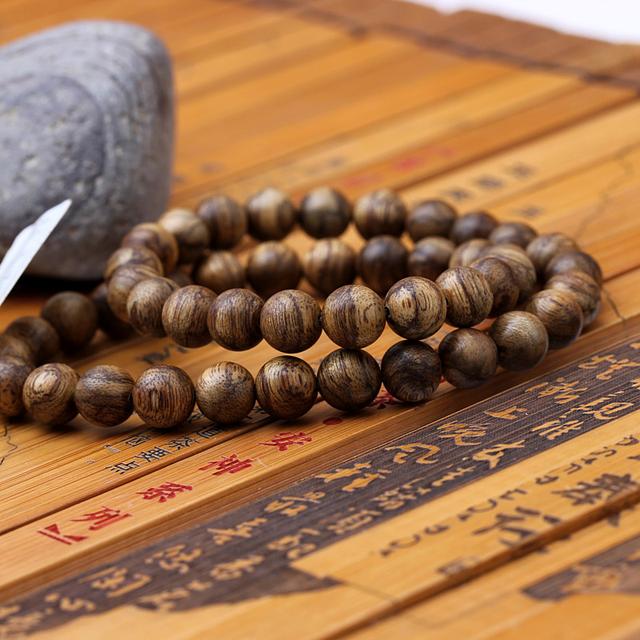
Risk One: Not all agarwood trees will produce agarwood
Usually, agarwood refers to the Aquilaria sinensis tree, which belongs to the Thymelaeaceae family. According to the global distribution of agarwood resources, they are relatively concentrated in the tropical and subtropical regions of Southeast Asia. Among similar plants worldwide, there are four families and genera in total, but the only one that can truly produce agarwood is Aquilaria sinensis of the Thymelaeaceae family. Aquilaria sinensis can be further divided into large-leaf and small-leaf varieties, and yellow and white types, but the only one that truly produces high-quality agarwood is what industry insiders commonly call Hainan native agarwood.
According to ancient texts, wild Aquilaria sinensis trees once grew with interlocking branches, stretching for hundreds of li, and could be described as extremely luxuriant. However, those that could produce agarwood were "often only one or two out of ten." It has long been no secret that most Aquilaria sinensis trees can grow into towering trees but do not produce agarwood. For Aquilaria sinensis to produce agarwood, it must endure lightning strikes, wind breakage, insect damage, and various man-made injuries, or under professional scientific guidance, artificial agarwood induction methods can be used to wound the tree and prompt rapid agarwood formation.
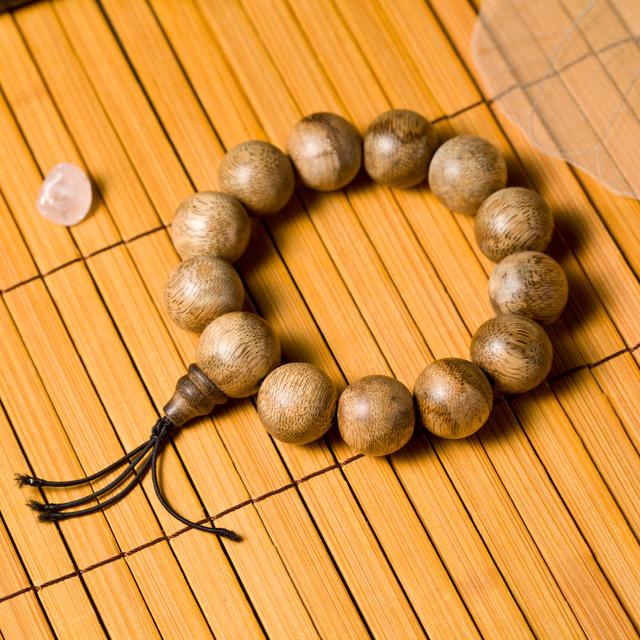
Risk Two: Not all agarwood seedlings meet planting standards
Because Aquilaria sinensis is endangered and rare, its superior mother trees are currently extremely scarce. A reporter has learned that the requirements for agarwood planting seedlings are very strict. Seeds must be collected from high-quality mother trees at least 12 years old, and only after selection can they be used for raising seedlings. After the seedlings emerge, they need to be continuously selected and culled. Only after one year, once the seedlings have been hardened in the field, can they be handed over to growers for large-scale planting.
Risk Three: Not every agarwood tree with Qinan will produce Qinan seedlings
Because of differences in quality and the part of the tree where agarwood forms, agarwood is subdivided in the industry into many grades and categories. Among them, the most widely recognized as the most expensive is Qinan agarwood, which mainly includes five major types: white Qinan, green Qinan, purple Qinan, yellow Qinan, and black Qinan. Because of the extremely high quality requirements and its extreme rarity, current market prices are almost all above 10,000 yuan per gram.
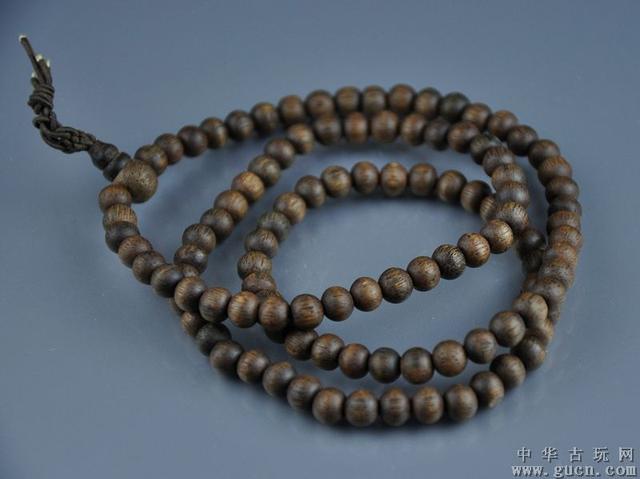
Risk Four: Not just any land can be used to grow agarwood
Some nursery owners, when recommending agarwood seedlings, claim that agarwood can be planted everywhere in Hainan, Guangdong, Guangxi, Yunnan, and even Fujian. In fact, this claim is highly irresponsible.
The best regions for agarwood cultivation are tropical and southern subtropical areas. The best soil conditions are red and yellow sandy soils. The best planting terrain is gentle slopes that do not easily form standing water, as agarwood is most afraid of waterlogging. If agarwood trees are planted in low-lying land, they are very prone to root rot due to standing water, leading to a total loss, and such cases are everywhere.
Meeting is fate. If you also like cultural playthings, please add WeChatzitan768(Long-press to copy) Add WeChat and a surprise awaits you. I believe that on this path of cultural playthings, we can become good friends,
keeping you away from counterfeit goods and quickly forming a connection!