A Detailed Guide to Identifying Genuine and Fake Pesticides and Using Them Properly
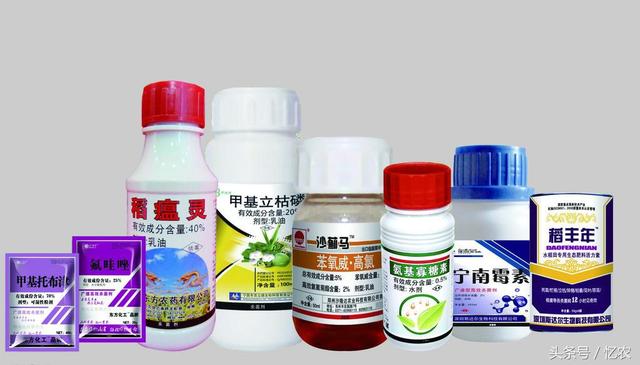
The pesticides we commonly see can be roughly divided, according to their effects, into insecticides, fungicides, herbicides, regulators, virus disease mitigators, safeners, rodenticides, bird repellents, etc.
So how can we tell well whether a pesticide product is legitimate?
First we need to look at the three certificates of the pesticide,
Pesticide Registration Certificate Number
Production Approval Certificate Number
Enterprise Standard Certificate Number
Products made by manufacturers without these three certificates are all illegitimate, so when we buy pesticides we must look carefully, especially when buying herbicides, because herbicides can easily cause problems if not handled properly.
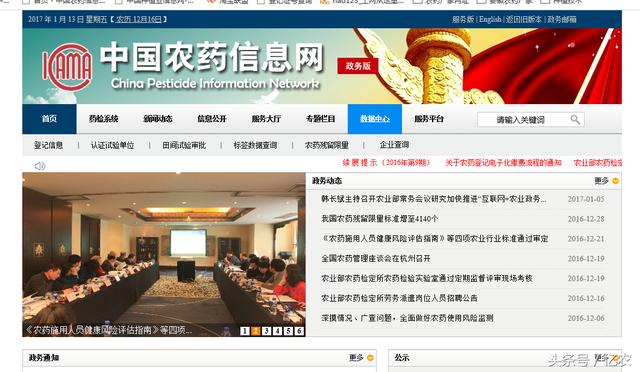
Having these three certificates does not mean you can rest easy either. Many manufacturers do not have certificates, or do not have the production certificate for this product, and they just fill in the certificate of some other manufacturer at random. How can this be identified? You can query it at the Data Center of the China Pesticide Information Network. Enter their manufacturer name or the pesticide registration certificate number, and you can look it up.
Manufacturers without certificates have no production qualifications. They can also make products, but many of the products are non-standard.
Because of my work, over the past two years I have visited the factories of more than 200 pesticide manufacturers one after another. Some are very legitimate, while others have just one or two production lines, one mixer, and one sealing machine. Their products can actually be effective too, but problems easily arise, because their content control is non-standard. In pursuit of effects, they often add some hidden ingredients.
For example, the biological agent cotton bollworm virus granules. This product is a standard biological agent, and using it is absolutely pollution-free and green, but this product can only kill cotton bollworms, and at the same time its insecticidal effect is slow. Some manufacturers add some hidden ingredients to it, so the killing effect is fast and it can also treat multiple pests at the same time.
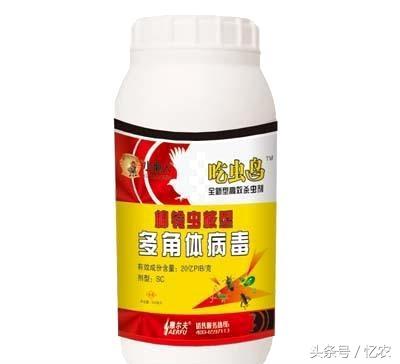
I know a factory owner who specializes in producing biological agents. He said that although this kind of biological agent is green and pollution-free, it sells very poorly in China, and most of it is exported to Europe, the United States and other countries.
So when we choose pesticide products, we still need to pay attention to the legitimacy of the product.
If you use the same product and after two years its effect suddenly becomes poor, is the manufacturer faking it?
If you use the same product and after two years its effect suddenly becomes poor, especially for insecticidal products, this phenomenon is very common.
Actually, this really wrongs the manufacturer. The manufacturer has not faked anything; it is just that the insects have developed resistance to the pesticide. To put it plainly, the insects have already evolved to the point that this pesticide no longer works on them.
Many people will feel that in just two years, insects have evolved so fast, it is too frightening,
Actually, insects do not evolve fast at all
For example, the whitefly. An adult can produce 10 generations a year, and one generation can lay 100--500 eggs
From the egg stage to the adult stage, it only takes 20 days.
Friends who are interested can calculate how many offspring one adult can produce in a year!!!
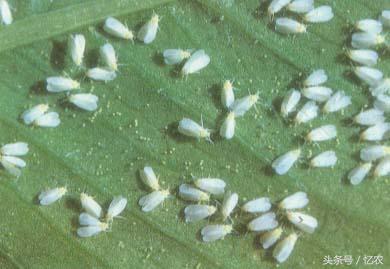
This is the whitefly
So when we use pesticides, we must pay attention to rotating and using them, that is, choose 2--3 kinds of pesticides for this pest and use them alternately. Do not keep using just one pesticide. Those who understand pesticides, when alternating pesticides, had best choose pesticides with different modes of action and use them alternately.
Pesticides are subdivided by type
Classified by effect
Insecticides, fungicides, herbicides, safeners, regulators, virus disease mitigators, rodenticides, bird repellents
Classified by formulation
Granules, aqueous solutions, suspensions, emulsifiable concentrates, powders, smoke agents, ultra-low-volume sprays, soluble powders, microcapsules, etc.
Insecticides also include insecticides, acaricides, snail killers, etc.
Fungicides also include fungicides, bactericides, etc.
If classified by mode of action
Insect killing: contact poisons, systemic agents, stomach poisons, fumigants, attractants, repellents, antifeedants, chemosterilants, specific insect growth regulators, etc.
Fungicides: inorganic fungicides, organic fungicides, antibiotic fungicides, etc.,
When we choose pesticides, we can use this as a basis to select products with different modes of action for alternate use.