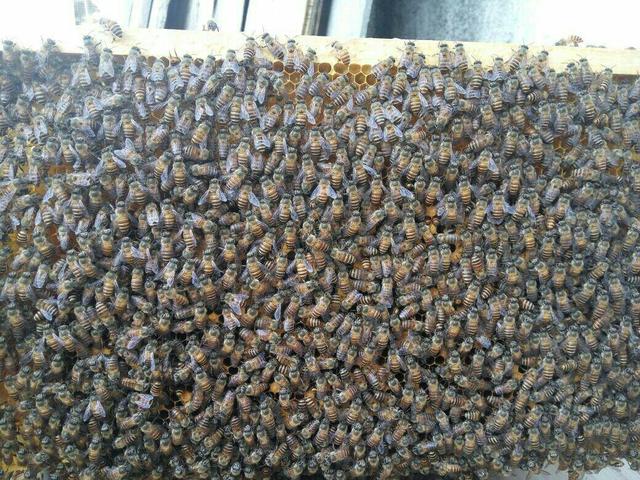
How to best treat bees after pesticide poisoning
Modern agriculture cannot do without applying pesticides and fertilizers, and it is very normal to spray many fruits and vegetables during the flowering period. Bees collect whenever they see flowers, so pesticide poisoning is also possible. Once they encounter a large area of sprayed flowers, it may well be a catastrophic disaster. So how should we prevent pesticide poisoning in bees, and what rescue methods are there for poisoning?
First, we must build good relationships with the farmers around the apiary. If they are going to apply pesticides, it is best if they notify us in advance, and if we can move the hives away, we should leave as much as possible. When choosing an apiary site, also try to stay away from agricultural production areas, and consider whether pesticides will be applied and whether there will be an impact. Because the losses from bee poisoning are severe, treatment is very difficult, and it may not necessarily cure them completely even with medicine!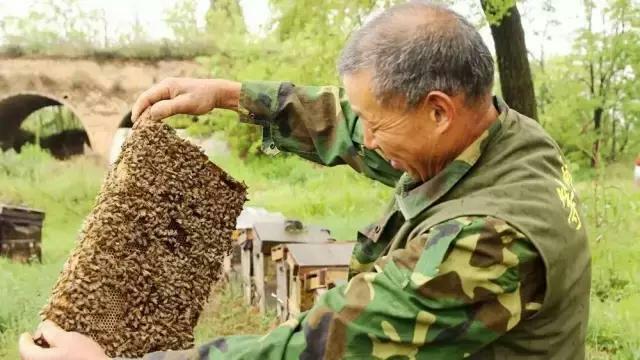
So what should be done if the colony really is poisoned? First, let us explain how to tell that the bees have been poisoned. One, there are dead bees near the entrance, with the proboscis protruding and the hind legs stretched straight out and other abnormal signs. Two, the bees outside the entrance jump around wildly, are irritable, and readily sting people. Three, when the comb is lifted, bees fall off. Remember, sticking out the proboscis is the main symptom, and once poisoning occurs, treatment must begin immediately.
Here is a Chinese herbal treatment method.
Prescription, based on treating one box of bee colonies as a unit, use 21 g each of licorice and honeysuckle, 50 g of mung beans, add an appropriate amount of water and boil, until the medicinal decoction is reduced by about half and thickened, then remove from the heat. Then filter to remove the medicinal residue. Add 25 g of honey or 50 g of white sugar to the decoction. Cool and set aside. The medicinal residue can be kept for a second decoction.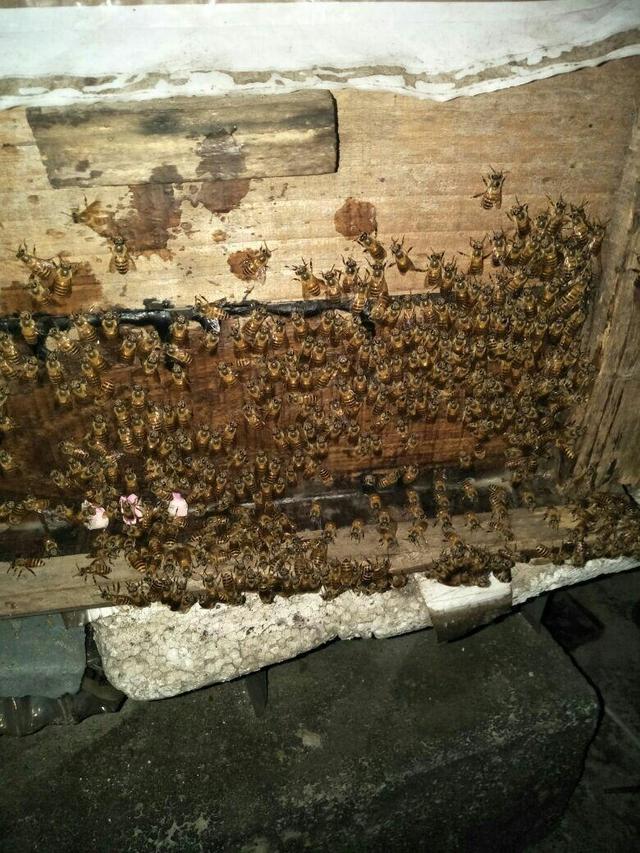
Feeding method. During the day, use the method of spraying the comb to feed the medicine. Use a clean spray bottle to gently spray the cooled decoction onto the comb, with the amount sprayed such that every bee can get a little droplet on it without getting its wings sticky. Spray once every 2--3 hours; the effect will differ depending on the pesticide that caused the poisoning. For the nighttime application method, add 50 g of honey and 100 g of white sugar to the second decoction, stir well, and pour it onto the two side combs for the colony to consume at night. In order to lure the sick bees to feed, a little honey can be poured on the top bars of the comb frames where the medicine is poured. Find a way to make sure every box consumes the full amount of the decoction.
In fact, there is more than one prescription for detoxification. Friends with experience can exchange ideas with one another.