Just how strenuous is it to grow Panax notoginseng? (Part One)
Panax notoginseng is a perennial herbaceous plant with one growth cycle each year. Its growing environment requirements are: low latitude, high altitude, small temperature difference between day and night, relative soil humidity of 70-80%, and acidic red and yellow soils with a pH value of 4.5-5.6, so cultivating Panax notoginseng can be described as a different kind of technical feat.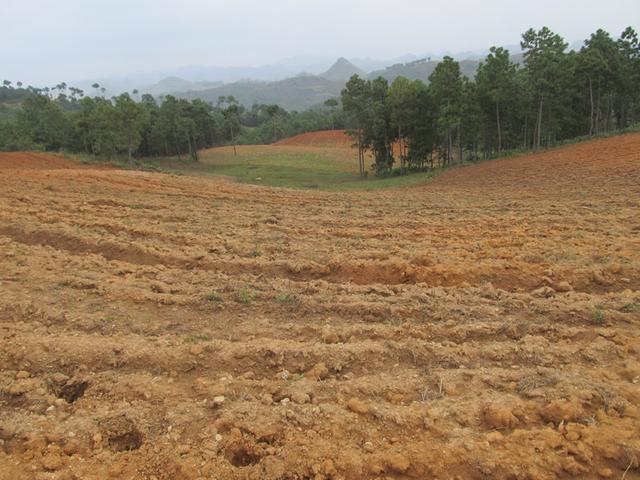
Choosing the site: there must be a slope
When choosing a site, you must choose sloped mountain land to make drainage and flood prevention easier; if waterlogging occurs, all the Panax notoginseng will drown. Then ridges must be built following the shape of the slope; once they are built, drainage ditches naturally form, and the Panax notoginseng seeds are planted on the ridges.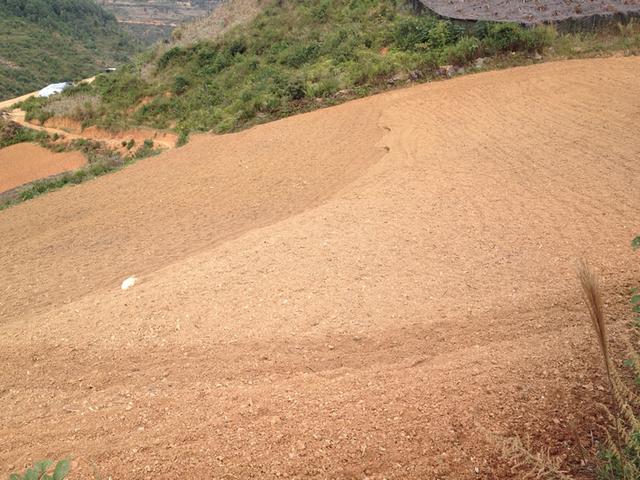
Flat land: choose the direction of the ridges well
Then comes driving in stakes; after the stakes are driven in, wire is strung, and its purpose is to cover the top fully with shade netting to prevent sunlight from shining directly on the Panax notoginseng seedlings, because Panax notoginseng is three parts fond of sun and seven parts fond of shade. Panax notoginseng is a typical shade plant, and this ecological habit is consistent with the structural characteristics of Panax notoginseng itself. Farmers with rich production experience have found that the suitable light conditions for the growth and development period of Panax notoginseng are roughly three parts light transmission and seven parts shading, and in practice this is further differentiated according to the age of the Panax notoginseng plants and the light transmission needs at different growth stages.
The area between every four stakes is called a kong (konng, fourth tone), and people all use the kong as a unit to measure the planting area of each piece of land, and also use the yield of each kong to estimate the yield of the whole plot.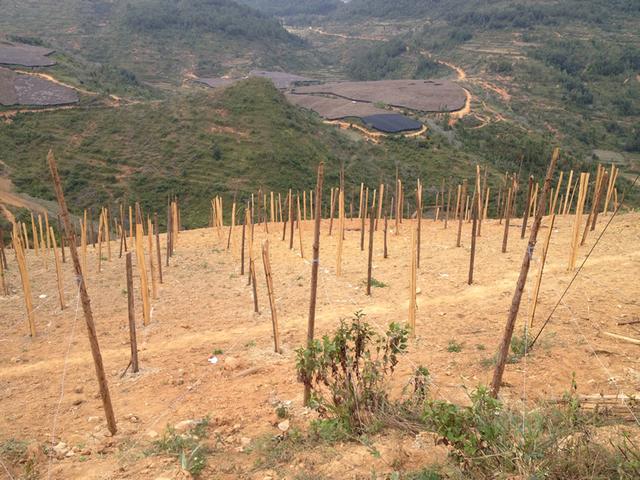
Driving in stakes, and also covering fully with shade netting
From sowing to harvest, Panax notoginseng takes more than 3 years; the roots of one-year-old Panax notoginseng are usually used as seedlings, and from the second year the plants can bloom and set seed. Generally, buds appear in July, flowers bloom in August, seeds set in September, and the fruits ripen in batches from October to November. Growing Panax notoginseng not only has a long operating cycle but also requires large inputs of manpower, materials and money, so growing Panax notoginseng is less a matter of the hard work of the farmers and more a gamble of profit against risk.