What are indoor hydroponic plants? Common variety recommendations
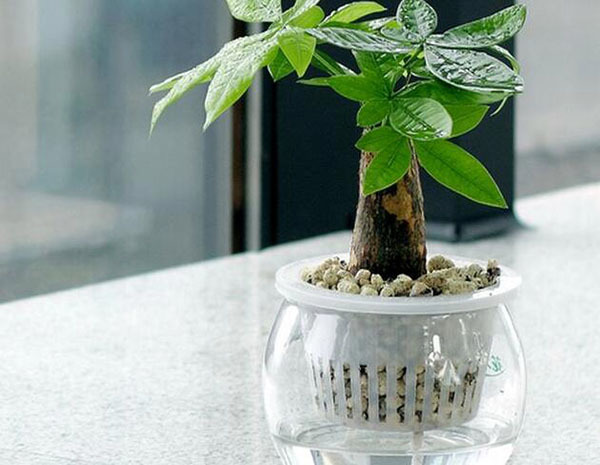
Cactus
When it comes to the cactus, although it is a drought-tolerant plant, it can also be grown in water. Compared with soil cultivation methods, a water-grown cactus has a very high chance of survival; you only need to keep the water clean and change it on time to let the cactus grow radiant and charming.
Lucky bamboo
The characteristic of bamboo is its straight stems and verdant leaves, and lucky bamboo is the same. Lucky bamboo is a shade-tolerant plant and can grow normally even in dim environments. It can be placed indoors without needing light; as long as it is given sufficient water, it can maintain a healthy appearance.
Spider plant
The spider plant is quite suitable for indoor decoration. It can produce white flowers, and its branches and leaves stay green all year round. It can usually alleviate indoor air pollution, making it both attractive and of practical value. When growing it in water, fill the container with clean water, then add a small amount of nutrients, and it will thrive.
Golden pothos
The water-growing method for golden pothos is very simple: cut off a vine and put it in water, then change the water regularly, and add some nutrients. It can both freshen the air and add a certain touch of color to the room.
Ivy
Ivy prefers shade and can grow quickly in a warm environment. Placed indoors, it is a very attractive decoration. It can climb onto all kinds of furniture, adding a touch of green brilliance to plain, simple furniture. The water-growing method for ivy is very simple: just put it in water, and it can grow healthily relying on its strong vitality.
What hydroponic plants are good to grow at home
Moneywort Some people call it "leigongteng". It looks quite cute overall. If you bought a soil-grown one, just take it out with the roots, rinse off the soil, and insert it in clean water.
Hydroponic plants suitable for indoors What are indoor hydroponic plants
Green gives people hope, and flower stamens give people beauty. Flowers and plants outdoors give people a sense of distance, making us lose the chance to breathe together with them. If we move outdoor flowers and plants indoors, to dance with the furniture, resonate with home appliances, and celebrate with people, plus add some of our own little creativity, who knows what kind of sparks could fly? Today I will introduce some easy-to-grow hydroponic plants, so they can come indoors and play too.
Hydroponic plants suitable for indoors: Narcissus
Narcissus is, without a doubt, a relatively easy hydroponic plant to grow. Give it a container and suitable water, and it does not even need nutrient solution; it can still surge into growth. Narcissus is easy to grow and economical, and you can buy one for around a dozen yuan. It also carries the meaning of warding off disasters and averting misfortune for the home. Although it looks a bit like a garlic bulb and is somewhat ugly, when narcissus blooms it is very fragrant. Overall, its value for money is extremely high.
Hydroponic plants suitable for indoors: Spider plant
Spider plant is also called: hanging pot grass, hanging orchid, fishing orchid, orchid grass. It is a plant in the monocotyledon class, Liliaceae family, genus Chlorophytum. It is drought-tolerant but not cold-tolerant by habit, likes warmth and moisture, and is suitable for indoor growth. Spider plant has a strong purifying ability and can absorb indoor waste gases such as carbon monoxide and carbon dioxide, and produce oxygen through photosynthesis. In addition, it is easy to care for and does not take up space (any glass cup or wine glass can serve as its culture vessel), so it is truly a good helper indoors with both decorative and purifying effects
Hydroponic plants suitable for indoors: Ivy
Ivy, a plant in the Araliaceae family, genus Hedera, also known as tuguteng, zuantianfeng, etc., prefers shade and can also accept all-day sunlight, and roots and grafts easily. Because it is evergreen all year round and its vines are slender, many regions in southern China use it as vertical decoration. Let it climb onto objects and grow freely, and it can achieve a decorative effect (you can also control its growth yourself and turn it into the shape you like). Buy it and take it home, place it in front of the window as a window decoration, full of green, with sunlight pouring in from outside the window; it is very pleasant.
Hydroponic plants suitable for indoors: Lucky bamboo
Lucky bamboo, also called bamboo banana, ten-thousand-year bamboo, wenchang bamboo, fortune tower, bamboo tower, etc., belongs to the Liliaceae family, genus Dracaena. Lucky bamboo likes shade, humidity, and high temperatures, and is tolerant of waterlogging and cold. It is a perennial evergreen herbaceous plant, symbolizing "great fortune and great profit", with high ornamental value, and it does not need much care. It can be used as a living room decoration and absorb some of the radiation produced in the living room. Its market price ranges from 50 to 100 yuan.
Are you tempted? Choose a hydroponic plant you like; your furniture has been lonely.
What are the common indoor hydroponic plants Key points for caring for hydroponic plants
Growing aquatic plants indoors can not only beautify the indoor space but also purify indoor air. Most importantly, it will not make the room full of soil, so it is much loved by modern people, and more and more people like to grow hydroponic plants in their homes. Generally, there are many types of hydroponic plants. So what exactly are the common indoor hydroponic plants? What are the key points for caring for hydroponic plants? Let us learn about them together with the editor.
What are the common indoor hydroponic plants:
When it comes to common indoor hydroponic plants, generally there are many types of hydroponic plants, but not many are suitable for home growing. The main ones generally include lucky bamboo, spider plant, golden pothos, ivy, asparagus fern, hyacinth, and so on. Let us look at the detailed introduction below:
1. Lucky bamboo:
An evergreen upright shrub in the Liliaceae family, genus Dracaena, very suitable for indoor hydroponic flowers. The leaves of lucky bamboo are emerald green, the stems are straight, and round like bamboo. The leaves are ovate with pointed tips, and the leaf stalk base clasps the stem. It is an extremely shade-tolerant plant and still grows well, upright and strong, under weak light conditions. It can be placed indoors for long-term foliage viewing and does not need special care; as long as there is enough water, it can grow vigorously. When growing it hydroponically, cut the lucky bamboo stems into small sections of more than 20 cm as cuttings and insert them in water. As long as 1/3 of the cutting can be submerged in water, it can take root and survive.
2. Spider plant:
A perennial evergreen rosette herbaceous flower in the Liliaceae family, with clustered linear leaves, and longitudinal yellow-white stripes at the edges or in the middle. In summer and autumn, slender, flexible, drooping stolons are drawn out from between the leaves, and tender leaves and aerial roots sprout at the tips or nodes, producing white flowers. Spider plant can be grown in water indoors. It can not only purify the air but is also attractive in appearance and easy to manage. Dig out a potted spider plant, remove the soil from the roots, cut off old roots and rotten roots, keep the fibrous roots, put it into a container bottle, fill the bottle with clean water and flower nutrient solution, and let the spider plant roots be submerged in the water to grow.
3. Golden pothos:
A plant in the Araceae family, genus Philodendron, belonging to climbing vine foliage flowers. It likes warm, humid environments by nature. Its vines can reach several meters long, with aerial roots at the nodes, and the leaves grow larger and larger. The leaves are alternate and evergreen. The pothos stems are slender and soft, and the leaves are delicate and elegant. Water growing is very simple: ensure the water is changed once every 2 to 3 days, with simple nutrients added. Golden pothos has high ornamental value; its trailing stems hang down naturally, and it can not only purify the air but also make full use of space, adding lively lines and bright colors to a rigid cabinet surface.
4. Ivy:
A plant in the Araliaceae family, genus Hedera, and the most ideal variety for indoor and outdoor vertical greening. It is an evergreen vine, with slender and soft branches and aerial roots, climbing on other objects. The leaves are alternate, and the leaf blades are triangular-ovate. The demand for potted plants is increasing day by day. It is a typical shade plant and can grow in a full-light environment. It grows well under warm and humid climate conditions, but is not cold-tolerant. Water growing is simple, and its vitality is strong.
5. Asparagus fern:
A perennial evergreen herbaceous flower in the Liliaceae family, genus Asparagus. The stems are slender and weak, and the branches are fine and leaf-like, spreading horizontally. The flowers are small and white. The berries are spherical and black. After the fruit ripens, it presents a scene of dots of red amid dense green, elegant and lovely. The plant has strong shade tolerance. Placed at the bedside or on a desk, it is elegant and generous, and is a very good indoor flower. Asparagus fern is also an ideal supporting material for cut flowers. In recent years, hydroponic asparagus fern has been successfully developed, and placing it in a room is even more elegant.
6. Hyacinth:
Hyacinth, also known as Dutch narcissus, belongs to the Liliaceae family, genus Hyacinthus. It is a perennial herb, with a spherical or flattened spherical bulb, covered outside by a skin that is purplish-blue or white, etc. The leaves are basal, thick, and strap-shaped lanceolate. The flower stem is drawn out from the center of the leaf stem, with a raceme inflorescence. The flower posture is delicate and beautiful, colorful and dazzling, and the fragrance is pleasant. It likes a sunny, cool, and humid environment by nature, and is suitable for both potted growing and water growing. When growing it in water, place its bulb in hydroponic nutrient solution; its appearance is clean and its ornamental value is strong.
The above is a brief introduction to what the common indoor hydroponic plants are. I believe that after the above introduction, everyone will have a further understanding and knowledge of indoor hydroponic plants. Of course, there are also some key points to pay attention to during the care of home hydroponic plants, so as to ensure a long lifespan for home hydroponic plants. Let us look at the following introduction to the key points for caring for hydroponic plants:
Key points for caring for hydroponic plants:
1. Temperature:
The suitable growth temperature for hydroponic plants is above 5 degrees and below 30 degrees. In other words, as long as the temperature feels relatively comfortable to people, the plants will also feel relatively comfortable, and they can grow normally. Even in winter, they can still have luxuriant branches and leaves, adding vitality for us.
2. Light:
Mainly scattered light. What is scattered light? It is natural light coming in through windows and other places, naturally scattered indoors. Generally, plants only need appropriate brightness to grow; they do not necessarily have to be exposed to the sun. In summer, direct sunlight should also be avoided as much as possible.
3. Nutrient solution:
Generally, everyone can just use the special hydroponic nutrient solution sold on the market, and prepare a suitable concentration according to the instructions, such as diluting 400 times or 1000 times. Do not get the ratio wrong. When preparing, let tap water sit for two hours to half a day until its temperature is close to room temperature and the chlorine in the water has completely volatilized, then add the concentrated nutrient solution in proportion, and it becomes a nutrient solution that can be used to grow hydroponic plants.
4. Changing water:
Changing water is an important task for hydroponic plants. Changing water means replacing the water in the bottle to which nutrient solution has been added. If the water is not changed for a long time, the dissolved oxygen content in the water decreases, which will affect the growth and absorption capacity of the root system. In addition, plants discharge some harmful substances during physiological activities. When the water is short of oxygen and the content of harmful substances is relatively high, it will cause poor plant growth or even death. When changing water, pay attention to the following issues:
(1) Water-changing time:
Generally, in spring and autumn, change the water once every 5-10 days; in summer, change the water about once every 5 days; in winter, change the water once every 10-15 days (after tap water has been left to stand for half a day, add concentrated nutrient solution in proportion). For flowers that have just been hydroponically grown, change the water once every 1-2 days. In summer, plants grow vigorously, temperatures are high, and water easily deteriorates, so the time should be shortened. In winter, most plants are in a semi-dormant or dormant state, and temperatures are lower, so the interval between water changes can be longer. Overall, a shorter interval between water changes is beneficial to plant growth.
(2) Cleaning the root system and container:
When changing water, the root system should be cleaned. Clean water can be used to rinse off the mucus on the roots, and some rotten roots and old roots that have lost their absorption capacity should be cut off. After a container has been used for a period of time, sediment will adhere to the container wall, and it is also prone to growing moss. It should also be cleaned thoroughly when changing water.
(3) Water depth:
When growing flowers hydroponically, people often submerge the root system in water, but from cultivation experience, you should not add too much water. Note this: when changing water, please expose half or one third of the plant's roots, leaving a small amount of the root system exposed to the air, so that the roots can both absorb dissolved oxygen from the water and absorb oxygen from the air.
5. Cleaning:
Each time you change the water, rinse the plant roots and container with clean water, and trim dead branches, withered leaves, and rotten roots. Under normal growth conditions, hydroponic plants will periodically rot part of their roots and then grow new roots. So when you find rotten roots, do not panic at first. Just use sterilized scissors (sterilized with alcohol cotton) to trim off the rotten roots. Sometimes some old roots can also be trimmed off to promote the growth of new roots (note: this should be done under the guidance of professionals). But be sure not to damage the water roots, otherwise it will affect the growth of the plant. The roots of hydroponic plants - those white, tender roots on top - are the water roots. Some grow directly from the base of the stem, and some grow from the main root. They are all responsible for the plant's absorption function, so be sure not to damage them.
6. Moisture retention:
In winter, there is very little moisture in the air, especially in the north, where indoor conditions are very dry, which is unfavorable for plant growth. So in daily care, please spray the leaf surfaces with clean water to maintain humidity. You can spray clean water twice a day.