Which plant varieties are suitable for indoor hydroponics?
Golden pothos looks a bit like the common pothos, but its leaves have yellow speckled patterns. Just cut a stem and put it in a bottle, and it can grow very long. I'm not fussy, I just use tap water. It's a very vigorous plant that doesn't need much sunlight and is suitable for indoors.
Which plants are suitable for indoor hydroponics?
English ivy is also super easy to grow. As long as you see more and more roots starting to grow in the water, that means you've succeeded.
If a spider plant grown in soil produces little offshoots, you can pick them off and put them in water for hydroponics. They will grow very complex root systems, and using a transparent bottle lets you enjoy the roots.
The common pothos is a pretty great hydroponic plant. It keeps growing longer and sprouting new leaves. I just bent it into a shape to decorate the room, and it stays lush and green without needing direct sunlight.
Although cactus-type plants don't like a lot of water, they are very suitable for hydroponics. Compared with using soil as a growing medium, hydroponic cacti are easier to keep alive, clean and tidy, and only need regular changes of clean water. Cut off all the dead roots of the cactus body completely, with a flat cut. Rinse the soil attached to the root and stem area clean with clean water, place it in a dry spot to air for 3 days, and after the wound is dry, soak a small amount of the roots in water.
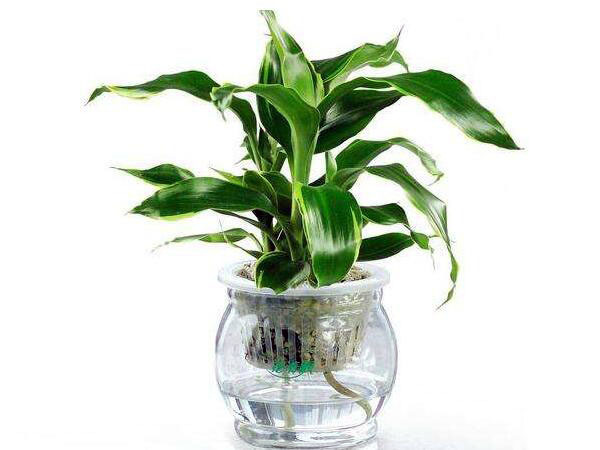
Dracaena fragrans can grow all year round and is an indoor foliage plant with a graceful plant shape. It likes an environment with sufficient light, high temperature and high humidity, and is also tolerant of shade and dryness. It also grows well in bright indirect light and in the relatively dry environment of northern homes. When hydroponically growing Dracaena fragrans, pay attention to the nutrient solution, and just pay attention to light and water at ordinary times. Spray a 0.1% potassium dihydrogen phosphate aqueous solution on the leaves. Place it in partial shade for about 1 week to acclimatize, then gradually move it to sufficient light for normal care.
Hydroponically growing peace lily lets you enjoy both the beauty of the flowers and the elegance of the roots, and it also has the advantages of being clean, eco-friendly and easy to care for, making people feel relaxed and happy. First cut off the rotten roots and trim away some of the outer leaves. Then disinfect once with a 800-1000 times dilution of potassium permanganate or carbendazim, especially the root area, then plant it shallowly in clean water. It can be shaded by about 50%, and new roots will gradually grow afterward.
A perennial evergreen herbaceous flower. It has strong shade tolerance, weak stems, and slender branches that are leaf-like. Placed at the bedside or on a desk, it is elegant and refined, and is a very good indoor flower.
For hydroponically growing asparagus fern, you can use a planting basket on top and water below, and add expanded clay pebbles inside the planting basket to hold the plant in place.
Dieffenbachia has rich varieties, including green-leaf and variegated-leaf types. It is not only highly ornamental, but can also effectively clean indoor air pollution. Dieffenbachia likes shady and humid environments, so in summer place it in a shaded spot to avoid strong light.
An evergreen shrub in the Agavaceae family. The middle of the leaf is green, and the edges have purple-red stripes. It likes high temperature and high humidity, and is also drought-tolerant and shade-tolerant. It is easy to grow in water and has a stylish appearance.
Changing the water is the key to whether Dracaena marginata can succeed, especially right after cuttings are inserted. Changing the water once every other day can increase its nutrient content, until the roots grow out. After it adapts to hydroponic cultivation, you can change or add water once a week or once a month depending on the season.
Which plants are suitable for indoor hydroponics?
I wanted to add some greenery at home, but I was afraid that soil would bring little flying bugs, so a friend recommended several plants suitable for indoor hydroponics. I didn't expect the decorative effect to be so good, and it really suits a lazy person like me. Whenever I see the water in the bottle getting low, I just add some. It's very clean with no bugs, and the green looks especially nice. It also makes use of many bottles that would otherwise be thrown away. You should try hydroponics too. It's also very suitable for placing on an office desk. The photos are all taken in real life. Pretty, right?
Key points of this article
Various hydroponic plants and bottles
Everyone must have seen this plant. It is generally called "moneywort," though a friend corrected me and said it is called "Tripterygium wilfordii." I'm not really sure either. Anyway, it is especially cute. If the one you bought is soil-grown, just take it out with the roots, rinse off the soil, and insert it in clean water.
This is "golden pothos." It looks a bit like the common pothos, but its leaves have yellow speckled patterns. Just cut a stem and put it in a bottle, and it can grow very long. I'm not fussy, I just use tap water. It's a very vigorous plant that doesn't need much sunlight and is suitable for indoors.
This is "English ivy." It is also super easy to grow. See the tender green new leaves that keep emerging? As long as you see more and more roots starting to grow in the water, that means it's OK.
This is the familiar "spider plant." If one grown in soil produces little offshoots, you can pick them off and put them in water for hydroponics. They will grow very complex root systems, and using a transparent bottle lets you enjoy the roots.
This is the most classic one, "common pothos." The most awesome kind of hydroponic plant, it keeps growing longer and sprouting new leaves. I just bent it into a shape to decorate the room, and it stays lush and green without needing direct sunlight.
One last nagging note: there's no need to specially buy vases or anything. Glass yogurt bottles and soy sauce bottles that are going to be thrown away are especially suitable, preferably transparent ones. When changing the water, I don't replace the whole bottle; I basically just add water. Has this particularly low-maintenance hydroponic plant made your heart flutter too?
Hydroponic plants suitable for indoors. What hydroponic plants are there for indoors?
Green gives people hope, and flower centers give people beauty. Flowers and plants outdoors create a sense of distance, making us lose the chance to breathe together with them. If we move outdoor-growing flowers and plants indoors, let them dance with the furniture, resonate with home appliances, and celebrate together with people, plus add some of our own little creativity, who knows what kind of sparks could fly? Today I'll introduce some easy-to-grow hydroponic plants and let them come indoors to play too.
Hydroponic plants suitable for indoors: narcissus
Narcissus is, without a doubt, a relatively easy hydroponic plant to grow. Give it a container and suitable water, and it doesn't even need nutrient solution, and it can still burst into growth. Narcissus is easy to grow and economical. You can buy one for around a dozen yuan. It also carries the meaning of warding off disasters and bringing safety to the home. Although it looks a bit like a garlic bulb and is a little ugly, narcissus is very fragrant when it blooms. Overall, its value for money is extremely high.
Hydroponic plants suitable for indoors: spider plant
Spider plant is also called: weeping potgrass, hanging orchid, fishing orchid, orchid grass. It is a plant in the monocotyledon class, Liliaceae family, Chlorophytum genus. It is drought-tolerant but not cold-tolerant by habit, likes warmth and humidity, and is suitable for growing indoors. Spider plant has a very strong purifying ability. It can absorb indoor waste gases such as carbon monoxide and carbon dioxide, and produce oxygen through photosynthesis. In addition, it is easy to care for and does not take up much space (any glass cup or wine glass can serve as its culture vessel). It is indeed a good helper indoors with both decorative and purifying effects.
Hydroponic plants suitable for indoors: English ivy
English ivy is a plant in the Araliaceae family, Hedera genus, also known as common ivy, and so on. It likes shade and can also tolerate all-day sunlight, and it roots and grafts easily. Because it is evergreen all year round and its vines are slender, many areas in southern China use it as a vertical decoration. Let it climb freely on an object and it can achieve a decorative effect (you can also control its growth yourself and turn it into the shape you like). Buy it home and place it in front of the window as a window decoration. With its lush green look and sunlight pouring in from outside the window, it is very pleasant.
Hydroponic plants suitable for indoors: lucky bamboo
Lucky bamboo is also called bamboo banana, evergreen bamboo, Wenchang bamboo, lucky tower, bamboo tower, and so on. It belongs to the Liliaceae family, Dracaena genus. Lucky bamboo likes shady, humid and high-temperature conditions, and is tolerant of waterlogging and cold. It is a perennial evergreen herbaceous plant, symbolizing "great fortune and great profit." It has high ornamental value and does not need much care. It can be used as a living room decoration and absorb some of the radiation produced in the living room. The market price ranges from 50 to 100 yuan.
Are you tempted? Choose a hydroponic plant you like. Your furniture is lonely.