How Do Orchids Reproduce? Detailed Explanation of Propagation Methods and Precautions
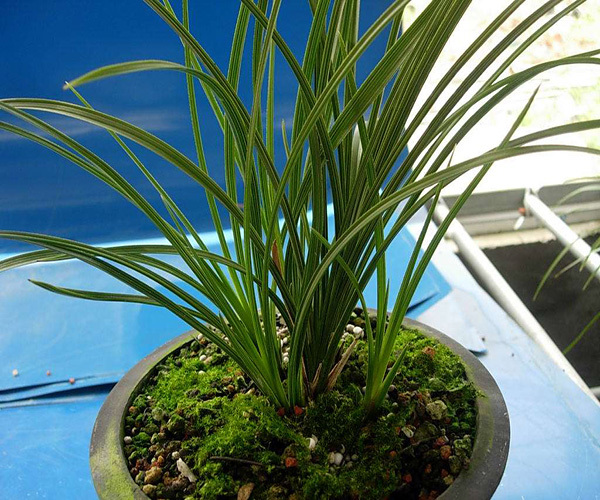
1. Orchid propagation methods
(1) Division propagation: Division propagation generally has three methods, namely the unpotted division method, the internal-cut method and the old-pseudobulb nursing method. Before division, water less, select thick and strong stems, and ensure at least 5 connected pseudobulbs. The cultivation pot should first be lined with broken tiles, then filled above with loose sandy soil to ensure soil permeability. After division is completed, water thoroughly, and afterward keep the soil moist; it will survive in half a month.
(2) Seed propagation: Seed propagation is not recommended for most people, because the germination rate of orchid seeds is extremely low. This is mainly because inside an orchid seed there is only one incompletely developed embryo, so the survival rate is low. In addition, the orchid seed coat does not easily absorb water, resulting in a low germination rate in seed propagation, so those with the conditions can use artificial culture methods.
(3) Tissue culture propagation: Tissue culture propagation is generally used in large-scale production. It has the characteristics of a high survival rate and low propagation cost. It uses new orchid shoots placed in culture nutrient solution for rapid propagation. Pour commonly available nutrient solution on the market into a culture dish, fix the new orchid shoots in it, and after one week, when roots grow, they can be transplanted into water for cultivation.
2. Precautions for orchid propagation
(1) Orchids are mainly distributed in the southeast and southwest regions. They mostly grow wild in shaded places under sparse forests in moist valleys and beside rocks, so they are naturally fond of warm, humid climates, prefer shade and moisture, require 70%-90% shading, and avoid high temperatures, dryness and strong light.
(2) During orchid cultivation, withered yellow old leaves and diseased or insect-damaged leaves should be continually pruned away to facilitate ventilation. After flower buds emerge, each plant should keep one strong flower bud and the rest should be cut off, so as to avoid consuming too many nutrients and affecting flowering the next year. After the flowers fade, the flower stalks should be cut off.
White Orchid (Michelia alba) Pest Prevention Techniques, White Orchid Propagation Methods and Precautions
White orchid (Michelia alba) originated in Indonesia and Java. It is widely cultivated in the provinces of South China. It is also grown in pots in the Yangtze River basin and North China.
Benefits of growing flowers: The flowers contain aromatic volatile oils, antioxidants, bactericidal substances and other substances, and can beautify the environment, purify the air and fragrance the room; the flowers have medicinal effects of warming the lungs, stopping cough and resolving turbidity; the essential oils extracted from the flowers and the dried aromatic materials made from the flowers can be used for beauty care, bathing and so on; the flowers can also be used to scent flower tea.
White orchid pest and disease control:
White orchid is easily infected by yellowing disease and anthracnose, and affected by pests such as red spider mites and scale insects.
Yellowing disease: White orchid prefers acidic soil. If it grows for a long time in slightly alkaline soil or is watered with slightly alkaline water, it is prone to yellowing disease, causing leaves to turn yellow and the root system to turn black and rot.
At this time, a 0.2% ferrous sulfate aqueous solution can be sprayed on the leaf surface, once every 5-7 days. A roughly 0.5% ferrous sulfate aqueous solution can also be applied frequently for prevention and control.
Anthracnose: If watered too much, with high humidity and poor ventilation, anthracnose is very likely to occur. After being infected with this disease, the plant's leaves fade green, showing small yellow spots, which gradually expand into round shapes; in severe cases the leaves wither, turn black and finally fall off.
To control this disease, use 50% carbendazim wettable powder at 500 times dilution, or 50% thiophanate wettable powder at 500 times dilution, spraying once every 5-10 days.
Root rot: If white orchid is watered too much or suffers waterlogging, it is easily infected by this disease. In mild cases growth is poor, with leaves wilting yellow and falling off; in severe cases the whole plant dies.
The control measures are to improve soil drainage conditions; some broken tiles can be placed in the pot bottom to help drainage; watering should follow "water when dry, water thoroughly when watering," and loosen the soil at any time; on rainy days, take care to prevent the plant from being rained on, and promptly pour out accumulated water in the pot.
If the plant is infected with this disease, chemical agents such as 65% zineb at 250 times dilution, 50% amobam at 250 times dilution, or 50% carbendazim at 500 times dilution can be used to drench the roots for treatment.
Red spider mites and scale insects: Affected plants have yellowing leaves and gradually wither and die, and the secretions of these pests can also induce sooty mold. If scale insects are found, they can be scraped off with a bamboo strip. To kill red spider mites, use 20% trithion at 1000 times dilution, or 50% parathion at 1000 times dilution, or diluted solutions of dichlorvos or dimethoate for spraying and killing.
White orchid propagation:
White orchid is mainly propagated by grafting, and can also be propagated by layering and sowing.
Grafting propagation: Grafting propagation mostly uses magnolia seedlings as rootstock, and usually there are two methods: cut grafting and approach grafting.
Cut grafting: 1-2-year-old thick and strong purple magnolia can be used as rootstock, carried out on a sunny day in mid-March. After about 20-30 days, the terminal bud can sprout leaves. In the south, it can also be carried out around the autumn equinox, or bud grafting can be carried out in August-September.
Approach grafting: From spring to autumn, it can be carried out throughout the entire growing season. It is generally done more often from April to July. The best approach grafting position is 70 cm from the ground. For the rootstock, purple magnolia with a trunk thickness of about 0.6 cm can be selected; select a healthy white orchid branch with the same thickness as the rootstock as the scion, then cut away 6 cm of the cortex and part of the xylem from both the rootstock and the scion, with smooth cut surfaces, then align the cambium of the two cut surfaces and join them tightly, and tie them firmly with plastic tape to prevent rain from washing them. After about 50 days after grafting, the grafted part heals and can be cut away from the mother plant. Approach grafting easily survives, but does not grow as vigorously as cut grafting.
Layering propagation: Layering propagation includes ordinary layering and air layering.
Ordinary layering is usually carried out in February-March. Cut halfway into the base of the branch to be layered, then cut upward for a segment, insert a tile in the middle, then gently press it into the soil without breaking it, then fix the branch pressed into the soil with thick iron wire to prevent it from tilting up, and then pile soil on top. After it sends out root buds, it can be cut away and planted separately.
Air layering is generally carried out before the start of the dog days. Select a robust, disease-free two-year-old branch, and perform girdling at 55 cm from its tip. The width of the girdled ring is about 2.5 cm. Then apply B12 injection to the cut, then enclose the girdled part with split bamboo tubes or tiles, bind them firmly with rope, and fix the bamboo tube or tile pot in place, and add culture soil into the bamboo tube or tile pot. Afterward, take care to frequently water the bamboo tube or tile pot on the layered branch so that the soil inside remains moist but slightly dry. After about one month, on the same branch 5-7 cm below the girdling cut, cut away a small piece of bark. At the same time, add an appropriate amount of 500 times dilution monopotassium phosphate aqueous solution to the culture soil. Afterward, about every 10 days, cut once at the same part in different directions, so as to gradually reduce the nutrient and water connection between the layered branch and the mother plant. After cutting 3-4 times in this way, the girdled part can heal and form a nodule, and root buds appear.
Seed propagation: Seed propagation is generally carried out at the end of September or the beginning of October. Harvest the mature fruit, take out the seeds, soak them in wood ash water for 1-2 days, then rub off the waxy aril by hand, then rinse them clean with water. At this point they can be sown. If not sown at this time, the seeds can be stored in moist sand in layers under cold storage, and sown indoors in pots in March of the following year. If cold storage is not carried out, the seeds are likely to lose their germination ability. After sowing, seedlings can emerge in about 20 days. The sowing substrate should have good air permeability and water permeability, and care should be taken to keep it moist.
Overwintering: It is not cold-tolerant. Except in South China, other regions must move it indoors for care in winter. Generally around Frost's Descent, white orchid should be moved indoors to a sunny place for care. The minimum room temperature should be kept above 5°C, and the most suitable temperature is around 10°C. The best time to move it outdoors is from Pure Brightness to Grain Rain, and after moving outdoors it should be placed in a sunny, wind-sheltered place.
Room temperature should preferably not exceed 15°C, otherwise the plant cannot enter dormancy, and over time this will consume a large amount of nutrients, causing the plant to weaken and drop leaves. If in winter the leaves are found to have small brown spots and dry tips, then fall off, and the newly grown leaves also soon fall off, this indicates the temperature is too high.
To ensure that white orchid can overwinter safely, the following points should also be noted during indoor care: check whether the place where the white orchid is placed has drafts, otherwise cold wind will cause leaf drop; check whether there is coal smoke nearby, because white orchid has poor resistance to smoke and dust, so it is best not to place it in the same room as a coal stove; frequently spray-wash or wipe the leaves with warm water to keep the leaves green and beautiful and increase humidity; in addition, strictly control the amount of watering, watering only when dry.
If leaf drop is found, promptly move it to a place with a higher room temperature or sufficient light to avoid cold damage.
How Do Cymbidium Orchids Reproduce? Cymbidium Orchid Propagation Methods
Cymbidium orchid propagation methods: Cymbidium orchids commonly use division, sowing and tissue culture propagation. Cymbidium orchids can generally be propagated by division. When new shoots begin to sprout in spring, it is the suitable time for division. The new plants after division should have more than 3 pseudobulbs. After cutting apart, wait for the wounds to dry before potting. Normal plants can be divided once every 3 years. When dividing, the knife should be disinfected to avoid causing viral infection. The potted cymbidium orchids after division should be placed in a warm and humid environment until new shoots extend out of the soil surface, then they can be managed by normal methods.
How Do Cymbidium Orchids Reproduce? 1. Cymbidium orchid division propagation methoda. Take the robustly growing plant out of the pot, and use a sharp knife to cut apart where the pseudobulbs are connected, dividing it into several clumps. Each clump should carry 2-3 pseudobulbs (one of which must be newly formed in the previous year).
b. Apply sulfur powder or charcoal powder to the cut, place the newly divided plants in a dry place to air-dry for 1-2 days, then pot them separately. The best time for division is from after the flowers fade to before new shoots grow out. Those with the conditions can use sterile sowing, fertilized embryo culture, tissue culture and other methods for large-scale propagation.
c. Note that the pseudobulbs must all be exposed above the surface of the culture soil. After planting, place them in a half-shaded, half-sunny place. Because the culture soil is moist when planting, do not water within 1 week after planting, only spray water mist on the leaf surface (generally spraying 4-6 times per day). After 1 week, gradually shift to normal care.
Precautions for cymbidium orchid division propagationa. After division, cymbidium orchids need to be placed in a half-shaded place;
b. Do not water immediately; if the potting soil is found to be too dry, a small amount of water can be sprayed on the leaf surface and the pot surface;
c. Normal watering can only be done after new roots grow from the base of the new shoots;
d. Observe the plant's health condition to avoid leaf drying, leaf drop and pseudobulb shrinkage (supplement water).
2. Cymbidium orchid seed propagation methodIt is mainly used for mass propagation of native species and crossbreeding. The seeds are tiny and under sterile conditions germinate extremely easily, with a germination rate above 90%.
3. Cymbidium orchid tissue culture propagation methodSelect young shoots sent out from the base of a robust mother plant as explants. Cut the shoot segments into stem tips 0.5 mm in diameter and inoculate them on a prepared culture medium. Use MS medium supplemented with 0.5 mg/L 6-benzylaminopurine; protocorms form in 52 days. Take the protocorms out of the medium, cut them into small pieces, and inoculate them in MS medium supplemented with 2 mg/L 6-benzylaminopurine and 0.2 mg/L naphthaleneacetic acid to proliferate the protocorms. Continue culturing the protocorms in the proliferation medium, and in about 20 days buds form at the top of the protocorms, and roots differentiate at the base of the buds. In about 90 days, the differentiated plants grow into complete small seedlings with 3-4 leaves.