How to Grow and Care for the Fuchsia: Daily Care Tips
Soil requirements
For potted fuchsias, the growing medium should be fertile, loose, and well-draining potting soil. Generally, a uniform mix of leaf mold, sandy loam, decomposed organic fertilizer, and phosphate fertilizer can be used, without applying a base fertilizer, to avoid root rot. Heavy, compacted soil is detrimental to the growth of fuchsias and is even less suitable for newly rooted cuttings.
Light conditions
Although fuchsias prefer shade, this does not mean they do not need sunlight. In the absence of sunlight, they not only tend to grow leggy but also produce paler flowers, smaller blooms, and even bud drop. Therefore, when growing fuchsias at home, they can be placed on a sunny balcony or terrace so they can carry out photosynthesis.
Temperature conditions
The growing temperature for fuchsias is 10-28°C, and the temperature in summer must not exceed 30°C, so cooling measures should be taken in summer. In winter, full sunlight is required, and the potting soil temperature must not fall below 5°C, otherwise frost damage will occur, and insulation measures must be taken. In addition, attention should be paid to ventilation in both winter and summer.
Watering method: When watering fuchsias normally, follow the principle of watering when dry and allowing them to dry out between waterings. In dry spring weather and during hot summer periods, mist the branches and leaves 1-2 times a day. Overwatering will cause waterlogging in the potting soil. In winter, when room temperature is low, watering must be strictly controlled and fertilizing stopped to prevent root rot. After each fertilizing and watering, loosen the soil promptly to improve aeration.
Proper fertilizing
Because fuchsias grow quickly and bloom frequently, during the growing period apply light fertilizer frequently, about once every 10 days with dilute cake fertilizer or compound fertilizer. During the flowering period, also apply a liquid fertilizer mainly of phosphorus and potassium once a month, but stop fertilizing in hot seasons. Before fertilizing, the potting soil should be on the dry side; after fertilizing, spray water once with a fine nozzle to prevent leaf rot.
How to Grow Fuchsias: Cultivation Methods for Fuchsias
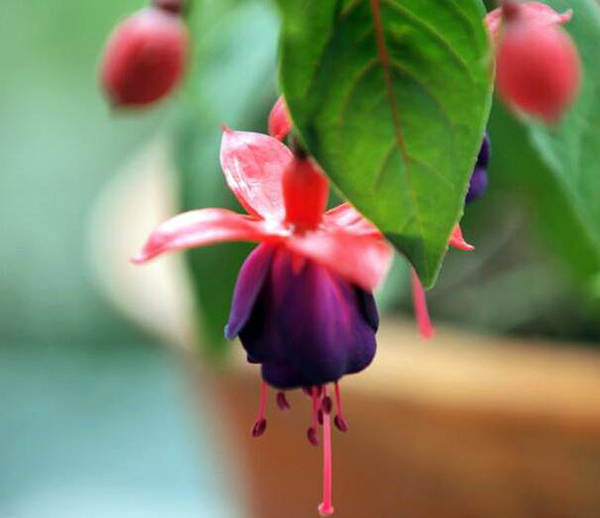
Fuchsia flowers are numerous and dense, and a large plant can produce more than 1,000 blooms; with their brilliant colors and long flowering period, they are a highly favored ornamental flower. Next, we will explain how to grow fuchsias, hoping to help everyone.
Fuchsia cultivation methods
Soil requirements: For potted fuchsias, the growing medium should be fertile, loose, and well-draining potting soil. Generally, a uniform mix of leaf mold, sandy loam, decomposed organic fertilizer, and phosphate fertilizer can be used, without applying a base fertilizer, to avoid root rot. Heavy, compacted soil is detrimental to the growth of fuchsias and is even less suitable for newly rooted cuttings.
Light conditions: Although fuchsias prefer shade, this does not mean they do not need sunlight. In the absence of sunlight, they not only tend to grow leggy but also produce paler flowers, smaller blooms, and even bud drop. Therefore, when growing fuchsias at home, they can be placed on a sunny balcony or terrace so they can carry out photosynthesis.
Temperature conditions: The growing temperature for fuchsias is 10-28°C, and the temperature in summer must not exceed 30°C, so cooling measures should be taken in summer. In winter, full sunlight is required, and the potting soil temperature must not fall below 5°C, otherwise frost damage will occur, and insulation measures must be taken. In addition, attention should be paid to ventilation in both winter and summer.
Watering method: When watering fuchsias normally, follow the principle of watering when dry and allowing them to dry out between waterings. In dry spring weather and during hot summer periods, mist the branches and leaves 1-2 times a day. Overwatering will cause waterlogging in the potting soil. In winter, when room temperature is low, watering must be strictly controlled and fertilizing stopped to prevent root rot. After each fertilizing and watering, loosen the soil promptly to improve aeration.
Proper fertilizing: Because fuchsias grow quickly and bloom frequently, during the growing period apply light fertilizer frequently, about once every 10 days with dilute cake fertilizer or compound fertilizer. During the flowering period, also apply a liquid fertilizer mainly of phosphorus and potassium once a month, but stop fertilizing in hot seasons. Before fertilizing, the potting soil should be on the dry side; after fertilizing, spray water once with a fine nozzle to prevent leaf rot.
Precautions for growing fuchsias
During the growing period, fuchsias require a cool climate, preferably 10-15°C; in winter they require full sunlight and can tolerate low temperatures of 3-5°C; in summer they enter a semi-dormant state, disliking heat and preferring partial shade. In the south, shading is needed from May to October, and growth is fastest at temperatures of 15-23°C. Getting fuchsias safely through summer is the key to cultivation technique. When the temperature rises to 30°C, it is unfavorable for their growth, and cooling measures should be taken; they can be placed under a ventilated shade shed, but must be protected from rain, and can also be cut back. In summer, stop fertilizing and control watering so they gradually enter dormancy. After flowering, when the leaves begin to turn yellow, prune them, leaving only 20 cm at the base, so they send out new shoots, which helps them get through summer safely. Fuchsias are afraid of waterlogging. When potting young plants, do not start with an overly large pot, to avoid poor drainage and soil waterlogging that can cause death. Only as the plant grows should the pot be gradually increased by one size. Fuchsias prefer humus-rich, well-draining, slightly acidic sandy loam; heavy, compacted soil is detrimental to the growth of fuchsias and is even less suitable for newly rooted cuttings.
The above is the cultivation method for fuchsias that we have explained. Is everyone clear now? For more home decoration knowledge, please stay tuned.
The Benefits and Uses of Fuchsias: Cultivation Methods for Fuchsias
Fuchsia, also known as the lady's eardrops, is a beautiful ornamental plant. It is a perennial subshrub with upright stems. It was originally native only to Mexico and later spread around the world. Today it is a common green potted plant indoors. Unlike other indoor plants, fuchsia has certain medicinal effects. What exactly are the benefits and uses of fuchsia? What are the cultivation methods for fuchsia? Let's take a look together.
The benefits and uses of fuchsia:
Speaking of the benefits and uses of fuchsia, besides the usual ornamental value of plants, it also has notable medicinal effects and can treat bruises and injuries. For its specific effects, let's look at the following introduction:
1. Fuchsia can be enjoyed for its ornamental value:
Being enjoyed for its ornamental value is an important benefit of fuchsia. Its flower shape is unusual and its colors are brilliant, giving people an elegant and bright feeling. It can be made into a potted plant for viewing, and placing it on a balcony, windowsill, or in a study can beautify the environment and provide ornamental pleasure for body and mind.
2. The medicinal effects of fuchsia:
The whole plant of fuchsia can be used as medicine. After being used medicinally, it is slightly astringent in taste and neutral in nature, and can enter the liver and kidney meridians. Dispelling wind and dampness and dissipating blood stasis to relieve pain are its most important medicinal effects. It is commonly used to treat conditions such as rheumatism pain in humans and postpartum abdominal pain in women. In treatment, it is mostly taken as a decoction, with the dosage not exceeding 60 grams.
3. Fuchsia can treat bruises and injuries:
Fuchsia has the effect of dissipating blood stasis and relieving pain, and has a good therapeutic effect on human bruises and injuries. During treatment, fresh fuchsia leaves can be taken, crushed forcefully, and applied directly externally to the injured area. After several applications, the symptoms of pain and swelling can disappear. In addition, this method can also be used to treat human low back pain and joint pain, with particularly outstanding pain-relieving effects.
The above is a brief introduction to the benefits and uses of fuchsia. I believe that after the above introduction, everyone will have a further understanding and awareness of the uses of fuchsia. Of course, because the uses of this fuchsia are quite notable, more and more people are growing it at home. Growing fuchsia is not easy and requires attention to method. What exactly are the cultivation methods for fuchsia? Let's take a look at the following introduction:
Cultivation methods for fuchsia:
1. Soil requirements:
For potted fuchsias, the growing medium should be fertile, loose, and well-draining potting soil. Generally, a uniform mix of leaf mold, sandy loam, decomposed organic fertilizer, and phosphate fertilizer can be used, without applying a base fertilizer, to avoid root rot. Heavy, compacted soil is detrimental to the growth of fuchsias and is even less suitable for newly rooted cuttings.
2. Light conditions:
Although fuchsias prefer shade, this does not mean they do not need sunlight. In the absence of sunlight, they not only tend to grow leggy but also produce paler flowers, smaller blooms, and even bud drop. Therefore, when growing fuchsias at home, they can be placed on a sunny balcony or terrace so they can carry out photosynthesis.
3. Temperature conditions:
The growing temperature for fuchsias is 10-28°C, and the temperature in summer must not exceed 30°C, so cooling measures should be taken in summer. In winter, full sunlight is required, and the potting soil temperature must not fall below 5°C, otherwise frost damage will occur, and insulation measures must be taken. In addition, attention should be paid to ventilation in both winter and summer.
4. Watering method:
When watering fuchsias normally, follow the principle of watering when dry and allowing them to dry out between waterings. In dry spring weather and during hot summer periods, mist the branches and leaves 1-2 times a day. Overwatering will cause waterlogging in the potting soil. In winter, when room temperature is low, watering must be strictly controlled and fertilizing stopped to prevent root rot. After each fertilizing and watering, loosen the soil promptly to improve aeration.
5. Proper fertilizing:
Because fuchsias grow quickly and bloom frequently, during the growing period apply light fertilizer frequently, about once every 10 days with dilute cake fertilizer or compound fertilizer. During the flowering period, also apply a liquid fertilizer mainly of phosphorus and potassium once a month, but stop fertilizing in hot seasons. Before fertilizing, the potting soil should be on the dry side; after fertilizing, spray water once with a fine nozzle to prevent leaf rot.