How to grow wax begonia? Detailed guide to care precautions
Watering: Watering wax begonia requires quite a few precautions, especially in winter and summer. The soil should be kept moist, and during the growing season the plant needs more water.
Fertilizing: Wax begonia needs phosphorus and potassium fertilizers for growth. Apply light fertilizer frequently to keep the plant in good condition.
Summer and winter management: Summer and winter temperatures differ greatly, and wax begonia prefers a relatively mild growing environment. So in summer, avoid direct sunlight and pay attention to sudden humidity; in winter, keep the temperature above 10°C for it to survive the winter safely. During the transition between seasons, keep watering appropriately dry and moist and fertilize accurately, and wax begonia can bloom in all four seasons.
Precautions for growing wax begonia
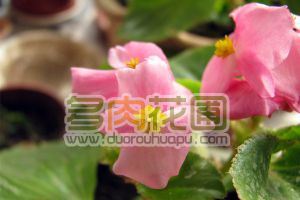
Wax begonia care: pay attention when applying fertilizer
During the growing season of wax begonia, do not add fertilizer randomly. Fertilize reasonably according to the leaf color and by observing leaf growth. Do not apply too much, otherwise the leaves of wax begonia will grow excessively, becoming too dense, which affects flowering and even causes poor growth, blocks light, and leads to yellowing leaves.
Before wax begonia blooms, apply an appropriate amount of phosphorus-potassium compound fertilizer, which helps improve the quality of its flowering.
Key points for propagating wax begonia
For potted wax begonia, sowing should be done in spring from April to May, or sowing in early autumn is also acceptable. The seeds should be scattered evenly in the soil in the pot, and no covering with soil is needed.
Use the water-absorption method to let the sowing pot absorb enough water from the basin, then cover it with a piece of glass or put on plastic film, and place it in a semi-shaded environment. In about 10 days or so, it will take root and sprout. Sow in spring, and it can bloom in autumn.
How to prune wax begonia
Wax begonia care also requires attention to pinching. After the wax begonia flowers fade, pinch off the spent flowers and diseased leaves so it can branch and bloom more. If this important pruning step is neglected, the plant tends to grow thin and lanky, with an ugly plant shape that affects its appearance, and it will bloom less.
Key points for watering wax begonia
In summer, wax begonia needs watering in both the morning and evening. In winter, the best time to water is at noon when the light is strongest, because winter sunlight is limited, so watering at a suitably warm temperature can prevent the begonia from freezing. Do not water too much; remember not to let the soil become waterlogged, otherwise the waterlogged potting soil will cause root rot, yellowing leaves, and wilting.
Pest and disease control for wax begonia
During the hot, dry period in summer, wax begonia is extremely prone to root rot and stem rot. In the early stage of the disease, reduce watering and spray carbendazim for control. Spraying 3-5 times consecutively is enough to see results.
How to grow begonia - Precautions for growing begonia
"For the beloved famous flower I would go mad, only worrying that wind and sun will harm its red beauty. At night I submit a green petition to the Hall of Transparency, begging to borrow spring shade to protect the begonia." Many ancient literati were passionate lovers of begonia, leaving behind many poems praising it. Many people with courtyards at home also like to plant some begonia, so how should begonia be grown to produce beautiful flowers? Next, follow the editor to learn about begonia growing methods and precautions.
How to grow begonia
First, potting soil. The ideal potting soil for wax begonia is a mix of river sand, leaf mold, and snakewood shavings. Wax begonia fears extreme heat, so in summer it should be kept in a cool place for care.
Second, watering. Wax begonia likes warm, moist conditions, so during the growing period, water according to the plant's growth and changes in temperature. Water less during the germination stage and keep the potting soil slightly dry; if too wet, it will cause root rot. During the growing season, water once every two days, and often spray water around the plant to increase air humidity. Also note: when watering, do not pour from the leaves and stem tips; water along the edge of the flowerpot, otherwise the stems and leaves may easily accumulate water and rot.
Third, fertilizing. During the growth period of wax begonia, apply fertilizer according to leaf color and leaf growth conditions, but do not apply too much, otherwise the leaves will grow excessively and flowering will be affected. Before flowering, apply an appropriate amount of phosphorus and potassium fertilizer to improve flowering quality.
Fourth, when winter comes, dig up the bulbous roots and hang them to store in a dry, ventilated place, or place the potted flowers indoors in a warm place to overwinter.
Fifth, disease prevention. During hot, dry periods, wax begonia is prone to root rot and stem rot. When discovered in the early stage, promptly reduce watering and spray carbendazim for control. Continuous use for a period of time can show curative effect.
Sixth, winter and summer management. Affected by temperature in winter and summer, wax begonia grows relatively slowly, so fertilizer and water management need to be strengthened.
Seventh, sunlight. In the hot midsummer season, by all means avoid exposing wax begonia to direct strong light, as this will sunburn it.
Eighth, after wax begonia flowers fade, be sure to promptly remove the growing tips and remove spent flowers, so it can grow more luxuriantly.
Ninth, pests. The common pest of wax begonia is the leaf-roller moth. This insect uses its larvae to eat tender leaves and flowers, directly affecting the growth and development of wax begonia. In this case, if it is not especially serious, you can catch them by hand; for serious cases, spray with a diluted dimethoate solution.
Tenth, the flowerpot for wax begonia should usually be placed on a balcony or in a courtyard in semi-shade for care. Never let direct sunlight come in, and pay attention to ventilation. About half a month after planting wax begonia, apply one application of decomposed fertilizer water. Afterward, during the growing season, apply a light fertilizer water once every 20-30 days. In winter, move it indoors to a place with ample sunlight, and the minimum temperature must not be lower than 10°C.
Precautions for growing begonia
1. Fertilizer. During the growing season of wax begonia, grasp the principle of applying light fertilizer frequently, mainly applying decomposed odorless organic dilute fertilizer water or inorganic fertilizer soaking liquid. Apply more nitrogen fertilizer during the seedling branching stage to promote leaf and branch growth; apply more phosphorus fertilizer during the budding and flowering stage to promote more flower buds, with more and brighter flowers. If fertilizer is lacking, wax begonia plants will wither and may even die.
2. Water. During the vigorous growth period of wax begonia, the soil needs to contain more water. Water promptly and keep it moist.
3. Summer and winter management. Affected by temperature in summer and winter, growth slows, so fertilizer and water management need to be strengthened. In the hot midsummer season, take measures to avoid strong direct light and lower the temperature, creating a small environment below 30°C for care. Keep the potting soil suitably dry and wet; too wet easily causes root rot, while too dry makes leaves wilt, so slightly moist is enough. If too much fertilizer is applied during this period, it will cause tender stems and leaves or rot disease. In winter, as long as the temperature is kept above 10°C, it can overwinter safely. In summer and winter management, if the temperature can be controlled below 30°C and above 10°C, with suitable dry-moist watering and moderate fertilizing, the plant will surely be robust and can achieve continuous blooming in all four seasons.
The above is an introduction to begonia growing methods and precautions. I believe after reading the above content, everyone can roughly understand the key points of planting begonia. For more knowledge about home plants, please continue to follow No.1 Home Network.