How to grow Rhapis excelsa (broadleaf lady palm)? These care tips make it easy to get started
Because Rhapis excelsa prefers a semi-shaded environment and must not sit in waterlogged conditions during cultivation, the following points should be noted when caring for it:
1. During the growing season, water should be sprayed on the leaves often; it is suitable for growing in pots.
2. Although Rhapis excelsa is shade-tolerant, it still needs appropriate light; too little light will cause the leaves to turn yellow, and if poor ventilation is added to this, the plant will develop parasites, affecting its growth.
3. Each fertilization should be in small amounts but frequent. Use organic fertilizer as the main type, with trace-element fertilizer as a supplement.
4. Rhapis excelsa needs a large amount of water. When watering, remember to pour from the growth point downward, letting clean water flow from top to bottom to the roots, keeping the potting soil moist.
5. Rhapis excelsa is prone to damage from pests and diseases such as red spider mites, rust mites, leaf spot disease and scale insects. If pests or diseases are found on the leaves, spray promptly.
Care tips for Rhapis excelsa
Click the image to go to the next page>>
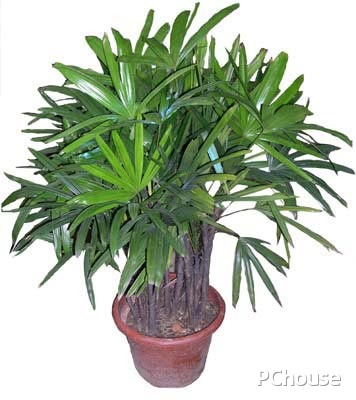
Because Rhapis excelsa prefers a semi-shaded environment and must not sit in waterlogged conditions during cultivation, the following points should be noted when caring for it:
1. During the growing season, water should be sprayed on the leaves often; it is suitable for growing in pots.
2. Although Rhapis excelsa is shade-tolerant, it still needs appropriate light; too little light will cause the leaves to turn yellow, and if poor ventilation is added to this, the plant will develop parasites, affecting its growth.
3. Each fertilization should be in small amounts but frequent. Use organic fertilizer as the main type, with trace-element fertilizer as a supplement.
4. Rhapis excelsa needs a large amount of water. When watering, remember to pour from the growth point downward, letting clean water flow from top to bottom to the roots, keeping the potting soil moist.
5. Rhapis excelsa is prone to damage from pests and diseases such as red spider mites, rust mites, leaf spot disease and scale insects. If pests or diseases are found on the leaves, spray promptly.
Care tips for Rhapis excelsa What types of Rhapis excelsa are there?
Rhapis excelsa is an important indoor foliage plant. Its plant form is compact and elegant, its clumps are upright, its leaf shape is delicate, and its leaf color is deep green and glossy. It has both a tropical charm and the elegance of bamboo, which is why it is loved by many people. So how do you grow Rhapis excelsa, and what are the care tips? What types of Rhapis excelsa are there? Let us tell you below.
Care tips for Rhapis excelsa
Rhapis excelsa likes a warm, humid, well-ventilated semi-shaded environment. It does not tolerate waterlogging and is extremely shade-tolerant. In summer, when it is hot and the light is strong, it should be shaded appropriately. The suitable temperature is 10-30°C. When the temperature is above 34°C, the leaf edges often scorch and growth stalls. The overwintering temperature should not be lower than 5°C. It requires loose, fertile acidic soil and does not tolerate barren or saline-alkaline soil. It requires relatively high soil moisture and air humidity. For pot cultivation, ordinary garden soil with a small amount of base fertilizer is sufficient.
During the vigorous growing season from May to September, apply liquid fertilizer 1-2 times a month. To control height, in May you can apply 1 watering of 400 ppm paclobutrazol, which can effectively control excessive height growth. The potting soil should be kept moist; better moist than dry, but it must not be waterlogged, otherwise the roots rot easily. In autumn and winter, reduce the amount of watering appropriately. During the growing season, shade is needed; especially in summer, avoid harsh sun exposure, otherwise the leaves turn yellow and the plant grows slowly and stays short. Generally, keep shading at about 50%.
During the growing season, keep the soil moist, or plant it directly into a pot that does not leak water and keep about 5 cm of water in the pot, which saves the trouble of watering every day. Rhapis excelsa has a wide range of light adaptability and can grow well in full sun or semi-shade, but in summer, placing it in semi-shade is more favorable for its growth and can keep the leaves tender green rather than aging. The specific requirements are as follows:
After flowering from May to June, it must not be exposed to rain; on rainy days, move the potted plant indoors promptly. It fruits from September to October. Generally, plants grown in the ground are more likely to fruit than potted ones, so plants that have fruited in the ground are often transplanted into pots and placed indoors for ornamental display. After moving them indoors before the Cold Dew solar term in early October, they can be placed where they can receive direct light in the morning and evening.
1. During the growing season, water should be sprayed on the leaves often; it is suitable for growing in pots.
2. Although Rhapis excelsa is shade-tolerant, it still needs appropriate light; too little light will cause the leaves to turn yellow, and if poor ventilation is added to this, the plant will develop parasites, affecting its growth.
3. Each fertilization should be in small amounts but frequent. Use organic fertilizer as the main type, with trace-element fertilizer as a supplement.
4. Rhapis excelsa needs a large amount of water. When watering, remember to pour from the growth point downward, letting clean water flow from top to bottom to the roots, keeping the potting soil moist.
5. Rhapis excelsa is prone to damage from pests and diseases such as red spider mites, rust mites, leaf spot disease and scale insects. If pests or diseases are found on the leaves, spray promptly.
What types of Rhapis excelsa are there?
Rhapis excelsa is divided into several types: multi-split Rhapis excelsa, dwarf Rhapis excelsa, slender Rhapis excelsa, thick Rhapis excelsa and filamentous Rhapis excelsa. Each type has its own different morphological characteristics, and they all come from different places.
Slender Rhapis excelsa: the tree form is small and graceful; it can be used for courtyards
Thick Rhapis excelsa: can be used for courtyard ornament. Its fibrous roots can be used to set bones. Produced in southwestern Guangxi. A landscaping material. Produced in western Guangdong, Hainan and southern Guangxi.
Filamentous Rhapis excelsa: produced in the Shiwandashan area of southern Guangxi.
Dwarf Rhapis excelsa: commonly cultivated in various places. The tree form is graceful and it can be used for courtyard landscaping and ornament. Produced from southern to southwestern China.
Multi-split Rhapis excelsa: can be used as a landscaping material. Produced in western Guangxi and southeastern Yunnan.