How to grow Chinese peonies? Master these cultivation tips
After planting, Chinese peonies should not be transplanted frequently, otherwise the roots will be damaged, affecting growth and flowering. To help Chinese peonies grow well, reasonable fertilization is needed every year. After each fertilization, water thoroughly and loosen the soil immediately to reduce water evaporation. During the rainy season, cultivate and weed regularly.
For potted Chinese peonies, cut off the withered branches and leaves after Frost's Descent to prevent pests and diseases. During the winter, there is no need to move them indoors; simply place them on a balcony or under the eaves in a sunny spot, and keep the potting soil from becoming too dry.
Before Chinese peonies bloom, once side buds appear, they can be removed promptly so that nutrients are concentrated, encouraging the terminal bud to produce larger, more beautiful flowers. After the flowers fade, if you do not plan to grow them from seed, cut off the flower stalks at any time to prevent seed formation and avoid consuming nutrients.
How to grow Chinese peonies: cultivation methods and planting tips
The Chinese peony is a flowering plant with a very long history of cultivation, and it closely resembles the tree peony commonly seen in our daily lives. Chinese peonies and tree peonies are often planted together to enhance ornamental value. So how do you grow Chinese peonies? Let us take a look below at the cultivation methods and tips for Chinese peonies.
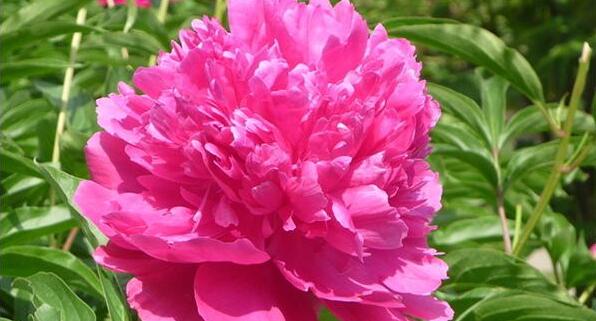
Introduction to the Chinese peony:
The Chinese peony, also known by the aliases Jiangli and Licao, belongs to the order Saxifragales, family Ranunculaceae, genus Paeonia, and is a perennial herbaceous flowering plant. The Chinese peony is celebrated as the "fairy of flowers" and the "minister of flowers," and is listed as one of the "six famous flowers." It is also called the "flower god of May." Because it has been regarded as the flower of love since ancient times, it is now honored as the representative flower of the Qixi Festival. The Chinese peony is a traditional famous flower of China, tolerant of cold, fond of cool climates, and intolerant of waterlogging, and it ranks alongside the king of flowers, the tree peony.
How to grow Chinese peonies:
Chinese peonies are cold-tolerant, fond of fertilizer but afraid of waterlogging, and prefer moist soil, though they are also somewhat drought-tolerant. They like sunlight and prefer cool climates in summer. Potted Chinese peonies tend to scorch their leaves under the strong midsummer sun, so shade should be provided. Chinese peonies have fleshy roots and a relatively long root system, so they should be planted in fertile, loose, well-drained sandy loam. Planting them in clay or low-lying waterlogged spots makes the roots prone to rot.
Cultivation methods for Chinese peonies:
1. Planting time for Chinese peonies: Chinese peonies like sunlight and are cold-tolerant, preferring cool temperatures and fearing heat; they grow poorly in high summer temperatures. Autumn is the best time to plant Chinese peonies.
2. Soil: For field-planted Chinese peonies, choose a sunny spot with high ground and good drainage, and never plant them in low-lying areas prone to water accumulation. Chinese peonies have fleshy roots, so when planting, choose loose, fertile, slightly acidic sandy soil. They are not suited to growing in alkaline soil. If the soil is too alkaline, the leaves will turn yellow and may even shrivel and die.
3. Cultivation points: For open-field cultivation, apply barnyard manure and dig deeply, then break up the soil finely and form high ridges. Generally, the ridge height is 10-15 cm, the ridge width is 70 cm, and the length is unlimited. The planting spacing is 80 cm. When planting, dig holes according to the length and size of the root system, taking care that the roots spread out and are not planted too deep; cover with soil to a depth that just covers the terminal buds by 4-5 cm. After planting, water thoroughly once and mound soil around the plants for overwintering.
4. Fertilizer and water management: Apart from natural rainfall, field-planted Chinese peonies do not need frequent watering. Usually, water moderately only a few times before and after flowering, when water demand is greatest, and during spring droughts, to supplement the lack of soil moisture; do not water too much each time. Topdressing should be controlled, with three applications per year. The first is when new shoots emerge rapidly. When the leaves and flower buds are extending, apply mainly quick-acting fertilizer, known as flower-promoting fertilizer.
5. Shaping and pruning: To make Chinese peony flowers abundant and colorful and the plants grow robustly, shaping and pruning are very important. Shaping mainly includes establishing the main stem, trimming branches, removing buds, thinning flower buds, and cutting off spent flowers. Chinese peonies can be shaped by establishing a main stem 2-3 years after planting. For varieties with very strong and vigorous growth, they can be pruned into a single-stem Chinese peony. For varieties with weak growth and few branches, generally cut off the thin, weak branches and keep the strong ones.
6. Pest and disease control: Common pests and diseases of Chinese peonies include brown spot, anthracnose, rust, root rot, root-knot nematode disease, longhorn beetles, red spiders, scarab beetles, mole crickets, and others. Among these, brown spot, anthracnose, and rust are fungal diseases. Pest and disease control should focus on early prevention, and once pests or diseases occur. Depending on the severity, follow the above dosage, appropriately shorten the spray interval, and increase the number of applications.
Planting tips for Chinese peonies:
After planting, Chinese peonies should not be transplanted frequently, otherwise the roots will be damaged, affecting growth and flowering. To help Chinese peonies grow well, reasonable fertilization is needed every year. After each fertilization, water thoroughly and loosen the soil immediately to reduce water evaporation. During the rainy season, cultivate and weed regularly.
For potted Chinese peonies, cut off the withered branches and leaves after Frost's Descent to prevent pests and diseases. During the winter, there is no need to move them indoors; simply place them on a balcony or under the eaves in a sunny spot, and keep the potting soil from becoming too dry.
Before Chinese peonies bloom, once side buds appear, they can be removed promptly so that nutrients are concentrated, encouraging the terminal bud to produce larger, more beautiful flowers. After the flowers fade, if you do not plan to grow them from seed, cut off the flower stalks at any time to prevent seed formation and avoid consuming nutrients.
The above is an introduction to the cultivation methods for Chinese peonies. We hope the content above helps everyone understand and learn about the cultivation methods and tips for Chinese peonies, so that everyone can know how to grow Chinese peonies and produce beautiful Chinese peony flowers at home.
How to grow Chinese peonies: cultivation methods and tips
The Chinese peony, also known by the aliases Jiangli and Licao, belongs to the order Saxifragales, family Ranunculaceae, genus Paeonia, and is a perennial herbaceous flowering plant. How do you grow Chinese peonies? Today we will explain the cultivation methods and tips for Chinese peonies.
Cultivation methods for Chinese peonies:
1. Planting time for Chinese peonies: Chinese peonies like sunlight and are cold-tolerant, preferring cool temperatures and fearing heat; they grow poorly in high summer temperatures. Autumn is the best time to plant Chinese peonies.
2. Soil: For field-planted Chinese peonies, choose a sunny spot with high ground and good drainage, and never plant them in low-lying areas prone to water accumulation. Chinese peonies have fleshy roots, so when planting, choose loose, fertile, slightly acidic sandy soil. They are not suited to growing in alkaline soil. If the soil is too alkaline, the leaves will turn yellow and may even shrivel and die.
3. Cultivation points: For open-field cultivation, apply barnyard manure and dig deeply, then break up the soil finely and form high ridges. Generally, the ridge height is 10-15 cm, the ridge width is 70 cm, and the length is unlimited. The planting spacing is 80 cm. When planting, dig holes according to the length and size of the root system, taking care that the roots spread out and are not planted too deep; cover with soil to a depth that just covers the terminal buds by 4-5 cm. After planting, water thoroughly once and mound soil around the plants for overwintering.
4. Fertilizer and water management: Apart from natural rainfall, field-planted Chinese peonies do not need frequent watering. Usually, water moderately only a few times before and after flowering, when water demand is greatest, and during spring droughts, to supplement the lack of soil moisture; do not water too much each time. Topdressing should be controlled, with three applications per year. The first is when new shoots emerge rapidly. When the leaves and flower buds are extending, apply mainly quick-acting fertilizer, known as flower-promoting fertilizer.
5. Shaping and pruning: To make Chinese peony flowers abundant and colorful and the plants grow robustly, shaping and pruning are very important. Shaping mainly includes establishing the main stem, trimming branches, removing buds, thinning flower buds, and cutting off spent flowers. Chinese peonies can be shaped by establishing a main stem 2-3 years after planting. For varieties with very strong and vigorous growth, they can be pruned into a single-stem Chinese peony. For varieties with weak growth and few branches, generally cut off the thin, weak branches and keep the strong ones.
6. Pest and disease control: Common pests and diseases of Chinese peonies include brown spot, anthracnose, rust, root rot, root-knot nematode disease, longhorn beetles, red spiders, scarab beetles, mole crickets, and others. Among these, brown spot, anthracnose, and rust are fungal diseases. Pest and disease control should focus on early prevention, and once pests or diseases occur. Depending on the severity, follow the above dosage, appropriately shorten the spray interval, and increase the number of applications.
Tips for growing Chinese peonies:
After planting, Chinese peonies should not be transplanted frequently, otherwise the roots will be damaged, affecting growth and flowering. To help Chinese peonies grow well, reasonable fertilization is needed every year. After each fertilization, water thoroughly and loosen the soil immediately to reduce water evaporation. During the rainy season, cultivate and weed regularly.
For potted Chinese peonies, cut off the withered branches and leaves after Frost's Descent to prevent pests and diseases. During the winter, there is no need to move them indoors; simply place them on a balcony or under the eaves in a sunny spot, and keep the potting soil from becoming too dry.
Before Chinese peonies bloom, once side buds appear, they can be removed promptly so that nutrients are concentrated, encouraging the terminal bud to produce larger, more beautiful flowers. After the flowers fade, if you do not plan to grow them from seed, cut off the flower stalks at any time to prevent seed formation and avoid consuming nutrients.