Soil Mixing Methods and Growing Tips for Desert Rose That Blooms in All Four Seasons
Desert rose is a common succulent among succulent enthusiasts. Growing tips for desert rose that blooms in all four seasons - how to mix soil? Below, the Succulent Garden introduces growing tips for desert rose that blooms in all four seasons - how to mix soil and care techniques.
Desert rose, also known as: Tianbao flower, Latin name: Adenium obesum. Apocynaceae, Adenium genus succulent plant, also called a succulent, native to Kenya and Tanzania in Africa, prefers high temperatures, dry conditions and a sunny environment, tolerates intense heat, not cold-resistant, named desert rose because its place of origin is close to the desert and it is red like a rose.
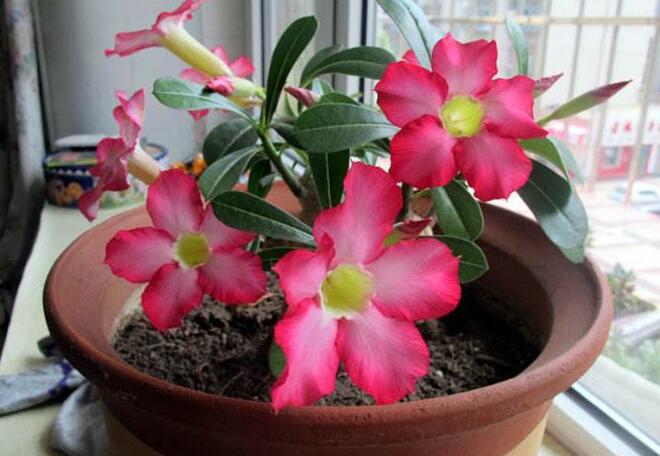
Desert rose growing methods, desert rose soil mixing
The desert rose flower is shaped like a small trumpet, rose-red, very gorgeous. The umbel inflorescence is in clusters of three to five, brilliant as brocade, blooming continuously in all four seasons.
About soil mixing:
Different pots, different watering habits and different care environments mean the soil mixing ratios are not the same. The principle of soil mixing is loose and breathable; a mix of coconut coir and perlite is recommended, coconut coir can be replaced with peat soil, perlite can be replaced with other granules, such as river sand, volcanic rock, ceramsite and so on; just mix according to the materials on hand, mix however is convenient, as long as it is loose and breathable.
Only an excellent desert rose soil mixing method can better grow the succulent desert rose, and only then can it bloom in all four seasons.
Growing Tips for Desert Rose That Blooms in All Four Seasons - How to Repot and Fertilize
Desert rose is a common succulent among succulent enthusiasts. What is the desert rose growing method? How to raise desert rose? Below, the Succulent Garden introduces the desert rose growing method and daily management and care techniques for desert rose.
Desert rose, also known as: Tianbao flower, Latin name: Adenium obesum. Apocynaceae, Adenium genus succulent plant, also called a succulent, native to Kenya and Tanzania in Africa, prefers high temperatures, dry conditions and a sunny environment, tolerates intense heat, not cold-resistant, named desert rose because its place of origin is close to the desert and it is red like a rose.
Desert rose growing methods, desert rose soil mixing, succulent growing
The desert rose flower is shaped like a small trumpet, rose-red, very gorgeous. The umbel inflorescence is in clusters of three to five, brilliant as brocade, blooming continuously in all four seasons. Deeply loved by flower lovers, below we share desert rose tips!
About repotting. Small seedlings go with small pots, large seedlings go with large pots; adult desert roses are generally repotted once a year, and when repotting the roots can be appropriately raised to improve ornamental value. After removing the desert rose from its pot, you can wash off the soil and check for rotten roots and dead roots; if there are rotten roots, remove the rotten root parts, let them dry and then pot up; if there are no rotten roots and no wounds, you can pot up in moist soil and let it recover in a cool place, or after potting up water thoroughly and put it in the sun (water thoroughly with carbendazim mixed with water, the concentration can follow the instructions). The specific method can be chosen by yourself according to the actual situation. When potting up, you can remove the leaves or combine this with pruning, to reduce nutrient loss and transpiration; pruning can also promote branching and control the plant shape.
Fertilizer management. Fertilizing during the growing season is essential; nitrogen, phosphorus and potassium fertilizers should be applied in combination. From the seedling stage to before flowering, mainly nitrogen fertilizer with phosphorus and potassium fertilizers as a supplement, to promote vegetative growth. But during the vegetative growth period of adult plants, apply less nitrogen fertilizer and more phosphorus and potassium fertilizers, because too much nitrogen fertilizer will cause leggy branches and leaves and inhibit reproductive growth. Osmocote is recommended as a base fertilizer, and Peters Professional and monopotassium phosphate as top dressings, using different types of Peters Professional according to different periods.