What are the cultivation methods for Gentiana scabra? A detailed explanation of growing techniques
Gentiana scabra is a plant in the genus Gentiana of the family Gentianaceae. It has the effects of clearing heat and drying dampness, and purging excess fire from the liver and gallbladder. It mainly treats high blood pressure, dizziness and tinnitus, cholecystitis, acute infectious hepatitis, genital dampness and itching, damp-heat jaundice, sores, boils and carbuncles, bitter taste in the mouth, and infantile convulsions, and is a fine medicine for protecting the liver and promoting gallbladder function. Nowadays many people grow Gentiana scabra, so what are the cultivation methods for Gentiana scabra? Next, let the editor of Yiqizhuangxiu.com briefly introduce them to everyone!
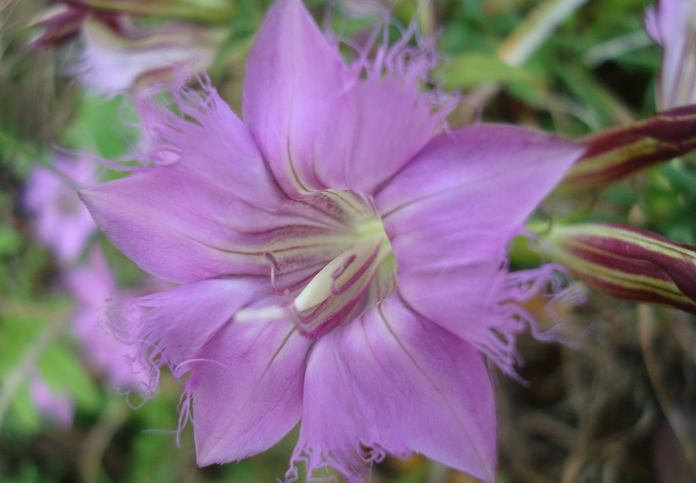
What cultivation methods are there for Gentiana scabra
1. Propagation methods
Gentiana can be propagated both sexually and asexually. Sexual propagation requires relatively strict technical conditions: after sowing, the soil moisture content should be no less than 30%, the surface air humidity 60-70%, and a temperature of 25-28°C is suitable; germination begins in about 7 days, and when the soil pH is 6.3-7.8 the seed germination rate is relatively high. Asexual propagation can use root division propagation or aboveground stem cutting propagation. For root division propagation, dig out the underground part in autumn, cut the rhizome into 3 pieces, and keep them together with the fibrous roots for use as planting stock; for aboveground stem cutting, take branches from perennial plants before bud differentiation, use every 3 nodes as cutting material, make a slanted cut below the lower node, and remove the two leaves at the end node, then immediately immerse 2-3 cm into a mixed solution of the compound hormones GA, BAP, and NAA at 1 ppm each in equal amounts; after 48 hours, use as cutting material. Light promotes seed germination.
2. Planting methods
Gentiana planting methods: Seedling raising from seed: sow in spring; before sowing, wash the seeds with water, mix in an appropriate amount of fine sand, and broadcast them on a leveled seedbed; the sowing rate is 1-1.2 grams per sq m; after sowing, cover with grass to maintain temperature and humidity, and do not let the temperature exceed 30°C. After 2 years of growth, transplant in spring or autumn; open furrows on the prepared large ridges, with the furrow depth depending on the size of the planting stock, a plant spacing of about 15 cm, and a soil covering depth of 3-4 cm.
Root division propagation: Plant the propagation material on prepared large ridges in autumn, with a plant spacing of about 10 cm and a soil covering depth of about 5 cm; after planting, water thoroughly to preserve soil moisture.
Cutting propagation: Insert the prepared cutting material into a leveled seedbed, with a plant and row spacing of 10×10 cm and a cutting depth of 2-3 cm, then water immediately; at a soil temperature of 18-20°C, roots can form in about 3 weeks.
How is Gentiana scabra grown? The sowing methods and cultivation techniques for Gentiana scabra
Gentiana scabra, also known as gentian, gallbladder herb, bitter gallbladder herb, etc., is a perennial herbaceous plant in the genus Gentiana of the family Gentianaceae. Gentiana scabra is a common Chinese medicinal material in China, and its rhizome is also used as medicine; it has effects such as clearing heat and drying dampness, purging liver fire and calming convulsions, and promoting gallbladder function and protecting the liver, and is deeply welcomed by the market. So, how is Gentiana scabra grown? The sowing methods and cultivation techniques for Gentiana scabra are introduced as follows.
Image: Gentiana scabra cultivation
I. Sowing methods for Gentiana scabra
1. Autumn sowing:Autumn sowing of Gentiana scabra is generally done in November, and it sprouts the following spring. To sow evenly, mix an appropriate amount of fine sand or humus into the seeds and use drilling.
2. Spring sowing:Spring sowing of Gentiana scabra should first undergo sand storage treatment, that is, after the seeds are collected, mix them with fine sand at 1:3 and bury them outdoors; after the low-temperature influence of winter, take them out and sow, using drilling.
Image: Gentiana scabra cultivation
II. Cultivation techniques for Gentiana scabra
1. Site selection and land preparation:For Gentiana scabra, it is advisable to choose relatively moist, flat terrain, sunny, sandy soil rich in humus; areas with high and dry terrain and direct sunlight, overly sticky soil, or poor soil are not suitable for cultivation.
2. Timely weeding:When growing Gentiana scabra, weeding should not be limited by the number of times; based on the principle of removing early, removing small, and removing as soon as weeds are seen, do not wait until weeds grow up and form a weed infestation before pulling them, as this both wastes labor and damages the seedlings.
3. Reasonable loosening of the soil:After Gentiana scabra is transplanted and has recovered from transplanting, promptly use your hands or a rake to remove the surface crust on the seedbed caused by watering; do not loosen the soil too deeply, so as not to damage the seedlings or pull them out. Generally, loosening the soil 2-3 times in combination with weeding is sufficient.
4. Timely topdressing:After Gentiana scabra is transplanted and has recovered from transplanting, carry out foliar topdressing; foliar topdressing can be done twice, from after leaf expansion to the budding stage and from flowering to fruiting, using foliar fertilizers such as monopotassium phosphate, Yemianbao, and Fengchansu.
5. Thinning flowers and removing buds:When growing Gentiana scabra, in order to reduce the consumption of nutrients, promote the accumulation of substances in the root system, accelerate rhizome growth, and improve cultivation benefits, for fields not used for seed collection, all flower buds should be removed after budding.
[Editor's concluding remarks]Gentiana scabra is an alpine plant and likes a moist and cool climate, so special attention is needed during cultivation. Above, the sowing methods and cultivation techniques for Gentiana scabra were introduced for everyone, and I hope they can be helpful to everyone!
Cultivation methods for Gentiana scabra
Soil selection:
Choose relatively moist sandy soil rich in organic matter.
Environment selection:
Gentiana scabra likes abundant sunlight, so you can choose a place where sunlight can shine directly.
Preparation before planting:
The base fertilizer should be sufficient; then level the soil surface and make furrows for planting Gentiana scabra.
Care after planting:
After the seeds sprout into seedlings, you can pull out the unhealthy seedlings and the smaller-growing ones, leaving the relatively sturdy seedlings for cultivation.
During the seedling stage, weed frequently; you can pull them out directly. Do not let weeds absorb the soil nutrients and cause the seedlings to lack nutrients, and even more so do not wait until the small weeds grow big before removing them, as this easily damages the roots of Gentiana scabra.
If the soil shows cracking or clumping, promptly carry out loosening management on the soil. Note when loosening the soil that it must not be too deep, otherwise it easily damages the seedlings and also pulls the seedlings out of the soil. Loosening the soil can also be combined with transplanting and final planting. After transplanting, loosen the soil 2 to 3 more times.
After transplanting, carry out one topdressing; spraying can be used to apply fertilizer to the leaf surface. At budding and at flowering and fruiting, carry out one more topdressing. During the 3rd to 4th years, apply fertilizer to the soil once, and after fertilizing, spread the soil flat.
Thinning flowers and removing buds
For fruiting plants, if the number of flowers is far greater than the number of fruits, promptly prune the flowers to avoid consuming unnecessary nutrients. If pruning is not done in time, the fruits that finally form will also drop before reaching full formation. Remove them.