How to grow Clivia? Growing methods and precautions
Clivia can satisfy people's many needs such as beautifying the home, cultivating character, purifying the air, and improving health, making your home display an elegant and luxurious style, and adding splendor and charm to enriching and diversifying people's lives. So what methods are there for growing Clivia? And what precautions are there? Next, let the editor of Yiqizhuangxiu.com briefly introduce them to everyone!
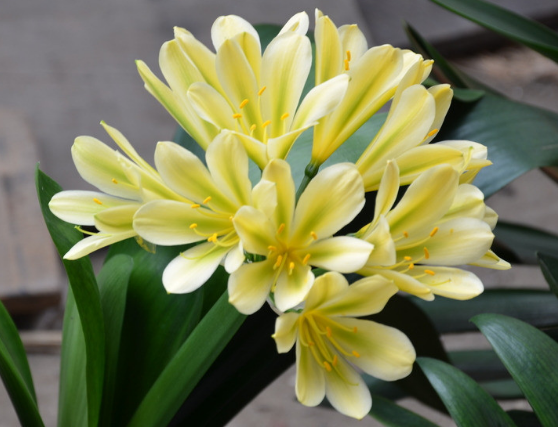
Clivia growing methods and growing precautions
Clivia growing methods
1. Growth habits: To understand the growing methods of Clivia, you first need to know its growth habits. Clivia is a plant that fears heat and cannot tolerate cold, likes a semi-shady and moist growing environment, and fears direct sunlight, so Clivia generally grows under trees. Its growth is often suppressed, which is also one of the reasons its growth period is very long. The optimal growing temperature for Clivia is between 18 and 28°C. It is suitable for growing in fertile, loose soil.
2. Growing methods: Clivia originally comes from under the large trees in the high-altitude forests of southern Africa. It likes fertility, so when growing Clivia, the soil used should be loose, fertile neutral or slightly acidic humus soil; among these, soil mixed with 65% humus soil, 20% clean sand, and 15% fine stove ash is best as the soil for cultivating Clivia. At the same time, it is also necessary to ensure that the relative humidity for Clivia is best at around 40%.
Precautions for Clivia
1. It was mentioned above that Clivia's habits are that it likes cool shade, so when growing Clivia, be careful not to place it under strong sunlight, and also ensure its optimal temperature and control its optimal temperature well, especially in summer and winter. Especially in summer, be prepared to protect Clivia from the heat and cool it down in good time.
2. When growing Clivia, pay attention to keeping its soil moist. So water it at any time, and when watering, note that you cannot spray too much at once; generally water should be sprayed on the leaf surface. In summer, this method can also be used to lower the temperature. Also, Clivia itself likes fertility, so it needs to be fertilized after a period of time.
Clivia growing methods and precautions. What are the growing methods and precautions for Clivia?
Clivia is a herbaceous plant of the genus Clivia in the Amaryllidaceae family. The plant has opposite leaves and can absorb dust and pollutants from the air. Its growth period is long, up to 4-5 years, but its flowering period is also very long and can last 1-2 months, usually opening from December each year to March of the following year. The planting process and growing methods of Clivia are very simple, but there are many key points to note. Below, the editor will share with everyone the growing methods and precautions for Clivia.
Clivia growing methods. Clivia growing precautions
Clivia is a plant that many people like to grow at home. To grow this plant well requires some effort. Below, take a look at the growing methods for Clivia and the precautions for growing Clivia.
Clivia growing methods:
1. Soil: The native habitat of Clivia is under the large trees in the high-altitude forests of southern Africa, with its root system rooted in layers of fallen leaves accumulated over many years. For cultivating Clivia, loose and fertile neutral or slightly acidic humus soil should be used. The soil for cultivation can be mixed from 65% humus soil, 20% clean sand, and 15% fine stove ash. The relative humidity of the soil should be around 40%.
2. Fertilizing: For Clivia, apply a solid fertilizer once in winter, apply less nitrogen fertilizer, and apply more phosphorus fertilizer and potassium fertilizer. Eggshell powder and thoroughly decomposed fishy water are very good phosphorus fertilizers, while chaff ash and tobacco ash are readily available potassium fertilizers. A compound fertilizer of nitrogen, phosphorus, and potassium can also be applied to promote the sprouting of more new plants and leaves. Fertilizing must be done in an appropriate amount, and it is absolutely not advisable to apply concentrated fertilizer or unfermented, undecomposed raw fertilizer, otherwise it can easily cause scorched or rotten leaf tips.
3. Watering: It is best to avoid it being too dry or too wet, and each watering must soak through; after flower buds appear, water a little more. About every 20 days, combine watering with applying fermented soybean cake water, diluted fishy water, and water from soaked horse hooves, etc., combining watering and fertilizing. When room temperature is low, watering should be controlled to prevent the potting soil from becoming too wet; overly wet potting soil can cause root rot and plant death, but the potting soil also must not be allowed to become too dry.
4. Temperature: The suitable growing temperature for Clivia in winter is 15-20°C, and it is best not to go below 10°C. After the flower stalk shoots up, the temperature should be kept at around 18°C, and the day-night temperature difference is best around 10°C; otherwise the flower stalk will bloom before reaching the proper height, and "stuck arrow" is likely to form.
Precautions for growing Clivia:
1. Spring is a good time for Clivia to begin growing after dormancy and to prepare for flowering. So at this time, the absorption of nutrients left from winter is relatively fast, and as a result there will be insufficient nutrition, so when spring arrives, pay attention to giving Clivia appropriate fertilizing. Also pay attention to maintaining moisture, but do not water too much, otherwise it will be harmful. As a general rule, fertilize once every half month, applying thin fertilizer.
2. Summer is a relatively difficult stage for Clivia, because the temperature is relatively high, so it is prone to lack water, but it also cannot be watered too much. In summer, absolutely do not expose it to direct sunlight, otherwise phenomena such as scorched leaves will occur.
3. Autumn is a season for water control. At this time, pay attention to controlling water; do not water too much, and fertilize about once every half month. If the flower stalk has shot up and it is flowering, the flowers cannot be directly sprayed with water.
4. Winter is the most difficult period for Clivia, because the temperature must not be too low. When the temperature is too low, if you want Clivia to get through safely, then appropriately maintain humidity, especially soil humidity. Often take it out to get some sun and take measures to keep it warm.
5. The surface of Clivia often needs major care. If Clivia has just been watered, then it is best to wipe it with a dry cloth, which helps the leaves become shiny.
6. If Clivia receives direct sunlight for a long time, it will make the leaves turn yellow or become scorched, so in summer, generally at noon, attention should be paid to shading it.
7. Too much fertilizing or too much water will lead to rot of the leaves and roots. It will also lead to bacterial growth, so in daily care the intensity of water and fertilizer must be controlled well.
The above is the relevant introduction in this article. I believe that after reading it, you also have a simple understanding of this. If needed, you can continue to follow No.1 Home Network to learn more information.