Clivia care methods differ with each season
In ancient times there was adapting to local conditions; today, Clivia care methods differ with the seasons. The Clivia flower points upward, shaped like a torch, with orange-red petals, dignified and elegant, making it an ideal potted flower for beautifying the environment. The pendulous Clivia has drooping flowers, reserved and deep, elegant and solemn, with a charm all its own. So what methods are there for growing Clivia in different seasons? Next, let the editor of Yiqizhuangxiu.com give everyone a brief introduction!
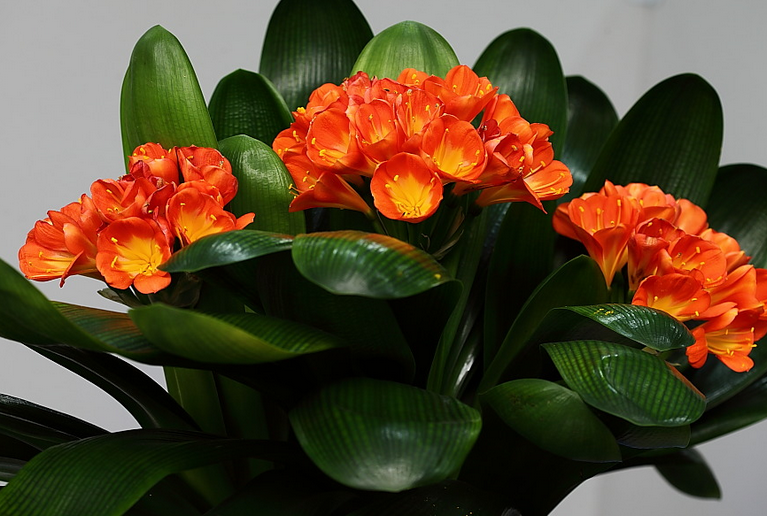
Clivia: different seasons, different care methods
Spring: avoid wind
In early spring, after Clivia has gone through winter dormancy, the root system begins to revive. Due to a lack of nutrient supply, once exposed to wind and sun, the leaves will show signs of dehydration, reducing their glossiness and lowering their firmness and thickness; in severe cases, yellowing and rotting of leaves may even occur. Therefore, at this time pay even more attention: Clivia is drought-tolerant but not moisture-tolerant, so keeping the potted plant generally moist is enough; too much watering easily causes root rot. Before the flower stalk emerges and blooms, avoid spraying water. Apply a fully decomposed liquid fertilizer once a week or every half month, but follow the principle of "light fertilizer, applied frequently," and never apply heavy fertilizer or raw fertilizer, to avoid leaf scorch and root rot.
Summer: avoid direct sun
Clivia is not strict about light requirements; it likes partial shade but fears direct light. Because summer temperatures and soil temperatures are relatively high, the root system is prone to disturbance, and unbalanced nutrient absorption leads to phenomena such as the neck stretching and leaves bolting. In addition, strong sunlight greatly increases transpiration; if watering is improper, the leaf color will become dull and scorched yellow or even wilt. Therefore, the requirements for cultivation in midsummer are:
Shading: it is best to place the potted plant under a shade shed or tree shade, avoiding direct sunlight at noon.
Cooling: besides placing the potted plant in a shady, ventilated place, also spray water frequently to cool it down, keeping the temperature below 25°C and humidity at 60-70% for the best environment.
Reducing fertilizer: when Clivia is at 25°C, appropriately reduce or stop fertilizing; too much fertilizer will burn the fleshy roots.
Watering: when the potting soil is half-dry, water it, but water thoroughly when watering. Never let water run into the leaves, to avoid rotten heart disease.
Autumn: avoid rain and water spraying
In early autumn, the climate gradually cools. During long spells of autumn rain, adult Clivia has more opportunities to cut the stalk and set seed, and to send up stalks and bloom. If exposed to rain or watered too much at this time, it can lead to root rot, stalk rot, heart rot and similar problems.
Therefore, when the stalk emerges and it blooms, avoid spraying water. About every half month, water once with decomposed cake fertilizer water (1:3). When watering, prevent water from entering the center of the leaf rosette, and do not let rainwater pour into the leaf rosette either, to avoid rotten core. In severe cases, the whole plant will rot and die.
Winter: avoid low temperature and dryness
In winter, when Clivia is at a low temperature below 5°C, the potting soil must be kept at about 70% humidity so that it will not be frostbitten due to dryness. If the moisture is less than 20%, it is prone to death from dry freezing. Before frost's descent, place the potted plant in a sunny spot indoors, and pay attention to cold protection and warmth; about every half month, turn the potted plant 180° to help the leaves grow neatly and beautifully.
When the indoor temperature in winter is 6-7°C, it can overwinter safely. Apply decomposed cake fertilizer once a month, and water with liquid fertilizer about every 10 days (nitrogen fertilizer should not be applied too much). Three months before flowering, apply liquid fertilizer mainly based on phosphorus and potassium fertilizer to promote stalk emergence and flowering.
In winter, Clivia enters a dormant period, and water evaporation is relatively reduced; keeping the potting soil moist is enough, but it is better to keep it on the drier side. Never frequently cut off water, allow water accumulation, or give half-watering. Otherwise, it can also cause scorched leaves or root rot.
Throughout the year of Clivia care, frequently spray the potted plant with clean water; after spraying, it is best to wipe it dry with a fine cloth. This not only increases the glossiness of the leaves but also enhances its ornamental value.
Clivia care methods: how to grow Clivia seedlings
Temperature
Clivia seedlings need a higher temperature than adult Clivia, but the temperature should be controlled between 15-30°C.
Environmental humidity
Clivia has no special requirements for air humidity; normal household humidity is sufficient. But in dry seasons, when household humidity is low, you can appropriately spray mist to increase humidity.
Light
Clivia seedlings must not be exposed to direct sunlight and need appropriate shading. In summer, they can be placed on a south-facing balcony with appropriate shading.
Watering
During watering, observe frequently; avoid the flowerpot drying out completely or accumulating water. You can pinch the flower soil with your hand; if it forms a clump that breaks apart at a touch, it is time to water! Usually, the method for watering Clivia is to spray-irrigate with a watering can. Aim the nozzle at the leaves; this not only achieves the purpose of watering and moistening the soil, but also cleans the leaves, removes dust, and increases leaf photosynthesis; at the same time, a few dew drops remain on the leaves, and as the water evaporates in sunlight, it can prevent leaf scorch.
Soil
Flower soil should be neither too fine nor too coarse. If too coarse, aeration is too good, the roots and soil do not easily merge, and the plant easily lodges; if too fine, soil aeration is poor and root rot easily occurs.
When the seedling grows one leaf, hardening off can begin. Reduce watering and place the seedling in a relatively cool environment (not below 5°C); this can increase the seedling's stress resistance, and the seedling will grow robustly.
Fertilizing
Seedlings do not need extra topdressing; appropriate application of foliar fertilizer is enough. When fertilizing, the fertilizer should be dilute. Once the seedling grows 2 leaves, it can be cared for like an adult Clivia.
How to grow Clivia seedlings
Temperature
Clivia seedlings need a higher temperature than adult Clivia, but the temperature should be controlled between 15-30°C.
Environmental humidity
Clivia has no special requirements for air humidity; normal household humidity is sufficient. But in dry seasons, when household humidity is low, you can appropriately spray mist to increase humidity.
Light
Clivia seedlings must not be exposed to direct sunlight and need appropriate shading. In summer, they can be placed on a south-facing balcony with appropriate shading.
Watering
During watering, observe frequently; avoid the flowerpot drying out completely or accumulating water. You can pinch the flower soil with your hand; if it forms a clump that breaks apart at a touch, it is time to water! Usually, the method for watering Clivia is to spray-irrigate with a watering can. Aim the nozzle at the leaves; this not only achieves the purpose of watering and moistening the soil, but also cleans the leaves, removes dust, and increases leaf photosynthesis; at the same time, a few dew drops remain on the leaves, and as the water evaporates in sunlight, it can prevent leaf scorch.
Soil
Flower soil should be neither too fine nor too coarse. If too coarse, aeration is too good, the roots and soil do not easily merge, and the plant easily lodges; if too fine, soil aeration is poor and root rot easily occurs.
When the seedling grows one leaf, hardening off can begin. Reduce watering and place the seedling in a relatively cool environment (not below 5°C); this can increase the seedling's stress resistance, and the seedling will grow robustly.
Fertilizing
Seedlings do not need extra topdressing; appropriate application of foliar fertilizer is enough. When fertilizing, the fertilizer should be dilute. Once the seedling grows 2 leaves, it can be cared for like an adult Clivia.