How to care for clivia in summer? Six steps to help you grow it well
Clivia is a well-known greenhouse flower. China has two species introduced from Europe and Japan. The former has small, drooping flowers and is called the drooping clivia; the latter has large, upward-facing flowers and is called the large-flowered clivia, which is currently the most commonly cultivated species. Nowadays many people like to grow clivia, so in summer, due to the characteristics of the climate, how should clivia be grown? Next, let the editor of Yiqizhuangxiu.com briefly introduce it to everyone!
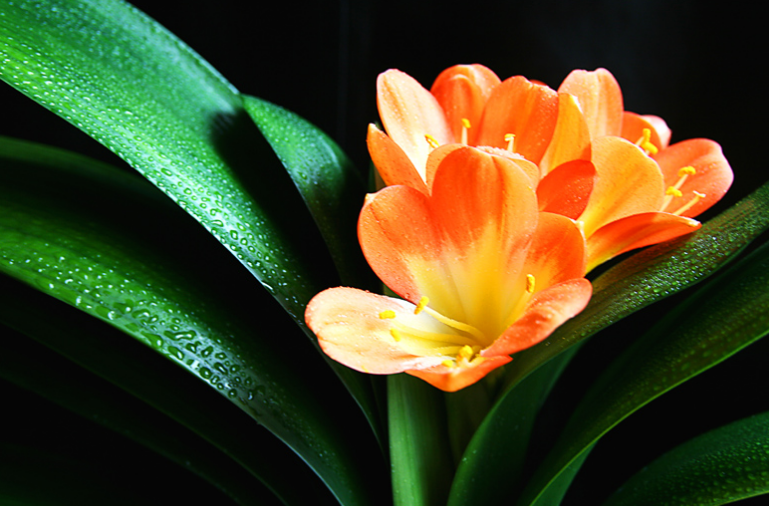
Growing clivia in summer: six steps
1. Prevent direct sunlight, do not expose to the sun
In summer, clivia should be shaded from strong light all day. Using the slanting sunlight for a while in the early morning each day is enough to satisfy photosynthesis.
2. Prevent high temperatures, do not let it dry out
The suitable temperature for clivia in summer is 18°C--25°C. It is best placed in an air-conditioned room, and a shaded, ventilated spot on a balcony is also fine. When watering, it is best to use tap water that has been left in the sun for two or three days, watering once a day after 6 p.m., and do not let the potting soil become too dry or too wet.
3. Prevent leggy growth, do not fertilize
Summer is the dormant period for clivia, so stop fertilizing and water moderately; controlling humidity is an effective measure. If too much fertilizer has been applied to the potting soil or the fertilizer effect is strong, remove the top layer of soil from the pot, mix in 1/3--2/3 sand, stir well and put it back into the pot. This not only reduces the fertilizer effect but also helps lower the temperature.
4. Prevent dust pollution, do not water with dirty water
The leaf surface of clivia should be kept clean. Once a week, dip a fine gauze in clean water, wring it dry and gently wipe once. Watering with dirty water will cause the roots and leaves to rot and turn yellow.
5. Prevent soil compaction, do not use clay (loess) in the pot
Clivia is suited to being grown in loose, breathable, water-permeable, fertile humus soil with a pH of around 7.0.
6. Prevent diseases, do not let it become infected
When changing the soil or wiping the leaves, the movements should be gentle to prevent the roots and leaves from being damaged and exuding sap, which can cause infection and lead to rot.
Clivia growing methods and precautions
Clivia can satisfy people's many needs such as beautifying the home, cultivating character, purifying the air and improving health, making your home appear elegant and luxurious, and adding brilliance and charm to enrich and adjust people's lives. So what methods are there for growing clivia? And what precautions are there? Next, let the editor of Yiqizhuangxiu.com briefly introduce it to everyone!
Clivia growing methods and precautions
Clivia growing methods
1. Growth habits: To understand the growing methods of clivia, you must first know its growth habits. Clivia is a plant that fears heat and cannot tolerate cold, likes semi-shade and a moist growing environment, and fears direct sunlight, so clivia generally grows under trees. Its growth is often suppressed, which is also one of the reasons its growth period is very long. The optimal growing temperature for clivia is between 18 and 28°C. It is suited to growing in fertile, loose soil.
2. Growing methods: Clivia originated in the southern part of Africa, under the large trees of high-altitude forest areas. It likes fertility, so when growing clivia, the soil used should be loose, fertile neutral or slightly acidic humus soil. Among these, soil mixed from 65% humus soil, 20% clean sand and 15% fine furnace ash is best as the growing soil for clivia. At the same time, it is also necessary to ensure that the relative humidity for clivia is around 40%, which is best.
Precautions for clivia
1. As mentioned above, the habit of clivia is that it likes shade, so when growing clivia, be careful not to place it under strong sunlight, and also ensure its optimal temperature. You must control the optimal temperature for clivia well, especially in summer and winter. Especially in summer, you should be prepared to protect clivia from the heat and cool it down in a timely manner.
2. When growing clivia, be careful to keep its soil moist. So water it at any time, and when watering, be careful not to spray too much at once; generally water is sprayed on the leaf surface. In summer, this method can also be used to lower the temperature. Also, clivia itself likes fertility, so it needs to be fertilized after a period of time.
Strange clivia pictures and growing methods for strange clivia
Strange clivia is the sixth type of native species discovered in South Africa around 2000, and is a protected species of South Africa. The place of discovery is Northern Cape province in South Africa. Strange clivia grows in humus in cracks on the slopes of mountains covered with stones. They either grow alone or in groups. The areas where strange clivia grows generally present a semi-arid Mediterranean-style climate, and in winter they often go through a period of precipitation. Below, the editor of Yiqiwang introduces the growing methods for strange clivia.Strange clivia pictures and growing methods for strange clivia
Planting
For pot cultivation, use a mixture of decomposed horse manure, leaf mold, river sand or furnace ash residue, in a ratio of 6:3:1. For adult seedlings, the pot should be changed once every 2-3 years. The size of the pot depends on the seedling, and the soil should be changed when repotting.
Fertilizing
Clivia likes fertilizer, but excessive fertilizing easily causes root rot, so the method of "light fertilizer applied frequently" should be adopted, and strong fertilizer and "raw fertilizer" should be avoided. During the spring and autumn growing seasons, apply a light fertilizer mainly based on nitrogen once about every 10 days to promote the growth of branches and leaves. When the flower stalk is emerging, apply a light fertilizer mainly based on phosphorus once a week to speed up the emergence of the stalk and make the flowers large and brightly colored. When the temperature is above 30°C, clivia is in a semi-dormant period, and below 10°C it stops growing and enters dormancy, so fertilizing is not suitable in either case, and attention should be paid to keeping the potting soil somewhat dry.
In addition, when growing clivia at home, the pot and soil should be changed once every 1-2 years. This is not only beneficial for timely replenishing the nutrients in the potting soil and increasing fertility, but can also allow the roots to spread out, which is beneficial for growth. Repotting is best done after flowering in spring or in autumn.
Watering
Clivia has well-developed fleshy roots. Too much watering easily causes root rot, while too little watering affects the growth of new leaves, rooting and the emergence of the flower stalk.
The amount of watering should be treated differently according to the specific situation. Where there is a small pot and small plant, high temperature, good ventilation, fast evaporation and good soil permeability, it is better to water more; otherwise, water less. Generally, less water is needed at the seedling stage, and more water is needed during the flowering period. In spring and summer, watering should be more, generally once a day; in autumn and winter, watering should be less. In autumn, water once every 1-2 days, and in winter, water once every 4-5 days.
Temperature and light
The suitable growing temperature for clivia is 15-25°C. When the temperature is higher than 25°C, the plant grows poorly, often showing leggy leaves, which affects flower bud differentiation; at this time, pay attention to ventilation and cooling. Below 10°C, growth is slow; when it drops below 0°C, it will cause the plant to freeze to death. In summer, pay attention to cooling, or choose a cool high-mountain area and other places to spend the summer, to promote flower bud differentiation. In winter, attention must be paid to cold protection. A large temperature difference between day and night is beneficial to the growth of clivia, generally 6-10°C is suitable.
Clivia likes weak light and does not like strong light. In particular, in summer it cannot be placed in the sun to be exposed. Plants grown under a 50% light-transmitting environment have green and emerald leaves, which can greatly improve the ornamental effect. Clivia has a relatively strong phototropism, so the direction of the pot should be rotated regularly so that the plant receives light evenly and the leaves extend in one line.
Pest and disease control
The common pest of clivia is scale insects. When pest damage occurs, scale insects often gather on the tender tips of the leaves, suck leaf sap, and secrete a large amount of pathogens, turning the stems and leaves moldy black, causing sooty mold and making the leaves wither. This insect has strong reproductive capacity and can produce multiple generations in 1 year. One female adult can often reproduce hundreds of larvae. If control measures are not taken in time, it can cause the entire plant to die.
Control method: give priority to prevention. Usually, frequently observe the plant body, and when pests are found, eliminate them early to prevent spread. To eliminate scale insects, manual and chemical methods can be used at the same time. If pests are found on only 1-2 leaf tips, manual scraping can be done, using a sharpened thin wooden stick or a bamboo pick to scrape off the insect bodies. If a large number of nymphs appear, use a 1000-fold dilution of 25% phosmet emulsifiable concentrate to spray and kill them, or use 40% omethoate emulsifiable concentrate plus 1000-1500 times water to make a solution and spray. Generally, spraying 1-2 times can kill them.
In addition, also note that earthworms can also become pests of clivia. When the clivia plant is young, its fleshy roots are very tender and weak. If there are earthworms in the potting soil, they often burrow around randomly, injuring the tender roots, destroying the function of clivia to absorb nutrients, and causing the plant to stop growing and developing or causing root rot.
The control method is: frequently check whether there are round soil particles on the surface of the potting soil (that is, earthworm excrement). If found, immediately irrigate with a 1500-2000-fold dilution of 50% dichlorvos emulsifiable concentrate. After irrigation, if earthworms are seen burrowing, remove them immediately; repeat once after 1 week, and the earthworms can be completely eliminated.
Shaping and pruning
Propagation
Clivia can be propagated by sowing or division.
For sowing, because clivia has a low ability to set seed through self-pollination, artificial pollination is needed to obtain seeds, and the seeds can be sown once mature. Sow the seeds point-down in a shallow pot, cover with 1-1.5 cm of sandy soil, water thoroughly and place indoors, maintaining 20-25°C and moist potting soil, and they will sprout in about 1 month. After that, appropriately control moisture and provide sufficient light. Generally, seedlings grow only 2 leaves in the first year.
For division, clivia easily produces tillers around the root crown, commonly called "foot buds", and these tillers can be used for propagation. Division is generally carried out in spring from March to April together with repotting. After separating the "foot buds" from the mother plant, plant them in plain sand to cultivate roots. After about 1 month, small new roots can be produced, and then they can be replanted.
Flowering regulation
Tips
[How clivia can safely pass the summer]
In many areas of China, the summer temperature reaches above 30°C. This environmental condition is not suitable for the normal growth of clivia. It will cause leggy leaves, thin and slender leaves, yellowing color, and unclear veins, affecting ornamental value. Hot and stuffy weather also easily causes root rot. To help clivia safely pass the summer, the following measures should be taken:
(1) Shade and cooling: In summer, the flower pot can be placed behind a building or under the shade of a large tree, or it can be placed at the window of a well-ventilated, cool room facing north for care.
(2) Increase air humidity: Spread sand and sprinkle water on the floor inside a north-facing balcony, and place the flower pot on the sand surface; or place a wooden board over a water pool, fill the pool with cold water, and place the flower pot with clivia on the wooden board. Both can increase air humidity and lower air temperature.
[Solving the "stuck arrow" problem]
Adult clivia first extends the flower stalk before blooming, commonly called "pulling the arrow". However, in some plants during growth and development, the flower stalk has not yet extended before the flower buds have formed, becoming stuck in the pseudobulb, causing the "stuck arrow" phenomenon. The reasons are many, such as: room temperature (temperature above the pot) being too low, which is not conducive to flower stalk cell division and elongation; insufficient nutrition during the flowering period, especially a lack of phosphorus and potassium elements; compacted potting soil, lack of permeability, and insufficient watering, etc. The solution is to appropriately raise the potting soil temperature, strengthen fertilizer and water management before the flowering period, and also use the drug "Cui Jian Ling" for treatment.