An introduction to potted plants and a detailed explanation of daily care methods
As everyone knows, green plants are becoming more and more popular nowadays. Potted plants at home and in the office are quite familiar to us. Potted plants create an outdoor natural scene within our narrow personal space, and most importantly, they help relieve eye fatigue, letting us immerse ourselves in the nourishment of nature amid a stressful life and work. Next, let the editors at Yiqizhuangxiu.com introduce the relevant characteristics and care of potted plants.
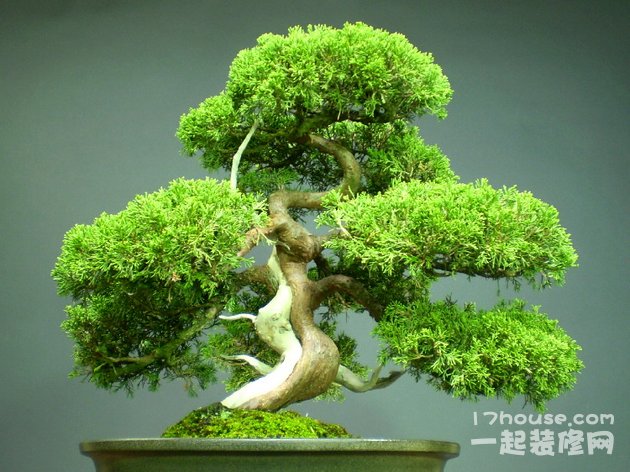
An introduction to potted plants and their care
There are many different varieties and styles of potted plants. All bonsai consist of three main parts: a trunk, branches and leaves. Bonsai trees differ from one another in that branches are removed or shaped to achieve the desired form. When deciding on a potted plant for your home or garden, choose a variety that appeals to you and suits your home's style and garden decor; generally, they also have the effect of absorbing harmful gases, purifying the air and beautifying the environment.
Caring for potted plants is not simple. First, do not water too much: since indoor potted plants are placed in a shady spot or one with a little sunlight, overwatering will make the potting soil waterlogged and cause the roots of the potted plant to suffocate and rot, with leaves turning yellow and dropping off. Therefore, watering indoor potted plants should follow the principle of "water when dry, and when you water, water thoroughly"; never water in dribs and drabs or water too much. Watering flowers with water used to cook vegetables or water from a container used to wash fish can give the plants nutrients and thereby help them grow. Second, do not fertilize too much or too little: not fertilizing potted plants for a long time or fertilizing too little will cause yellow leaves; fertilizing too much means the potted plant cannot absorb it, burning the root system, and since it cannot take up water, the leaves will also turn yellow and drop. Usually, for indoor potted plants, choose to apply a thin fertilizer once in late spring, and once every other week in summer and autumn; never apply heavy concentrations of fertilizer. If too much fertilizer has been applied, you can dilute it and wash away some of the fertilizer in the soil by watering more. A lack of fertilizer can cause the potting soil to harden, and the potted plant's leaves to turn yellow and its branches to become thin, long, yellow and tender. At this point, fertilize immediately, and results can be seen within a week. In addition, potted plants should not receive too much or too little light: light should be determined according to the growth characteristics of the potted plant, and should not be excessive or insufficient. Some sun-loving potted plants, such as pomegranate, azalea and Chinese rose, if kept for a long time in a place with too little light, will gradually weaken, with thin yellow leaves and no or few flowers. Then there is the prevention and control of pests and diseases: the common pests and diseases of indoor potted plants are mainly aphids, red spider mites and leaf spot disease caused by infection with fungi and other viruses. Their harm lies in easily causing localized necrosis of the leaves or withering of the leaf surface of potted plants, and even the whole plant turning yellow and withering. Therefore, for indoor potted plants, you should put more effort into water, fertilizer and light management, keep the indoor air circulating, and spray pesticides in time for prevention.
Last but not least, talk or sing to your plants. Studies have already shown that this can help them live longer, and some plants need certain music played to them. For example: Indian sitar music works best, followed by classical music. However, do not play heavy metal music for any plant.
An introduction to potted plants and their care
How should potted plants be cared for in early autumn? 4 key points for autumn care of potted plants
“Waking from sleep, autumn colors are nowhere to be found, amid the bright moonlight on the phoenix-tree-lined steps”. Time strolls on, passing through Major Heat and stepping into Start of Autumn. After enduring the test of a hot summer, the potted plants at home have ushered in a new growth period. However, since autumn is a changeable season, if cared for improperly, plants that barely survived the scorching summer may still die in autumn. So, how should potted plants be cared for in early autumn? Let's take a look.
Image: potted plants
1. Temperature
After Cold Dew in autumn, the weather turns cool, and many flowers that like warmth cannot stand the stimulation of low temperatures; at this time, potted plants should be promptly moved to a warm spot indoors for care. However, do not move them all indoors; you should choose which plants to bring indoors according to the habits of the flowers. Moving some flowers indoors too early may adversely affect the plants' subsequent development.
Image: potted plants
2. Watering
Flowers with different habits require different watering methods. For flowers that like moisture, the work of keeping the potting soil moist should still be done well in autumn; in addition, for some moisture-loving foliage plants, you can spray and wipe the leaves in appropriate amounts; for flowers suited to being planted in autumn, ensuring normal watering is an important guarantee of their healthy growth; for other flowers, most need to be watered according to the degree of dryness or moisture of the soil, and the amount of water should be gradually reduced to prevent the plants from growing leggy and affecting bud transformation, etc. At the same time, reducing the amount of watering also helps lay a foundation for the plants to safely overwinter in the next stage.
Image: potted plants
3. Fertilizing
In autumn, many potted plants will enter a new period of vigorous growth; at this time, to ensure better growth of the flowers, fertilizing work is crucial. Flowers with different flowering periods require different fertilizing methods. First, for potted plants that bloom once a year, such as azaleas and camellias, fertilizing should focus on liquid fertilizer, mainly applying phosphorus fertilizer as a top dressing, with about 2-3 applications being best; for potted plants that bloom multiple times a year, such as Chinese roses and jasmine, there are higher fertilizer requirements, and while ensuring normal nitrogen fertilizer application, phosphorus and potassium fertilizer can be appropriately added to ensure what the plants need for growth. In addition, for some green foliage plants kept at home, adding a small amount of nitrogen fertilizer in autumn can make the leaves more emerald green and give the plants greater ornamental value. After autumn arrives in northern regions, temperatures gradually drop; when the temperature falls, fertilizing should be stopped immediately to help the plants overwinter safely.
Image: potted plants
4. Shaping and pruning
Autumn is a suitable time for pruning branches and leaves. To reduce excessive consumption of nutrients, pruning in appropriate amounts is more helpful for the growth of potted plants and effectively prevents plants from growing leggy. For some common flowers that form buds in autumn, removing excess buds is better for the quality of flowering; for flowers whose flowering period has passed, or whose flowering period is relatively long, the fallen flowers should be promptly removed to encourage them to grow new buds and continue blooming; in addition, sprouts can be pruned appropriately, and after pruning, pinching can be done to prevent leggy growth.
[Editor's conclusion]Autumn, as the transitional season between summer and winter, makes doing a good job of caring for potted plants in autumn directly related to the plants' overwintering. Above, we introduced the 4 key points for autumn care of potted plants, and hope they can be of help to everyone!
The advantages of hydroponic plants over potted plants: easy to care for and easy to keep alive
Modern society is an era that emphasizes efficiency, and everything is required to be fast, so more and more people love growing hydroponic plants at home. Hydroponic plants have a high survival rate and also solve a lot of the trouble brought by potted plants. So what exactly are the advantages of hydroponic plants? Let's take a look.
1. Purify the air and benefit health
Scientific research shows that plants can absorb harmful gases and attach them to the leaf surface, and the root systems of hydroponic plants in particular have a stronger adsorption capacity. They can incorporate harmful gases and dust into their metabolic process, and remove their toxicity during the material transformation. Because of their plant characteristics and their ability to combine with minerals, hydroponic plants have a particularly good filtering effect on improving indoor air, specifically including:
(1) Adsorbing obvious harmful substances: hydroponic plants adsorb harmful substances mainly through absorption by their roots. Some plant species can remove up to 90% of formaldehyde, benzene or carbon monoxide from a room.
(2) Absorbing nicotine: now, people have recognized which plants can best restrain which harmful substances. For example, pothos used in a room where people smoke can clean the air very well, because its leaves and roots can noticeably absorb and fix more nicotine.
(3) Absorbing formaldehyde: the weeping fig can also effectively absorb large amounts of this toxic gas attached to its leaves. Within 1-2 days, it can make 90% of the harmful substances enter its metabolic process, thereby producing sugars, energy and other clean natural substances.
2. Clean and hygienic, with few pests and diseases
Hydroponic plants eliminate the trouble of finding soil and managing it when preparing various potting soils for soil-based potted plants, and suit the high-efficiency, fast-paced characteristics of modern society.
3. Release moisture and maintain air humidity.
If an office can be greened to a large extent, you will often no longer need artificial air conditioning. Large areas of hydroponic plants are the most effective temperature regulators, and are conducive to forming ecologically beneficial air purification indoors. Growing hydroponic plants in large workspaces can noticeably reduce the rate of employee illness. The dry air produced by ordinary air conditioning damages people's respiratory tracts, but after bringing in green plants, the number of illness cases can be reduced by about 40%.
4. Beautify the environment and delight the mood
Hydroponic plants are elegant in style and highly ornamental. Hydroponic flowers allow you to enjoy the leaves, stems and flowers, and also to admire their ever-changing root systems, increasing the decorative appeal of the flowers. You can use the ever-changing forms and colors of flowers to freely arrange and lay out several kinds of flowers, thereby achieving an artistic effect similar to flower arranging.
5. Easy to maintain and easy to care for
Every plant needs five basic growth factors to grow healthily and luxuriantly. They are: light, air, suitable temperature, water and nutrients. If any one of them is lacking, the plant will quickly wither and die, and no amount of other components can make up for it. Soilless plants already possess three of these factors themselves:
(1) Air: placing small granular clay pebbles with good breathability at the plant roots can ensure balanced ventilation for the roots.
(2) Water: a water level hole is set to meet the plant's water needs, and the container can maintain a certain water reserve, thus saving the trouble of constantly watering.
(3) Nutrients: hydroponic plants come with enough fertilizer to sustain plant growth when purchased, so they can survive on their own for as long as three months.
(4) Light and suitable temperature: only these two factors depend on external conditions.
So, to kill a hydroponic plant is not an easy thing either. Types of hydroponic plants: pothos, arrowhead plant, Swiss cheese plant, peace lily, anthurium, Chinese evergreen, aloe, lucky bamboo, dwarf umbrella tree, pennywort, water bamboo, and so on.