How to grow Anthurium in water? These methods make indoor potted plants more beautiful
Anthurium is a plant in the Araceae family and also a plant with a relatively strong affinity for water. But growing it in water is slightly difficult. So how do you grow Anthurium in water? How much do you know? Below let me give you a detailed introduction to how to grow Anthurium in water.
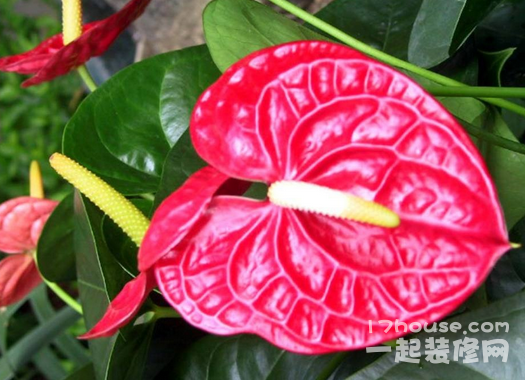
How to grow Anthurium in water
The cultivation methods for water-grown Anthurium require regular water changes and cleaning of the flower's roots, correct selection and proper use of nutrient solution, and flexible adjustment according to the environmental conditions of different seasons. These are the keys to whether you can successfully grow water-grown Anthurium.
The length of time between changes of the hydroponic nutrient solution can be determined according to the temperature in different seasons and the growth condition of the flowers.
In spring and autumn, at temperatures of 15°C to 28°C, for hydroponic flowers with sturdy branches and leaves, replace the nutrient solution once every 7 to 10 days. First take out the hydroponic flowers, pour out all the used nutrient solution (it can be used to water potted flowers), clean the container, remove the dead roots and rotten roots of the flowers, rinse the root system, replace with new nutrient solution, and put them back into the container for static hydroponics.
When the temperature exceeds 30°C, most flowers are in a dormant or semi-dormant state, with slow physiological metabolism. At this time, nutrient solution hydroponics can be stopped and tap water can be used instead for growing. It is likewise necessary to change the water once every 7 to 10 days, clean the container, remove dead roots and rotten roots, rinse the root system, and restart hydroponics. When the temperature drops below 28°C, use nutrient solution again for cultivation. Most foliage flowers suitable for hydroponics stop growing in environments below 10°C, and do not need nutrient solution hydroponics either. Replace with new tap water once every 15 to 20 days, and along with the water change, clean the container and rinse the root system. Because winter water temperature is lower, pathogens will not multiply in large numbers, and flower roots are also less likely to rot. However, some aged roots die, and they should be removed when rinsing.
As for the nutrient solution used, the flower market has varieties specifically for keeping flowers and fish together, called "flower-fish co-cultivation."
The root system of Anthurium breathes very actively, and placing it directly into water easily hinders its breathing. The best method is to use a substrate, and the best substrate is expanded clay pebbles. Since Anthurium's roots are fleshy roots and the leaves emerge from the roots, the usual method of custom orchid + stones + easy approach does not easily produce small leaves. Expanded clay pebbles, however, are light in texture and provide ample space, making it easy for small leaves to emerge. The Anthurium I currently grow hydroponically in the office uses expanded clay pebbles, and it has already been grown for 2 years, with each plant bearing 3 to 4 flowers.
To grow Anthurium hydroponically with expanded clay pebbles, first wash the roots clean, trim old roots and damaged roots, and remove flowers. Then place the plant into a container. Fill it with expanded clay pebbles, then dilute rooting powder in the proper proportion, spray the expanded clay pebbles damp, and be careful not to let too much water accumulate below; if there is too much water, pour it out. After a long wait, you will be pleasantly surprised to find Anthurium's thick, white fleshy roots growing on all sides, all clinging to the edge of the container. At this point, congratulations: a water-grown Anthurium is considered complete, and what remains is to regularly add nutrient solution and care for its growth.
How to grow Anthurium
Precautions for growing Anthurium at home
1. Choice of cultivation substrate. In the process of standardized large-scale production, the substrate I use is mainly peat soil plus a small amount of perlite and coarse river sand, with a small amount of floral foam lining the bottom of the pot. For small-scale home growing, it is also quite ideal to buy prepared potting soil at a garden store and then mix it with expanded clay pebbles or dry bark (ratio 2:1) as a substrate. The prepared substrate must be disinfected.
2. Requirements for the cultivation environment. Since Anthurium is a semi-shade plant, the suitable growth temperature for Anthurium is between 14°C and 35°C. When the temperature is below 10°C, chilling injury occurs; when the temperature is above 35°C, the plant will also be harmed. In this case, water should be sprayed on the plant and its surroundings in a timely manner. To a certain extent, when the humidity is also high under high temperature conditions, damage will not be so easily caused.
3. Management of fertilizer and water. Anthurium plants generally have a higher demand for "magnesium fertilizer" than other foliage plants. It is recommended to apply a complete fertilizer with P:N:K=1:1:1. For ordinary small-scale home growing, you can buy granular slow-release fertilizer 15-15-15+3Mgo (Magic-K) at a garden store and apply it together with foliar fertilizer, or buy all-water-soluble compound fertilizers such as Baolifeng No. 2 or Huaduoduo general type, dilute them into 800-1000 times liquid fertilizer, and apply regularly (no less than once a week). The principle of fertilizing Anthurium is to prefer dilute over heavy, and small meals more often; otherwise it easily damages the roots, affects plant growth, and directly causes plant death. Anthurium likes moisture (high relative humidity), but the substrate should be on the dry side. Therefore, watering is best done together with applying liquid fertilizer, and usually spray water on the leaves and surroundings more often to increase the relative temperature of the cultivation environment.
4. Prevention and control of pests and diseases. The most common pests on Anthurium are red spider mites, nematodes, cabbage caterpillars, whiteflies, thrips, snails, and scale insects, among which red spider mites, nematodes, and cabbage caterpillars are especially predominant. Anthurium is very sensitive to insecticides, and the concentration must be correct when used; its concentration is usually lower than that used for other flowers. Pay special attention that copper-containing pesticides and dimethoate, methamidophos, dichlorvos, malathion, parathion, etc. can be toxic to Anthurium.
After reading the above detailed introduction, do you have a better understanding of how to grow water-grown Anthurium?
Cultivation methods for water-grown Anthurium: make your indoor potted plants more beautiful
Anthurium is a plant in the Araceae family and also a plant with a relatively strong affinity for water. But growing it in water is slightly difficult. So how do you grow Anthurium in water? How much do you know? Below let me give you a detailed introduction to how to grow Anthurium in water.
Cultivation methods for water-grown Anthurium
The cultivation methods for water-grown Anthurium require regular water changes and cleaning of the flower's roots, correct selection and proper use of nutrient solution, and flexible adjustment according to the environmental conditions of different seasons. These are the keys to whether you can successfully grow water-grown Anthurium.
The length of time between changes of the hydroponic nutrient solution can be determined according to the temperature in different seasons and the growth condition of the flowers.
In spring and autumn, at temperatures of 15°C to 28°C, for hydroponic flowers with sturdy branches and leaves, replace the nutrient solution once every 7 to 10 days. First take out the hydroponic flowers, pour out all the used nutrient solution (it can be used to water potted flowers), clean the container, remove the dead roots and rotten roots of the flowers, rinse the root system, replace with new nutrient solution, and put them back into the container for static hydroponics.
When the temperature exceeds 30°C, most flowers are in a dormant or semi-dormant state, with slow physiological metabolism. At this time, nutrient solution hydroponics can be stopped and tap water can be used instead for growing. It is likewise necessary to change the water once every 7 to 10 days, clean the container, remove dead roots and rotten roots, rinse the root system, and restart hydroponics. When the temperature drops below 28°C, use nutrient solution again for cultivation. Most foliage flowers suitable for hydroponics stop growing in environments below 10°C, and do not need nutrient solution hydroponics either. Replace with new tap water once every 15 to 20 days, and along with the water change, clean the container and rinse the root system. Because winter water temperature is lower, pathogens will not multiply in large numbers, and flower roots are also less likely to rot. However, some aged roots die, and they should be removed when rinsing.
As for the nutrient solution used, the flower market has varieties specifically for keeping flowers and fish together, called "flower-fish co-cultivation."
The root system of Anthurium breathes very actively, and placing it directly into water easily hinders its breathing. The best method is to use a substrate, and the best substrate is expanded clay pebbles. Since Anthurium's roots are fleshy roots and the leaves emerge from the roots, the usual method of custom orchid + stones + easy approach does not easily produce small leaves. Expanded clay pebbles, however, are light in texture and provide ample space, making it easy for small leaves to emerge... The Anthurium I currently grow hydroponically in the office uses expanded clay pebbles, and it has already been grown for 2 years, with each plant bearing 3 to 4 flowers.
To grow Anthurium hydroponically with expanded clay pebbles, first wash the roots clean, trim old roots and damaged roots, and remove flowers. Then place the plant into a container. Fill it with expanded clay pebbles, then dilute rooting powder in the proper proportion, spray the expanded clay pebbles damp, and be careful not to let too much water accumulate below; if there is too much water, pour it out. After a long wait, you will be pleasantly surprised to find Anthurium's thick, white fleshy roots growing on all sides, all clinging to the edge of the container. At this point, congratulations: a water-grown Anthurium is considered complete, and what remains is to regularly add nutrient solution and care for its growth.
Cultivation methods for water-grown Anthurium: make your indoor potted plants more beautiful
Precautions for growing Anthurium at home
1. Choice of cultivation substrate. In the process of standardized large-scale production, the substrate I use is mainly peat soil plus a small amount of perlite and coarse river sand, with a small amount of floral foam lining the bottom of the pot. For small-scale home growing, it is also quite ideal to buy prepared potting soil at a garden store and then mix it with expanded clay pebbles or dry bark (ratio 2:1) as a substrate. The prepared substrate must be disinfected.
2. Requirements for the cultivation environment. Since Anthurium is a semi-shade plant, the suitable growth temperature for Anthurium is between 14°C and 35°C. When the temperature is below 10°C, chilling injury occurs; when the temperature is above 35°C, the plant will also be harmed. In this case, water should be sprayed on the plant and its surroundings in a timely manner. To a certain extent, when the humidity is also high under high temperature conditions, damage will not be so easily caused.
3. Management of fertilizer and water. Anthurium plants generally have a higher demand for "magnesium fertilizer" than other foliage plants. It is recommended to apply a complete fertilizer with P:N:K=1:1:1. For ordinary small-scale home growing, you can buy granular slow-release fertilizer 15-15-15+3Mgo (Magic-K) at a garden store and apply it together with foliar fertilizer, or buy all-water-soluble compound fertilizers such as Baolifeng No. 2 or Huaduoduo general type, dilute them into 800-1000 times liquid fertilizer, and apply regularly (no less than once a week). The principle of fertilizing Anthurium is to prefer dilute over heavy, and small meals more often; otherwise it easily damages the roots, affects plant growth, and directly causes plant death. Anthurium likes moisture (high relative humidity), but the substrate should be on the dry side. Therefore, watering is best done together with applying liquid fertilizer, and usually spray water on the leaves and surroundings more often to increase the relative temperature of the cultivation environment.
4. Prevention and control of pests and diseases. The most common pests on Anthurium are red spider mites, nematodes, cabbage caterpillars, whiteflies, thrips, snails, and scale insects, among which red spider mites, nematodes, and cabbage caterpillars are especially predominant. Anthurium is very sensitive to insecticides, and the concentration must be correct when used; its concentration is usually lower than that used for other flowers. Pay special attention that copper-containing pesticides and dimethoate, methamidophos, dichlorvos, malathion, parathion, etc. can be toxic to Anthurium.
After reading the above detailed introduction, do you have a better understanding of how to grow water-grown Anthurium?
Water-grown Anthurium Anthurium andraeanum: illustrated guide to water-grown Anthurium: how to grow water-grown Anthurium / how to propagate water-grown Anthurium
Water-grown Anthurium profileWater-grown Anthurium Anthurium andraeanum
Aliases: Huazhu, Anzuhua, Huohehua, Hongezhang
Classification: aquatic flowers
Family and genus: Plantae, Angiosperms, Monocotyledonae, Araceae, Anthurium
Blooming period: all seasons
Water-grown Anthurium is a plant with a relatively strong affinity for water. But growing it in water is slightly difficult. It is a flower plant from South America, and by nature likes a warm, humid, semi-shaded environment. Water-grown Anthurium originated in the tropics of South America, and is now widely cultivated in Europe, Asia, and Africa. Contents.
Cultivation methods and precautions for water-grown Anthurium: introduction to water-grown Anthurium
Water-grown Anthurium is a plant with a relatively strong affinity for water. But growing it in water is slightly difficult. It is a flower plant from South America, and by nature likes a warm, humid, semi-shaded environment.
Water-grown Anthurium originated in the tropics of South America, and is now widely cultivated in Europe, Asia, and Africa. Contents.
Morphological characteristics of water-grown Anthurium: roots and stems
Water-grown Anthurium is a perennial evergreen herbaceous flower. Its plant height is generally 50-80 cm, varying by variety. It has fleshy roots and no stem.
Leaves
The leaves of water-grown Anthurium emerge from the rhizome, have long petioles, are solitary and heart-shaped, bright green, with sunken veins.
Flowers
The flowers of water-grown Anthurium are axillary, with a waxy spathe, perfectly round to ovate, bright red, orange-red flesh-colored, or white, with a spadix, cylindrical, upright.
Water-grown Anthurium blooms in all four seasons.
Ecological habits of water-grown Anthurium
Anthurium likes an environment with relatively high humidity. The humidity mentioned here refers to the relative humidity in the air, not only the water content in the planting medium. Humidity is also a variable, because when humidity rises and dry winds increase (especially in northern China), if water is not replenished, then humidity will decrease. Generally speaking, the humidity required by Anthurium should preferably be maintained at 70%-80% (air temperature 20-28°C). The level of humidity can regulate moisture for Anthurium, that is, regulate the transpiration of Anthurium leaves.
If relative humidity is too low, causing drought and water shortage, the edges of leaves and spathes will dry up, and the spathes will be uneven. The water temperature for watering Anthurium should be maintained at about 15°C (including the nutrient solution applied). This point is especially important in severe cold and intense heat. The medium moisture should not be too wet, because Anthurium's roots are semi-fleshy, and the roots themselves store a large amount of water. Too much water in the medium causes a lack of oxygen in the medium, obstructs root respiration, and being in an overly wet state for a long time will cause root rot. You can use discarded cola bottles or mineral water bottles, fill them with tap water, let them sit for 3-4 days, then pour the water into a spray bottle and spray the surface of Anthurium leaves. In summer, spray once at 10:00-11:00 and once after 15:00, but the pH value of the sprayed water should be low.
Cultivation techniques for water-grown Anthurium: hydroponic planting methods
Before hydroponically growing soil-grown Anthurium, it must first be acclimated so that it grows new roots in water, and then it can be placed in water for hydroponics.
1. Dig the potted Anthurium out of the soil, cut off rotten roots, fibrous roots, and old leaves, wash it clean with clear water, put it into potassium permanganate solution for disinfection, and then wash the Anthurium again with clear water. If using a transparent glass container for hydroponics, it is best to cover the outside of the glass with a black plastic bag to prevent strong light. Cover the top with a transparent convenience bag (to keep warm and moist). Place it in a spot with scattered light, and keep the temperature above 10 degrees.
2. During acclimation, change the water frequently: every 3 days for the first half month, and once a week for the second half month. Each time the water is changed, add nutrient solution once, and the nutrient solution should be selected specifically for hydroponic flowers. After one month, Anthurium will grow new roots, and the newly grown roots will be relatively adapted to the aquatic environment. The leaves will begin to sprout new shoots.
3. Potting water-grown Anthurium. If a semi-transparent hydroponic flowerpot is used, it will be somewhat better. Carefully put the Anthurium roots into the hydroponic basket; river stones or expanded clay pebbles can be placed in the basket to fix the plant's position. Add water to half or 2/3, so that the roots not submerged in water can still breathe from the air.
4. For acclimated water-grown Anthurium, the water can be changed according to actual conditions. When there are many impurities in the water, it should be changed. After a period of time, the hydroponic flowerpot should also be cleaned. Nutrient solution should not be added too frequently, because it will cause eutrophication of the water, accelerate the reproduction of microorganisms in the water, and cause the oxygen content of the water to drop sharply, which is unfavorable to plant growth.
5. If a larger flowerpot is used to grow Anthurium hydroponically, small fish can also be kept in the water. Plants and fish mutually benefit each other and also form a corresponding scene. It can be said to kill two birds with one stone.
How to manage
After adding nutrient solution, it should also be left to sit as above before use. On one hand, the chlorine in tap water can evaporate; on the other hand, water that has been left to sit can remain consistent with room temperature. Do not put water that has been left to sit in the sun, to avoid the formation of green algae. Using cooled boiled water is also feasible. When growing Anthurium hydroponically, the speed of inducing new roots takes a relatively long time compared with plants such as Aglaonema. However, its root system has strong vitality, and once a hydroponic root system is formed, it is very easy to care for. Therefore, healthy virus-free Anthurium plants should be selected, and after disinfection with agricultural streptomycin, flower nutrient solution can be used for acclimation.
Disease control of water-grown Anthurium
Anthurium sometimes shows premature flower aging, deformity, adhesion, cracking, vitrification, and blue spots. These are mostly physiological diseases caused by improper management of fertilizer, potting soil, and air humidity, or by variety reasons. The preventive method is to improve cultivation management, fertilize reasonably, and provide appropriate ventilation.
The main pests and diseases of potted Anthurium include bacterial wilt, leaf spot, root rot, Cylindrocarpon, Cylindrocladium, nematodes, red spider mites, aphids, lepidopteran pests, whiteflies, scale insects, snails, etc.
Anthracnose
Anthracnose is one of the common diseases of Anthurium. The pathogen is fungi of the genus Gloeosporium or Colletotrichum. The former's symptom is the formation of round brown lesions along the leaf veins, after which the lesions join together to form large lesions with brownish-yellow edges, and the diseased part finally dries up. The latter is similar to the former, with black bristles growing on the acervulus, and it also causes flower rot, forming black necrotic spots on the spadix. High humidity is the main reason for the occurrence of this disease. The control methods are chemical control and strengthened cultivation management: ventilate and let in light frequently, avoid splashing water or air-conditioning condensate onto the leaves, and promptly remove diseased leaves.
Red spider mites
Damage symptoms of red spider mites: mainly causing leaves and flowers to fade, affecting the marketability of leaves and flowers. In the early stage of damage, pesticides can be sprayed for control. Control agents include dicofol, propargite, omethoate, and cyfluthrin, etc.
Bacterial wilt
Bacterial wilt is a bacterial disease caused by Xanthomonas bacteria, which can infect leaves and the spadix. In the early stage of the disease, water-soaked, semi-transparent irregular small spots form on the leaves, then turn black, with a bright yellow edge outside, and the area around the lesions loses green color. This pathogen can cause systemic infection, manifested as old leaves turning yellow, petioles breaking, and vascular bundles turning yellow. The control method is to strengthen cultivation management, supplement with chemical control, promptly remove diseased plant residues, and burn them. During cultivation management, minimize artificial wounds and minimize the use of ammonium nitrogen fertilizer. Generally, in the early stage of the disease, spray agricultural streptomycin or Xinzhiomycin.
Bacterial leaf spot
The symptoms shown are of one type on leaves and flowers: in the early stage, water-soaked spots can be seen on the back of leaves and flowers, and later brown spots appear on the leaf margins, accompanied by yellow halos. Another type is that bacterial infection begins on the stem, and through vascular bundles infects cells and rapidly expands to the entire plant. In the early stage, it can be found that the color of new leaves is dull, because the vascular bundles are blocked by bacteria, hindering the flow of water and the transport of nutrients within the plant, making leaf color dull and leaves yellow. In a relatively short time, this type of infection will cause flower stalks and leaves to fall from the plant, and the growing point rapidly rots with bacterial ooze flowing out.
There is no specific cure for bacterial diseases; the main approach is prevention:
Environmental prevention
Strengthen control of greenhouse temperature (the ideal reproduction condition for bacteria is around 30 degrees), hygienic environment, and the movement of personnel and work tools in the production area, etc.
Fertilizer prevention
During plant growth, try not to use nitrogen fertilizer in high NH4 form. Remove or isolate diseased plants.
Leaf blight nematode disease is caused by infection by nematodes of the genus Aphelenchoides, mainly infecting roots and leaves. The symptoms are necrotic spots or brown spots formed along leaf veins, root enlargement, and finally the entire leaf dries up. Control methods mainly include strengthening seedling quarantine, selecting healthy seedlings, and properly disinfecting the cultivation substrate.
Distribution areas of water-grown Anthurium
Water-grown Anthurium originated in the tropics of South America, and is now widely cultivated in Europe, Asia, and Africa. Contents.
Medicinal or dietary therapeutic value of water-grown Anthurium
The medical information and health dietary therapy information on huhuawang are for reference only and cannot be used as a basis for diagnosis or medical treatment. Any health problem should be consulted with professional medical personnel, and treatment of any disease should follow a doctor's advice.
Ultimate flower-protecting mission: love yourself, start from reality, and strictly follow a doctor's advice. For illness, do not be careless, do not delay, do not give up hope, face it bravely, use love to warm the silent world, and use your heart to care for the flower field within.
Pharmacological toxicity
The flowers of water-grown Anthurium have mild toxicity, and as long as they are not eaten by mistake, there will be no problem. Wash your hands each time after pruning branches and leaves. Its toxicity mainly comes from the sap, and with more attention there will be no problem. Anthurium belongs to the Araceae family, and many are toxic, but as long as you do not come into overly intimate contact with it, there is no problem. Anthurium can be grown at home, has mild toxicity, but it is best placed outdoors.
Landscape uses of water-grown Anthurium: ornamental value
The flowers of water-grown Anthurium are unique, being spathes, with bright and gorgeous colors and rich colors. They are precious flowers in the world. The flowering period is long; cut flowers can be kept in water for as long as 1.5 months, and cut leaves can be used as matching foliage for flower arrangements. They can be used as potted plants, and a single flowering period in pots can last as long as 4-6 months, and they can bloom year-round.
Uses and functions of water-grown Anthurium: home matching
Water-grown Anthurium has a unique appearance, with jade-green leaves, and the fiery red spathe inflorescence sits atop them. The pairing of red and green appears so eye-catching, and the yellow inlaid within that expanse of fiery red plays an especially finishing touch role; we cannot help but praise such a combination as a masterpiece of nature. Precisely because of its outstanding elegance, Anthurium is loved by many flower enthusiasts.
Anthurium and flowers of the same genus are newly emerging cut flowers and potted flowers at home and abroad.
Japanese people who are skilled in flower arrangement crown it with the reputation of "large red round fan."
The influence of water-grown Anthurium on the home environment
Water-grown Anthurium combines the three bright colors of red, green, and yellow in one, rich but not monotonous, colorful but not cluttered. Using the vitality-filled Anthurium to set off other green plants and echo one another, you can arrange a space with a calm atmosphere, allowing you to comfortably spend a quiet moment and feel the various flavors most desired in life. Indoors only, with wooden furniture full of affinity, wallpaper, fabric art, tableware, and green plants carefully matched, you can complete a pleasant picture comparable to an outdoor pastoral life.
Pictures of water-grown Anthurium