What to Do When a Money Tree's Leaves Turn Yellow? Easy Solutions by Treating the Root Cause
The money tree is one of the most popular houseplants, evergreen all year round with a graceful shape and good feng shui associations, and people love growing it in pots at home. However, in the process of growing a money tree, problems are inevitable, such as yellowing leaves. What causes this? And what solutions are there? Next, let the editors at Yiqizhuangxiu.com give everyone a brief introduction!
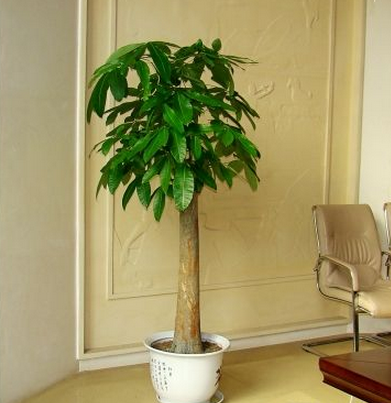
Treat the Root Cause to Solve the Problem of Yellowing Money Tree Leaves
Money Tree Leaves Turning Yellow
1. Water-induced yellowing
Caused by overly frequent watering; its characteristic is that the old leaves show no obvious change while the young leaves turn yellow. In this case, watering should be stopped immediately.
2. Drought-induced yellowing
Caused by lack of water and drought; its characteristic is that the old leaves turn yellow first, from the bottom up. If the lack of water lasts a little longer, the whole plant's leaves will turn yellow, and it may even die, so it should be watered in time.
3. Fertilizer-induced yellowing
Caused by overly frequent fertilization or too high a concentration; its characteristic is that the young leaves are thick and fleshy, glossy, and uneven; fertilization should be stopped, the soil should be loosened, and the plant should be watered.
4. Starvation-induced yellowing
Caused by insufficient fertilizer, too low a fertilization concentration, and too long an interval between fertilizations; its characteristic is that the young leaves and tender stems turn yellow first. If this phenomenon is seen and fertilizer is not applied in time, it can also cause the whole plant's leaves to turn yellow or even die; for flowers lacking fertilizer, never apply a large amount of concentrated fertilizer at once, to avoid burning the roots.
5. Iron-deficiency yellowing
For woody flowering plants in greenhouses, etc., because the soil fertility conditions change greatly, yellowing leaves often occur. Its characteristic is that the young leaves are obviously affected while the old leaves are less so, with yellow leaf flesh and green veins, forming a typical network pattern; this can be solved by applying a ferrous sulfate aqueous solution. The method is: mix 7 parts cake fertilizer, 5 parts ferrous sulfate, and 200 parts water to make a diluted solution and water the plant with it.
What to Do When a Money Tree's Leaves Turn Yellow: Treating the Root Cause Is the Fundamental Solution
After growing a money tree for a period of time, its leaves turn yellow, affecting its appearance and, even more, one's mood. So what should be done when a money tree's leaves turn yellow? It is said that there are as many as 10 causes of yellowing money tree leaves; if medicine is used blindly, it may make the problem of yellowing money tree leaves impossible to solve.
Yellowing leaves on a money tree can be said to be a common situation, and it is closely related to improper care during cultivation.
1. Improper watering
The money tree likes a warm and humid climate environment, and the potting soil is best kept moist, but when grown indoors, generally do not water until the potting soil is dry, and water thoroughly when you do. Because if you do not water thoroughly and only wet the top while the bottom stays dry, it will affect nutrient absorption, causing the leaf color to become dull and lusterless, and gradually wither and yellow from the bottom up and fall off. In this case, water lightly and spray water frequently, so that it gradually recovers before returning to normal watering.
2. Unsuitable light
The money tree likes light, but cannot tolerate strong direct sunlight; semi-shade or diffused light is best, and only in winter does it need better light conditions to grow well. Starting in late April, you can choose a sunny, warm midday to move the pot outdoors or onto a balcony for 1-2 hours of direct sunlight, then gradually extend the time, and you will get very good growing results. If kept in shade or a dark place for a long time, the leaves will turn yellow and drop, and in severe cases the plant may even wither and die.
3. Damage from pests and diseases
Leaf spot disease is a common ailment of the money tree. Garlic juice can be sprayed to sterilize it. As for pests, the main problems are red spider mites and scale insects. To deal with red spider mites, you can use effective controls such as manzate, keman, and dicofol. For scale insects, when there are few, you can wipe them clean with a cloth strip, because scale insects die as soon as they leave the plant; when there are many, you can spray a 0.2% solution of essential balm or laundry detergent for control.
4. Too much fertilizer
During the money tree's optimum temperature growth period, fertilizer should be applied regularly to ensure lush growth of the plant. Generally, a light fertilizer is applied once about every 20 days, and when repotting, well-rotted base fertilizer should be added. However, applying too much fertilizer, or applying fertilizer that has not been rotted, will cause the money tree's roots to burn, resulting in yellowing and falling leaves.
5. Dust on the leaf surface
If the dust on the leaf surface is too thick, it not only affects the appearance but also affects the plant's respiration and photosynthesis, thereby causing the leaves to turn yellow. The dust should be wiped off promptly.
6. Incorrect soil-changing operation
When changing the soil, improper operation can also cause the money tree's leaves to turn yellow. When changing the soil for a money tree, try to damage the roots as little as possible; the added substrate should be sterile, breathable, fertile, and slightly acidic; and the potting soil should be filled in firmly without leaving gaps. If there are gaps, no matter how much water is poured, the plant will still suffer from water shortage, thus causing the leaves to turn yellow.
7. Low ambient temperature
The money tree likes a warm and humid environment. Its optimum growth temperature is 20-30°C. When the temperature is below 18°C, the money tree stops growing. It can adapt to temperatures as low as 10°C, but the temperature must not be lower than 5°C, otherwise frost damage will occur, with mild cases showing yellow, falling leaves and severe cases resulting in death.
8. Hot, high temperatures
For the money tree, which likes a warm and humid environment, if it is placed in high temperatures and exposed to the sun, the plant's transpiration will be excessive, and the roots will not be able to supply enough water and nutrients, very easily causing the leaf tips to scorch or the leaves to turn yellow and fall off. It should be moved promptly to a well-ventilated, shady place.
9. Too dense and unventilated
If the money tree's branches and leaves grow too luxuriantly and have not been pruned for a long time, the inner branches and leaves will not get enough light, very easily causing the leaves to turn yellow and fall off. Pruning should be strengthened in time to let in air and light.
10. Soil and water on the alkaline side
In most northern regions, the soil and water contain relatively more salt and alkali, and are not very suitable for planting the acid-loving money tree. Because the soil lacks absorbable iron, the money tree's leaves will gradually turn yellow. Therefore, when planting, choose acidic soil and regularly water with alum fertilizer water during the growth period.
When a money tree is grown indoors, its growing environment has changed, so we need to create a suitable environment for its growth. This is the fundamental way to prevent the money tree's leaves from turning yellow.
How to Grow a Money Tree: What to Do When a Money Tree's Leaves Turn Yellow
I believe many people place a money tree at home or in the office. First, the money tree has very good symbolic meaning, and in addition, the money tree has a very graceful shape, with glossy green leaves all year round, making it a very attractive foliage plant. But with improper care, the money tree can also develop yellow leaves. Below is an introduction to how to grow a money tree and how to deal with yellowing money tree leaves.
How to Grow a Money Tree
I. Choice of environment
The money tree is highly adaptable, liking light while also tolerating shade, and growing well in full sun, half sun, or shaded places. But if it grows in a dark place for a long time, its vigor will decline. In early summer, 50% shading is best, to avoid the intense sun scorching the leaf tips and leaf margins.
When grown indoors for viewing, it should be placed in a spot with some diffused light, and it should not be kept there continuously for more than 30 days. If decline or leggy growth occurs, it should gradually be exposed to sunlight, and never suddenly be exposed to strong light, to prevent it from dying from not adapting.
II. Choice of potting soil
Most money trees bought nowadays come with soil provided by the seller, so gardeners do not need to change the soil as soon as they get it. Grow it first, and consider changing the soil later. If you do change the soil, potted money trees generally use loose garden soil or peat soil, leaf mold, coarse sand, plus a small amount of compound fertilizer as base fertilizer and growing medium.
III. Watering the money tree
The money tree's root system is not well developed, and many gardeners' money trees die mostly because of root rot. Some gardeners may ask, how often exactly should a money tree be watered, and how much at a time? It must be clearly stated here that conditions vary from place to place, and the pots and soil used also differ, so there is no fixed watering standard.
So how should you water? Generally speaking, watering a money tree once a month is not considered little. Also, here is a little tip for gardeners: a plant will not die quickly from lack of water and will recover quickly after watering, but if it is waterlogged, it is basically beyond saving. For money trees, you can usually spray more water and water less.
III. Fertilizing the money tree
Under normal circumstances, if the soil is fertile enough, no fertilization is needed. If it has been grown for a long time, you can consider giving a light fertilizer, and never a concentrated fertilizer. For fertilization, you can use some common foliage fertilizers, and remember to use light fertilizer.
Note: Generally speaking, money trees have been beheaded, so every spring, gardeners can also prune them appropriately. First, it improves appearance, and second, it promotes the growth of new branches.
IV. Watch out for pests and diseases
If the stem surface is found to be black or black thread-like fibers are exposed, it is stem rot causing the money tree's stem to rot. In the early stage of the disease, spray a 1000-fold solution of 50% Shu Jun Wang water-soluble powder, once every 10 days, for 2-3 consecutive treatments.
For anthracnose, spray 50% chlorothalonil wettable powder at 800-fold or 50% carbendazim at 600-fold for control, once every 7-10 days. For cabbage caterpillars, inchworms, and red spider mites, regularly spray 40% omethoate at 800-fold or 50% dichlorvos at 1000-fold, once every 7 days, for 2-3 consecutive sprays.
What to Do When a Money Tree's Leaves Turn Yellow
1. Overwatering
The potting soil stays too wet for a long time, causing a lack of oxygen in the soil, making some fibrous roots rot and hindering normal respiration and the absorption of water and nutrients, causing the leaves to turn yellow and fall off. After being affected, the young leaves first turn pale yellow, and then the old leaves gradually turn yellow as well. Watering should be stopped immediately, fertilization suspended, and the soil often loosened to make it well aerated.
2. Drought and dehydration
Missing watering or long-term half watering (that is, wet on top and dry below) affects nutrient absorption and also easily causes the leaf color to become dull and lusterless, with leaves wilting and drooping. First the lower old leaves age, and gradually wither and yellow from the bottom up and fall off. At this point, water lightly and spray water, so that it gradually recovers before returning to normal watering.
3. Long-term lack of fertilizer
If no nitrogen fertilizer has been applied for a long time or the pot and soil have not been changed, the soil lacks nitrogen and other nutrient elements, causing the branches and leaves to become weak, with thin, yellow leaves. The pot should be turned out in time, replaced with new loose and fertile growing medium, and gradually given dilute, well-rotted liquid fertilizer or compound flower fertilizer.
4. Excessive fertilization
If too much fertilizer is applied, the new leaves will become thick and fleshy and mostly uneven, and the old leaves will dry at the tips, scorch yellow, and fall off. Fertilization should be stopped immediately, watering increased so that the fertilizer flows out from the drainage hole at the bottom of the pot, or the pot should immediately be turned out and the soil ball rinsed with water before being replanted in the pot.
5. Hot, high temperatures
In summer, if cool-loving flowers (such as cyclamen, fuchsia, and wax begonia) are placed in a high-temperature spot and exposed to strong direct sunlight, it very easily causes the young leaves' tips and margins to scorch, or the leaves to turn yellow and fall off. They should be moved promptly to a well-ventilated, shady place.
6. Excessive shading
If sun-loving flowers are kept for a long time in a shaded place or a place with insufficient light, the branches and leaves will turn yellow.
7. Soil and water on the alkaline side
In most northern regions, the soil and water contain relatively more salt and alkali. When planting acid-loving flowers such as rhododendron, camellia, banana shrub, gardenia, orchid, white orchid, and osmanthus, because the soil lacks absorbable soluble iron and other elements, the leaves will gradually turn yellow. When planting, choose acidic soil and regularly water with alum fertilizer water during the growth period.
8. Too dense and unventilated
If too much nitrogen fertilizer is applied, the branches and leaves grow too luxuriantly, and with no pruning for a long time, the inner branches and leaves do not get enough light, easily causing the leaves to turn yellow and fall off. Fertilize reasonably and strengthen pruning to let in air and light.
9. Dry air
When the indoor air is too dry, some flowers that like a humid environment, such as spider plants and orchids, often show dry leaf tips or scorched leaf margins. Measures such as spraying water and covering with plastic film should be taken to increase air humidity.
10. Improper temperature
If the room temperature in winter is too low, flowers that like high temperatures are often susceptible to cold damage, thus causing the leaves to turn yellow, and in severe cases to wither, yellow, and die. If the room temperature is too high, the plant's transpiration will be excessive, and the roots will not be able to supply enough water and nutrients, which will also make the leaves turn yellow. Please remember to adjust the room temperature in time.
11. Soil on the acidic side
Southern red soil is on the acidic side, and elements such as magnesium are easily lost. When planting trees and flowers that tolerate alkali or like slightly alkaline soil, such as oleander, boxwood, and winter jasmine, the phenomenon of yellowing between the veins of old leaves often easily occurs. Calcium magnesium phosphate fertilizer can be applied or a magnesium sulfate solution sprayed.
12. Damage from pests and diseases
Leaf spot disease caused by infection with fungi and other pathogens easily causes local necrosis of the leaves, with yellow spots or patches appearing, and in severe cases the whole leaf withers, yellows, and falls off. After infection with mosaic virus, yellow-green mottled patches appear on the leaves; when harmed by scale insects, red spider mites, and the like, the leaves also become locally yellow and withered, or even the whole leaf wilts, yellows, and falls off. In all cases, pesticide should be sprayed promptly for control.
13. Strong irritation
When preventing and controlling pests and diseases, using too high a concentration of pesticide, or being polluted by toxic gases in the air, or suddenly watering with cold water when the temperature is high, all easily cause the leaf tips or part of the leaf surface to turn yellow and scorch, or even the whole plant to wither and die.
Therefore, attention should be paid to the reasonable use of pesticides, and efforts should be made to eliminate sources of air pollution. In midsummer, avoid watering flowers with cold water around noon. Finally, it should also be mentioned that yellow leaves on potted flowers are sometimes caused by one reason, but are often the result of multiple factors, so a correct diagnosis should be made in order to treat the root cause.
The above is an introduction to how to grow a money tree, as well as some answers to the question of what to do when a money tree's leaves turn yellow. I hope everyone can gain some understanding. For more home plant knowledge, please stay tuned.