How should indoor bonsai, potted plants, and flower arrangements be placed?
A bit of greenery indoors can add a fresh, lively touch of life to a room. Therefore, in the indoor arrangements of many homes, bonsai, potted plants, and flower arrangements are commonly used to decorate and accent the indoor environment.
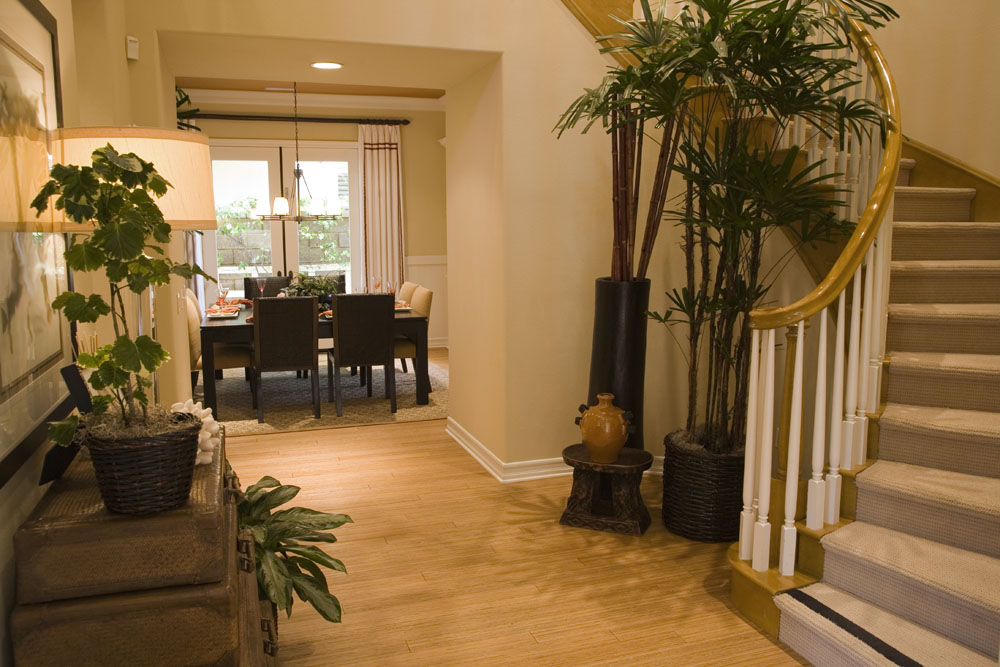
Interior decoration: How to place bonsai, potted plants, and flower arrangements indoors
Bonsai art is an art created in our country. Our country's bonsai art already has a history of more than 2,000 years. Bonsai art is in fact a clever combination of plant cultivation techniques and garden art. The materials used for bonsai are extremely wide-ranging: a mountain, a stream, a blade of grass, a tree, and especially twisted, coiled trunks and strangely shaped mountain stones are all the best material for bonsai. Using these materials, through the careful design and ingenious processing of craftsmen, and using the artistic techniques of shrinking a dragon to an inch and planting branches and placing stones, they imitate the manner and spirit of nature, its fantastic mountains and beautiful waters, and create one vivid miniature scene after another.
Although its scenery is small, it can give people the artistic feeling of "within a foot one can gaze at a distance of ten thousand li; within a square inch one can discern the steepness of a thousand xun." Therefore, bonsai is praised as "silent poetry, three-dimensional painting."
Bonsai is divided into two categories: one is tree-stump bonsai, and the other is landscape bonsai. The characteristics of tree-stump bonsai are thick, short stems, fine, small branches and leaves, gnarled and twisted roots and branches, and an old, elegant form. According to their growth tendency, trunks and branches are divided into forms such as straight trunk, coiled and curved, horizontal branch, hanging branch, clustered branch, and connected roots; tree species used for bonsai include Jiulixiang (Murraya paniculata), Fujian tea (Carmona retusa), pomegranate tree, boxwood, Chinese juniper, Buddhist pine (Podocarpus macrophyllus), elm, and Liuyuexue (Serissa japonica). Using the shaping method of storing branches and truncating trunks, they express the natural wild charm of trees that are firm and unyielding, elegant and unrestrained. Landscape bonsai uses stones that are beautiful in color, strange in shape, clear in texture, easy to carve, good at absorbing water, and easy to grow moss, such as Taihu stone, stalactite, pumice, sand-accumulated stone, and coral stone. According to the characteristics of the mountain stones, landscape bonsai is divided into solitary peak style, vertical style, symmetrical style, sparse-dense style, climbing-stone style, and so on.
The pots, bowls, basins, and shallow vessels selected for bonsai are generally ceramic. In bonsai art, attention should be paid to the mutual enhancement, mutual harmony, and integration of tree and stone, pot and vessel, and stand.
Bonsai gives people a feeling of refinement, delicacy, and preciousness. It is generally placed on stands, shelves, platforms, tables, or cabinets, in places suitable for people's line of sight and attention-grabbing. The size of the bonsai should be in harmony with the surrounding environment and spatial proportions.
The potted plants used for indoor home environment arrangement are mostly flowers of the four seasons and green decorative plants. Potted flowers include orchid, plum blossom, narcissus, Chinese rose, bicolor peach, crabapple, camellia, chrysanthemum, lily, four-o'clock flower, purslane, jade answer flower, clivia, and so on; evergreen decorative plants include Japanese evergreen, green pine, sago palm, tree of heaven, asparagus fern, monstera, spider plant, Guanyin bamboo, golden-edged thousand-year-old orchid, beach naupaka, striped one-leaf orchid, and so on. Placing potted flowers indoors naturally brings much vitality and pleasure. For example, potted spider plants are often placed on relatively high stands or furniture, or small flower pots are hung up with string; their drooping branches and delicate form can adjust the monotony of indoor vertical and horizontal lines. Another example is sago palm and monstera, whose leaves are large and highly decorative; their form and color are completely different from other indoor objects, forming a sharp contrast and showing the vitality of life. Some cactus family plants, such as epiphyllum, night-blooming cereus, and cactus ball, although when not flowering they cannot compare with the seductive variety of other potted plants, can nevertheless add a wild charm from distant places.
Flower pots are generally made of clay pots. Glazed porcelain pots or ceramic pots are not breathable and affect the growth of flowers. According to the habits and growth characteristics of the flowers, they should be placed separately on balconies, windowsills, tables, cabinets, stands, and shelves. Large evergreen potted plants are generally placed in a corner of the room to fill space.
Bonsai and potted plants differ from decorative handicrafts in their characteristics: first, they have life and vitality and give people the enjoyment of natural beauty; second, because their branches and leaves have a thousand postures and ten thousand forms, they set each other off with furniture and other objects, forming a rich feeling of indoor lines, shapes, colors, and space, and adding indoor charm. Therefore, when placing bonsai and potted plants indoors, their size, color, position, and angle must all take into account the relationship with the surrounding environment. By all means avoid piling clutter around the flowers, or placing them on top of a television, and do not place other objects of equal volume and equal height beside the flowers. Generally, they should be placed in an eye-catching position.
Flower arrangements can also beautify the indoor environment. Whenever spring fills the garden or during festive holidays, whether in city or countryside, people often gather or buy a bouquet of fresh flowers to take home and put in a vase, enjoying them for several days to add pleasure to life. Some also buy plastic flower arrangements, which can provide long-term decoration and enjoyment.
Flower arranging originally originated from Buddhist flower offerings. In Japan, flower arranging is also called "kado," and is Japan's unique traditional art. With different content in the arrangement and different flower shapes, the vessels chosen are also varied: some are slender porcelain vases with narrow mouths; some are crescent-shaped ancient bronze vessels; some use plain bamboo tubes; some use oddly shaped glass bottles. Their shapes and surface lusters are all different.
Flower arranging should fully bring out the natural posture of flowers and plants. The selection and matching of flowers and plants, the size of the flowers, the length of the stems, the slant of the branches, every bud and every leaf must go through careful design. Generally speaking, if the branches are long and few, a tall vase or cylindrical shape is suitable; if the branches are short and many, a round, plump jar or a low vase is suitable. Flower arranging should express the arranger's mood and interests, thereby forming different styles such as light and elegant, plain, gorgeous, and dignified.
The flowers and plants in a flower arrangement can be changed regularly according to the season. According to the characteristics of the flower shapes and the shapes of the vessels, different display methods such as hanging up, suspending, placing sideways, and laying flat should be used respectively. The viewing effect should also be taken into account.
According to national appreciation habits, potted plants and flower arrangements are often endowed with certain personified qualities because of the characteristics of various flowers and trees. For example, in our country, the praised plum blossom's defiance of frost, the rose's delicate beauty, the peony's wealth and honor, the orchid's noble purity, and so on; fondness for a certain flower is often a reflection of a person's thoughts and emotions.
TAG: decoration knowledge decoration questions
Bonsai-style flower arrangement
It is a form of artistic flower arrangement created using a shallow water basin. It uses the layout methods of bonsai art to make the flower arrangement resemble a plant bonsai. This kind of flower arrangement is made using arranged flower branches. When making it, some mountain stones and other materials can be placed in the water basin as background and embellishment.
Pot-culture flower arrangement is a kind of plant decoration art in which potted plants and fresh flower branches are artistically combined for indoor arrangement. The potted plants used are generally small indoor plants. Taking foliage plants as an example, although they themselves are suitable for indoor viewing, they have no brightly colored flowers or fruits. Fresh flower and fruit branches inserted among potted foliage plants can make their colors more brilliant. In addition, some indoor potted plants with poor posture can be matched with bright branches, leaves, flowers, and fruits, which can also make their posture more perfect.
"Plum" art excels in both bonsai and flower arrangement show true skill
Click Longhu Tourism WeChatFollow me, you definitely can't go wrong!
Wonderful content
In early March, plum blossoms are still blooming profusely on the branches. At Meihuashan in Ming Xiaoling, the sea of flowers surges like the tide, with hidden fragrance drifting. After seeing patches of seas of plum blossoms, have you ever seen plum blossoms planted in pots or plum branches inserted in bamboo tubes? This morning, the plum bonsai and plum-themed flower arrangement art displayed at the Plum Blossom Valley Art Center attracted many citizens and tourists to stop and admire.
As if naturally opened by heaven flower arrangement skill shows true heart
Personally directed by Mao Guojun, senior horticultural technician of the Zhongshan Mausoleum Administration, the presented flower arrangement works not only enhanced visitors' understanding of plum blossoms, but also improved the artistic appreciation of plum viewing. The reporter saw at the scene that many inconspicuous flowers, fruits, branches, leaves, and vines casually collected from nature were carefully processed and trimmed by teacher Mao Guojun, and in an instant became one after another work of art originating from nature yet higher than nature. "Plum blossoms have a strong spirit and vigor, and possess a noble quality that other flowers do not have." Teacher Mao Guojun introduced that the process of arranging plum blossoms should display its tall, upright, wind-and-snow-defying feeling. In an empty bamboo flower vase, the teacher deftly inserted plum branches, pine branches, and nandina, then gently cut a few carnations for embellishment, and a vivid work of art was born. "The combination of plum, pine, and bamboo, the Three Friends of Winter, can better display formal beauty."
When asked about the freshness retention of fresh flowers, Teacher Mao explained that maintaining flowers must begin with flower selection. Fresh flowers with bright color, freshness, and sufficient water are the first choice; after arranging the flowers, the water must also be changed frequently to keep the water source clean, with changes according to the season: once a day in summer, once every 2-3 days in spring and autumn, and a slightly longer time in winter, once every 7 days; finally, there is the adjustment of nutrient solution. Normal freshness retention mostly uses sugar or vitamins. It is worth noting that metal vessels should be avoided, in case they cause a chemical reaction with the nutrient solution and affect the flowers.
Different shapes great effort in small bonsai
The entire art center displays plum bonsai in a thousand postures and ten thousand forms. Various shapes such as slanting-trunk style, lying-trunk style, and cliff-hanging style dazzled visitors, and made photography enthusiasts press the shutter wildly. One pot with a history of more than a hundred years, "Wasted Years," quietly lies in an oval flower pot. "This bonsai won a gold award at the 14th China Plum and Wintersweet Exhibition," said Xu Jianlin, senior horticultural technician of the Zhongshan Mausoleum Administration, happily. As its name suggests, "Wasted Years" has undergone a hundred years of cultivation and has been passed down through careful cultivation by several generations of horticulturists. "Every year it must undergo careful pruning, binding, pest and disease control, and water and fertilizer management," Xu Jianlin introduced. The production of ancient plum stump bonsai is extremely complex. Because of its advanced age, the xylem accumulates water and decays seriously. The decayed parts must first be removed, preservative brushed on, and tools used for carving to make shari deadwood, so that while effectively protecting the ancient plum stump, it increases the vigorous and ancient beauty and greatly enhances its collection value. And every potted plant is infused with the great effort of horticultural technicians. As the oldest bonsai in Zhongshan Mausoleum, "Wasted Years" is nevertheless one of the most "shy" plum bonsai and is still in bud. According to reports, the plum blossoms of this bonsai are tiaozhimei (jumping-branch plum), belonging to the mid-to-late plum bonsai, and will bloom in a week.