How to Grow Pothos in Water? A Full Breakdown of Seven Cultivation Methods
Water-cultured pothos, that is, pothos grown by the water culture method. Pothos is a large evergreen vine. Growing in tropical regions, it often climbs on rocks and tree trunks in rainforests and can grow into a huge vine. It has strong twining ability and well-developed aerial roots, so it can be attached to a cylinder tied with palm fiber and placed in an entrance hall or hotel, or trained into a hanging form and placed in a study or on a windowsill. It is a flower suitable for indoor placement. So what methods are there for growing water-cultured pothos? Next, let the editor of 17house briefly introduce them to everyone!
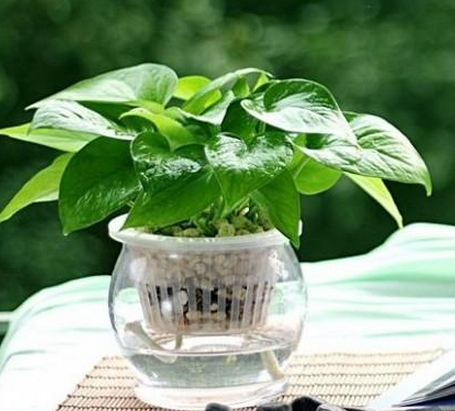
Seven Methods for Growing Water-Cultured Pothos
1. Choosing a water culture container
You can use a vase, a beaker, or other transparent containers (such as a glass bottle).
2. Choosing water
Water is the key element for water-cultured pothos. Tap water, well water, clean drinking water, etc. can be used, but it should be left to stand for one or two days before use.
3. Cutting method
It is advisable to choose healthy, strong pothos stems with aerial roots as the object for water culture. The stem length is 15 cm to 30 cm. Basically, remove the leaves of 1 to 2 nodes and then put them into water; you can also choose a potted plant with a good plant shape, wash off the soil on the roots, cut off excess old roots, and then put it into clean water, which also makes it easy to survive.
4. Water-changing cycle
In the early stage of water culture, change the water frequently, once every 2 to 3 days. After rooting, change it once every 7 to 10 days. You can buy water culture acclimation liquid to reduce inflammation and sterilize and promote root growth.
5. Root pruning
If the roots are too long, cut them short in time to prevent nutrient loss. If the roots rot and become slimy, they should also be cleaned in time, the rotten roots cut off, and soaked in potassium permanganate solution for disinfection before resuming care. Follow the water-changing routine of the early water culture stage.
6. Temperature and light
In winter in the north, a room temperature above 10°C allows it to overwinter safely, and only above 20°C can it grow normally. At the same time, avoid excessive temperature differences and do not place it near heating equipment. Water-cultured pothos needs sufficient scattered light to make the leaves spread out and stay emerald green. It should be placed in a place with enough scattered light, such as a sealed balcony with light or a spot indoors with good light.
7. Humidity
There are several ways to increase humidity: place it near a humidifier, use a sprayer to spray the leaves, stems, and aerial roots, gently wipe the leaf surface with a cold wet towel or toilet paper, and spray water at the place where aerial roots grow.
Hydrangea Cultivation Methods and Photo Appreciation
Hydrangea flowers are planted in large patches in modern parks and scenic areas, forming beautiful landscapes. However, potted appreciation of hydrangea is still not very common, which brings an excellent opportunity for the development and application of hydrangea. We might as well quickly learn the cultivation methods of hydrangea and stay at the forefront of hydrangea cultivation.
Hydrangea Cultivation Methods and Photo Appreciation
——————————————————————————————————————————————
[Plant Profile]
——————————————————————————————————————————————
Chinese name:Hydrangea
Scientific name:Hydrangea macrophylla
Alternative names:Eight Immortals flower, Ziyang flower, Qibianhua, Western hydrangea, Powder ball flower
Family:Saxifragaceae
Genus:Hydrangea
Origin and distribution:Native to the Sichuan area of China and Japan
Morphological characteristics:A deciduous shrub or small tree, with opposite leaves, ovate to ovate-elliptic, dark green on the surface, flowering in summer. The flowers form large spherical cymes at the branch tips, with white neutral flowers at the edges. The flowering period is April to May, the flower diameter is 18-20 cm, and all are sterile flowers. The flowers are green when they first open, then turn white, and have a delicate fragrance. It is named because its form resembles a hydrangea.
Growth habits of hydrangea
——————————————————————————————————————————————
We must first understand the growth habits of hydrangea in order to master its cultivation methods in a targeted way. Hydrangea is native to the Yangtze River Basin of China and likes a warm, humid, and semi-shaded environment. It is afraid of both drought and waterlogging, and is not cold-tolerant. In cold regions, the aboveground part dies in winter and only sprouts new shoots again the following spring. Hydrangea likes fertile, moist, well-drained light loam and has strong adaptability. The acidity and alkalinity of the soil have a great influence on the flower color of hydrangea. In acidic soil it is mostly blue, and in alkaline soil it is mostly red.
Hydrangea cultivation methods
——————————————————————————————————————————————
★ The suitable growth temperature for hydrangea is 18-28°C, and the winter temperature should not be lower than 5°C. Flower bud differentiation requires maintaining conditions of 5-7°C for 6-8 weeks. 20°C can promote flowering, and if 16°C can be maintained after flowering, the flowering period can be extended.
★ Hydrangea is a short-day plant. With more than 10 hours of dark treatment each day, flower buds form in about 45-50 days.
★ Potted hydrangea commonly uses a 15-20 cm pot. After sprouting in spring, water thoroughly to ensure the leaves do not wilt. June to July is the flowering period of hydrangea, so fertilizer and water should be sufficient, with fertilization once every half month.
★ Usually, when cultivating hydrangea, avoid direct sunlight, and 60-70% shading is ideal. Proper shading when light is too strong in midsummer can extend the viewing period of the flowers. Removing the flower stems after flowering can encourage new branches.
★ The potting soil of hydrangea should be kept moist, but watering should not be excessive. Especially in the rainy season, pay attention to drainage to prevent root rot caused by waterlogging. In winter, slightly dry conditions are better; if it is too humid, the leaves are prone to rot. Repot once every spring and prune properly to maintain a beautiful plant shape.
★ The main diseases of hydrangea include wilt disease, powdery mildew, and leaf spot. Spray with a 600-fold solution of 65% zineb wettable powder for control. Pests include aphids and mirids, which can be killed by spraying with a 1500-fold solution of 40% omethoate emulsifiable concentrate.
"Conclusion:Hydrangea is abundantly produced in Japan. In horticultural shops there are many varieties of hydrangea, and you can see many new varieties with strange flower colors. They are expensive and are all used as household potted ornamentals. Hydrangea cultivation has become a major trend, so quickly master the methods of hydrangea cultivation.
【More plant encyclopedia】
Poppy Night-blooming jasmine Rose Azalea Lavender Pothos Asparagus fern Peperomia Hyacinth Anthurium Cherry blossom Calla lily
African jasmine Rose Spring Festival flowers Succulents Tropical plants Tumi flower Agave Canna Spider lily Forget-me-not Dandelion
Dendrobium officinale Yew Kapok Osmanthus Begonia Water-cultured plants Home feng shui plants Bedroom feng shui plants Plum blossom Aloe
Jasmine Radiation-resistant plants Copper coin grass Potted plants Bonsai making Drug plants Mistletoe Indoor flowers Money tree Lucky bamboo Lucky bamboo
Potted plant making Anthurium Mint Lithops Geranium Garden Christmas cactus Peace lily Snake plant Kunlun snow chrysanthemum Water lily Blue enchantress
Hydrangea Cultivation Methods Hydrangea Cultivation Methods and Photo Appreciation
Hydrangea flowers are planted in large patches in modern parks and scenic areas, forming beautiful landscapes. However, potted appreciation of hydrangea is still not very common, which brings an excellent opportunity for the development and application of hydrangea. We might as well quickly learn the cultivation methods of hydrangea and stay at the forefront of hydrangea cultivation.
[Recommended reading] Lily Kalanchoe Globe amaranth Gardenia Clivia Bromeliad Balloon flower Mulberry Winter jasmine Sensitive plant
Hydrangea Cultivation Methods and Photo Appreciation
——————————————————————————————————————————————
[Plant Profile]
——————————————————————————————————————————————
Chinese name:Hydrangea
Scientific name:Hydrangea macrophylla
Alternative names:Eight Immortals flower, Ziyang flower, Qibianhua, Western hydrangea, Powder ball flower
Family:Saxifragaceae
Genus:Hydrangea
Origin and distribution:Native to the Sichuan area of China and Japan
Morphological characteristics:A deciduous shrub or small tree, with opposite leaves, ovate to ovate-elliptic, dark green on the surface, flowering in summer. The flowers form large spherical cymes at the branch tips, with white neutral flowers at the edges. The flowering period is April to May, the flower diameter is 18-20 cm, and all are sterile flowers. The flowers are green when they first open, then turn white, and have a delicate fragrance. It is named because its form resembles a hydrangea.
Growth habits of hydrangea
——————————————————————————————————————————————
We must first understand the growth habits of hydrangea in order to master its cultivation methods in a targeted way. Hydrangea is native to the Yangtze River Basin of China and likes a warm, humid, and semi-shaded environment. It is afraid of both drought and waterlogging, and is not cold-tolerant. In cold regions, the aboveground part dies in winter and only sprouts new shoots again the following spring. Hydrangea likes fertile, moist, well-drained light loam and has strong adaptability. The acidity and alkalinity of the soil have a great influence on the flower color of hydrangea. In acidic soil it is mostly blue, and in alkaline soil it is mostly red.
Hydrangea cultivation methods
——————————————————————————————————————————————
★ The suitable growth temperature for hydrangea is 18-28°C, and the winter temperature should not be lower than 5°C. Flower bud differentiation requires maintaining conditions of 5-7°C for 6-8 weeks. 20°C can promote flowering, and if 16°C can be maintained after flowering, the flowering period can be extended.
★ Hydrangea is a short-day plant. With more than 10 hours of dark treatment each day, flower buds form in about 45-50 days.
★ Potted hydrangea commonly uses a 15-20 cm pot. After sprouting in spring, water thoroughly to ensure the leaves do not wilt. June to July is the flowering period of hydrangea, so fertilizer and water should be sufficient, with fertilization once every half month.
★ Usually, when cultivating hydrangea, avoid direct sunlight, and 60-70% shading is ideal. Proper shading when light is too strong in midsummer can extend the viewing period of the flowers. Removing the flower stems after flowering can encourage new branches.
★ The potting soil of hydrangea should be kept moist, but watering should not be excessive. Especially in the rainy season, pay attention to drainage to prevent root rot caused by waterlogging. In winter, slightly dry conditions are better; if it is too humid, the leaves are prone to rot. Repot once every spring and prune properly to maintain a beautiful plant shape.
★ The main diseases of hydrangea include wilt disease, powdery mildew, and leaf spot. Spray with a 600-fold solution of 65% zineb wettable powder for control. Pests include aphids and mirids, which can be killed by spraying with a 1500-fold solution of 40% omethoate emulsifiable concentrate.
"Conclusion:Hydrangea is abundantly produced in Japan. In horticultural shops there are many varieties of hydrangea, and you can see many new varieties with strange flower colors. They are expensive and are all used as household potted ornamentals. Hydrangea cultivation has become a major trend, so quickly master the methods of hydrangea cultivation.
【More plant encyclopedia】
Poppy Night-blooming jasmine Rose Azalea Lavender Pothos Asparagus fern Peperomia Hyacinth Anthurium Cherry blossom Calla lily
African jasmine Rose Spring Festival flowers Succulents Tropical plants Tumi flower Agave Canna Spider lily Forget-me-not Dandelion
Dendrobium officinale Yew Kapok Osmanthus Begonia Water-cultured plants Home feng shui plants Bedroom feng shui plants Plum blossom Aloe
Jasmine Radiation-resistant plants Copper coin grass Potted plants Bonsai making Drug plants Mistletoe Indoor flowers Money tree Lucky bamboo Lucky bamboo
Potted plant making Anthurium Mint Lithops Geranium Garden Christmas cactus Peace lily Snake plant Kunlun snow chrysanthemum Water lily Blue enchantress