What are the benefits of pothos? A complete list of the effects and benefits of growing pothos
Pothos is also called devil's ivy, stone garlic, bamboo-leaf grass, golden pothos, golden vine, and more. It is a plant that is very easy to keep alive; it only needs water, and it is called the "flower of life." In home life, people may grow some flowers and plants to add beauty, and nowadays many families are growing pothos, so what are the benefits of pothos? Next, let the editor of Yiqizhuangxiu.com briefly introduce it to everyone!
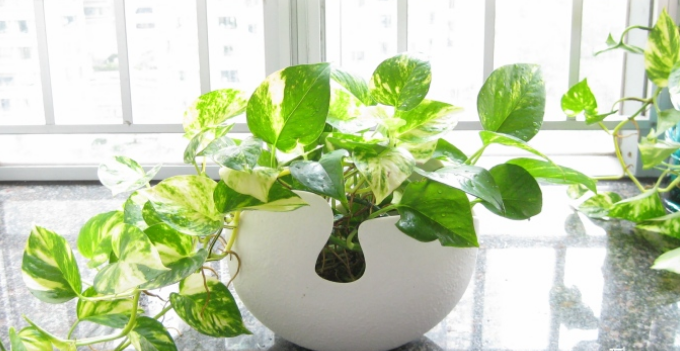
What are the benefits of growing pothos
I. What are the benefits of growing pothos
There are many benefits of growing pothos at home, mainly reflected in ornamental value, removing odors, and absorbing harmful gases such as formaldehyde.
First, because its leaves are delicate and lovely and its stems are slender and soft, pothos has very good ornamental value and can also add vitality and energy to a room, making it a very good indoor plant decoration. In addition to its role in ornamentation and beautifying the environment, pothos is also good at absorbing indoor formaldehyde. Its trailing stems hang down naturally, and it can not only effectively purify the air but also absorb most harmful gases in the room, such as formaldehyde and benzene.
In addition, pothos also has the title of odor absorber. Because pothos has well-developed aerial roots, it has a strong ability to absorb odors produced in family life, such as cooking fumes and detergents, and many families place the pothos they grow in the bathroom to purify the air.
Besides the above benefits, growing it can also effectively enhance the interests and personal qualities of family members, thereby bringing more shared enjoyment to family life.
II. Propagation of pothos
Pothos can be propagated by cuttings and by burying stems. That is, in late spring and early summer, select healthy pothos vines, cut 15 cm to 30 cm stems, remove the leaves from the 1 to 2 nodes at the base (do not damage the aerial roots), then insert them into the potting soil. After covering with soil and watering, first place them in a shaded place. Afterward, for a period of time, spray water on the leaves every day or cover with plastic film to keep moisture. The room temperature must not be lower than 20°C, and the survival rate is generally above 90%.
What are the benefits of growing pothos? Propagation methods of pothos
Pothos is an important variety for office plant growing, and it has very good effects on greening the environment and absorbing polluted air. Below let us look at what the benefits of growing pothos are, and the propagation methods of pothos.
I. Pothos growing methods and precautions
The growing methods and precautions for pothos should mainly be analyzed and carried out from the following 5 aspects. As long as the requirements of the following 5 aspects are met, you will definitely grow very good pothos.
1. For indoor home pothos growing, choose loose soil with good drainage for potting, and pothos is suitable for slightly acidic soil.
2. Temperature: The suitable temperature for growing pothos is 20 to 30 degrees, and the lowest must not be below 15 degrees. Around 10 degrees it will freeze to death. Of course, most families have growing temperature conditions suitable for pothos. Just pay attention to keeping it warm in winter. If the climate is too cold, you can keep pothos warm by reducing window opening.
3. Light: Because pothos originally grows in dark primeval forests and likes shade, its light requirements are not strong. Therefore, when growing pothos, it is usually enough to place it indoors where it can see sunlight. You can also take it into the sun at noon for a while so it can carry out photosynthesis better, then put it back indoors. Although pothos is very shade-tolerant, it is also not good to keep it in a dark place for a long time. At least about half a month, it should be exposed to strong light.
4. Water: When growing pothos, do not water too much. At most, just spray water at its roots. As long as the soil is kept moist. If water accumulates, it will breed mosquitoes and insects, seriously affecting the growth and ornamental effect of pothos. In summer, water appropriately more. The principle is to keep the potting soil moist but not waterlogged. In winter, watering should be controlled, once every two or three days is enough. When indoor heating is on, water appropriately more. When the indoor temperature is too low, pay attention to reducing watering. When you cannot water, you can spray water on the leaves to cool it down.
5. Fertilizer: For fertilizing pothos, ordinary inorganic fertilizers are difficult to absorb, so special fertilizer must be used, such as Beida Huhuashen and Japan's Hana Ichiban. Because pothos growth slows in winter, fertilize less. During the growing season of pothos, appropriately increase fertilization. When fertilizing, spraying liquid fertilizer can be the main method.
The difference between pothos growing methods and those for other plants is that because it has aerial roots on its stem nodes, it is very easy to keep alive, and cutting propagation is generally used for reproduction. In particular, 15°C to 25°C is the stage when it grows fastest. The pothos growing methods and precautions summarized here for everyone are all very practical. Growing some pothos at home adds beauty and purifies the air, so isn't that killing two birds with one stone?
II. What are the benefits of growing pothos
There are many benefits of growing pothos at home, mainly reflected in ornamental value, removing odors, and absorbing harmful gases such as formaldehyde.
First, because its leaves are delicate and lovely and its stems are slender and soft, pothos has very good ornamental value and can also add vitality and energy to a room, making it a very good indoor plant decoration. In addition to its role in ornamentation and beautifying the environment, pothos is also good at absorbing indoor formaldehyde. Its trailing stems hang down naturally, and it can not only effectively purify the air but also absorb most harmful gases in the room, such as formaldehyde and benzene.
In addition, pothos also has the title of odor absorber. Because pothos has well-developed aerial roots, it has a strong ability to absorb odors produced in family life, such as cooking fumes and detergents, and many families place the pothos they grow in the bathroom to purify the air.
Besides the above benefits, growing it can also effectively enhance the interests and personal qualities of family members, thereby bringing more shared enjoyment to family life.
III. Propagation of pothos
Pothos can be propagated by cuttings and by burying stems. That is, in late spring and early summer, select healthy pothos vines, cut 15 cm to 30 cm stems, remove the leaves from the 1 to 2 nodes at the base (do not damage the aerial roots), then insert them into the potting soil. After covering with soil and watering, first place them in a shaded place. Afterward, for a period of time, spray water on the leaves every day or cover with plastic film to keep moisture. The room temperature must not be lower than 20°C, and the survival rate is generally above 90%.
The above is the relevant introduction in this article. I believe after reading it you also have a simple understanding of this. If needed, you can continue to follow No.1 Home Network to learn more information.
How to grow pothos and what are the many household benefits of growing pothos
How to grow pothos? In exploring pothos growing methods, we learn from each other and study together, so the growth results of pothos will be excellent. Through growing pothos, we can make many friends.
I. How to grow pothos
1. Pothos develops best when cultivated in loose, organic-rich, slightly acidic and neutral sandy loam. Repot once every three years. Pothos is a shade-loving plant, avoids direct sunlight, likes scattered light, and is relatively shade-tolerant. Usually, when it receives four hours of scattered light, pothos grows and develops best.
2. Propagation uses cutting and stem-burying methods. Select healthy pothos vines, cut them into sections of two nodes, being careful not to damage the aerial roots, then insert them into plain sand or coal cinder, with a depth of 1/3 of the cutting. Water thoroughly and place in a shaded place. Spray with Xinguo lipid film to retain moisture, and the survival rate is generally raised to above 90%.
3. Pothos likes relatively high air humidity and a moist environment. Midsummer is the peak growth period for pothos. Every day, spray water several times on the aerial roots and leaf surfaces of pothos. This can wash dust from the leaves, help pothos breathe, make the leaf color green and verdant, lower leaf surface temperature, increase the air humidity of the micro-environment, and allow the leaves to grow better. For fertilizing pothos, nitrogen fertilizer is the main type and potassium fertilizer is supplementary. Spray Xinguo lipid film to preserve fertilizer and moisture. In winter, when room temperature is relatively low, pothos is in a dormant state, so water less and just keep the potting soil from drying out.
4. The most suitable growth temperature for pothos is 20°C-28°C during the day and 15°C-18°C at night. In winter, as long as the indoor temperature is not lower than 10°C, pothos can safely overwinter. If the temperature is lower than 5, it is easy to cause leaf drop and affect growth. During the growing period, spraying Zhuangjingling at the right time can make the plant stems thick and strong, the leaves fleshy and thick, the leaf color fresh and tender, and the plant lush.
5. Shaping and pruning. Plant or directly insert 4-5 plants per pot, and set up a palm pole in the middle of the pot so pothos can twine and grow upward. Shaping and pruning are carried out in spring. When the stems and vines have climbed all over the palm pole and the tips exceed the palm pole by about 20 cm, cut off 40 cm of the stem tips of 2-3 of the plants. After cutting back, when new buds and new leaves sprout, then cut off the stem tips of the remaining plants. For potted plants that have lost leaves on the whole plant or the lower half due to winter freezing or other reasons, half of the stems and vines can be cut back by 1/2, and the other half cut back by 2/3 or 3/4, so that the cut openings are staggered in height. In this way, the new leaves growing below the cut openings can quickly cover the palm pole.
II. What are the benefits of growing pothos
Placing pothos in the bathroom can absorb polluted air very well
There are many benefits of growing pothos at home, mainly reflected in ornamental value, removing odors, and absorbing harmful gases such as formaldehyde.
First, because its leaves are delicate and lovely and its stems are slender and soft, pothos has very good ornamental value and can also add vitality and energy to a room, making it a very good indoor plant decoration. In addition to its role in ornamentation and beautifying the environment, pothos is also good at absorbing indoor formaldehyde. Its trailing stems hang down naturally, and it can not only effectively purify the air but also absorb most harmful gases in the room, such as formaldehyde and benzene.
In addition, pothos also has the title of odor absorber. Because pothos has well-developed aerial roots, it has a strong ability to absorb odors produced in family life, such as cooking fumes and detergents, and many families place the pothos they grow in the bathroom to purify the air.
Besides the above benefits, growing it can also effectively enhance the interests and personal qualities of family members, thereby bringing more shared enjoyment to family life.
The above is the relevant introduction in this article. I believe after reading it you also have a simple understanding of this. If needed, you can continue to follow No.1 Home Network to learn more information.