Growing Pothos Makes Home Air Fresher
Pothos (Epipremnum aureum) is a shade-loving plant, mostly grown in pots as a climbing foliage plant. It prefers warm, humid environments and requires loose, fertile, well-drained soil. Because pothos can absorb benzene, formaldehyde and other substances from the air, it is widely grown indoors. So how do you grow pothos? Next, let the editor of Yiqizhuangxiu.com give everyone a brief introduction!
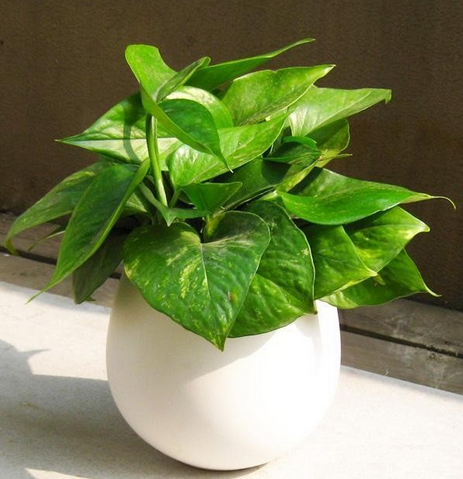
Fresh Home Air Is Essential - Grow Pothos to Breathe Fresh Air
In spring, summer and autumn, pothos can be placed near an east- or north-facing windowsill; in winter it can be placed at a south-facing window
If it is kept in a too-dark environment for a long time, not only will the trailing stems become leggy, with longer internodes and a sparse, scattered shape, but the yellow-white stripes on the leaves will also become smaller and paler, and the markings may even disappear completely and fade to green. If grown outdoors, pay attention to shading; especially in summer, be careful to prevent direct strong light, otherwise new leaves will become smaller, the leaf color will be dull, and the leaf edges will easily be scorched. The suitable temperature for pothos growth is 20°C-30°C, and the winter room temperature should not be lower than 15°C.
Pothos likes moisture
During the growing season, watering should keep the potting soil moist regularly; never let the potting soil dry out, otherwise it easily causes yellow leaves and a poor plant shape. If watering is excessive and causes waterlogging in the pot, it easily causes root rot and withered leaves; especially when the winter room temperature is low, even more attention should be paid to controlling watering. In summer, while watering adequately, also pay attention to regularly misting the leaves. In winter, when the climate is dry, the leaves also need to be sprayed and washed with warm water once every 4-5 days to wash away dust from the leaf surface, which helps keep the leaves bright and green.
For potted pothos, choose fertile, loose, well-drained leaf mold soil
Slightly acidic soil is better. Pothos is extremely shade-tolerant and can be placed in a sunny indoor spot all year round. In a dimly lit room, it should be moved to a brighter environment every half a month to recover for a period, otherwise the internodes tend to lengthen and the leaves become smaller. Pothos likes a hot and humid environment; the overwintering temperature should not be lower than 15°C, the potting soil should be kept moist, and the leaves should be misted regularly to increase air humidity and benefit the growth of aerial roots. Pothos is usually propagated by layering and stem burying. In late spring and early summer, select vigorous pothos vines, cut 15 cm to 30 cm cuttings, remove the leaves from the basal 1 to 2 nodes, being careful not to damage the aerial roots, then insert them into plain sand or coal cinder to a depth of 1/3 of the cutting. Water thoroughly and place in a shaded spot, mist the leaves daily or cover with plastic film to retain moisture. As long as the environment is kept no lower than 20°C, the survival rate is above 90%.
How to Grow Pothos and What Are the Household Benefits of Growing Pothos
How to grow pothos - in discussing pothos cultivation methods, we learn from each other and study together, so that the growth results of pothos are excellent. Through growing pothos, we can make many friends.
I. How to Grow Pothos
1. Pothos develops best when cultivated in loose, organic-rich, slightly acidic to neutral sandy loam. Repot once every three years. Pothos is a shade-loving plant, avoiding direct sunlight and preferring scattered light; it is fairly shade-tolerant. Generally, receiving four hours of scattered light gives the best growth and development.
2. Propagation uses cuttings and the stem-burying method. Select robust pothos vines, cut them into sections with two nodes, being careful not to damage the aerial roots, then insert them into plain sand or coal cinder to a depth of 1/3 of the cutting. Water thoroughly and place in a shaded spot, spray with Xinguozhimmo to retain moisture, and the survival rate is above 90%.
3. Pothos likes relatively high air humidity and a moist environment. Midsummer is the peak growth period for pothos; the aerial roots and leaves can be misted several times a day, which not only cleans dust from the leaves and helps pothos breathe, but also keeps the leaves emerald green, lowers leaf surface temperature, increases the air humidity of the micro-environment, and helps the leaves grow better. For fertilizing pothos, use mainly nitrogen fertilizer, with potassium fertilizer as a supplement. Spray with Xinguozhimmo to retain fertilizer and moisture. In winter, when room temperature is lower, pothos is in a dormant state, so water less and just keep the potting soil from drying out.
4. The most suitable growing temperature for pothos is 20°C-28°C during the day and 15°C-18°C at night. In winter, as long as the indoor temperature is not lower than 10°C, pothos can overwinter safely; if the temperature is below 5, it easily causes leaf drop and affects growth. During the growing period, spraying Zhuangjingling at the right time can make the plant stems thick and strong, the leaves thick, the leaf color fresh and tender, and the plant lush.
5. Shaping and pruning. Plant 4-5 plants per pot or insert cuttings directly, and set up a moss pole in the middle of the pot to make it easy for pothos to twine and grow upward. Shaping and pruning are done in spring. When the stems have climbed all over the moss pole and the tips extend about 20 cm beyond the pole, cut off 40 cm of the stem tips of 2-3 of the plants. After the cutbacks sprout new buds and new leaves, then cut off the stem tips of the remaining plants. For potted plants that have lost leaves on the whole plant or the lower half due to winter cold damage or other reasons, cut half of the stems back by 1/2 and the other half back by 2/3 or 3/4, so that the cut points are staggered in height; in this way, the new leaves growing below the cut points can quickly cover the moss pole.
II. What Are the Benefits of Growing Pothos
Placing pothos in the bathroom can absorb foul odors very well
There are many benefits to growing pothos at home, mainly reflected in ornamental value, removing odors, and absorbing harmful gases such as formaldehyde.
First, because of its delicate, elegant leaves and slender, soft stems, pothos has excellent ornamental value and can also add vitality and energy to a room, making it a very good indoor plant decoration. Besides its role in ornament and beautifying the environment, pothos is also good at absorbing indoor formaldehyde. Its trailing stems hang down naturally, effectively purifying the air and absorbing most of the indoor harmful gases such as formaldehyde and benzene.
In addition, pothos is also known as an odor absorber. Because pothos has well-developed aerial roots, it has a strong ability to absorb odors such as cooking fumes and detergents produced in family life. Many families place the pothos they grow in the bathroom to purify the air.
Besides the above benefits, growing it can also effectively enhance the interests and personal qualities of family members, bringing more harmonious enjoyment to family life.
The above is the related introduction in this article. I believe after reading it you also have a simple understanding of this. If needed, you can continue to follow No.1 Home Network to learn more information.
How to Grow Pothos Well and What Household Benefits Does Pothos Have
Pothos is a plant that many indoor growers like to cultivate now. This plant is very easy to grow. If you also want to grow pothos, then take a look at how to grow pothos well and what household benefits pothos has.
How to Grow Pothos
When growing pothos, place it in a bright indoor spot, or move it to a balcony at noon to get some sun. Although pothos is not strongly phototropic, in winter, to ensure it can carry out normal photosynthesis, its light exposure should be increased.
When growing pothos in winter, the temperature is best kept above 10°C, and avoid large temperature differences, especially when the temperature is low; a careless mistake in growing pothos may cause the leaves to freeze and be damaged.
When growing pothos, pay attention to environmental humidity. Increasing humidity is beneficial to pothos growth. A humidifier or spraying water can be used to supplement humidity for pothos. But it should be done in moderation, so as not to affect pothos respiration and photosynthesis.
In autumn and winter, the amount of watering for pothos should be strictly controlled according to room temperature. When the winter temperature is low, watering should be reduced, and the amount can be controlled at 1/4-1/2 of the original.
Before winter begins, pothos can be given appropriate fertilizer. Fertilization should mainly be foliar feeding, and the fertilizer should mainly be liquid inorganic fertilizer; fertilizing once about every 15 days is better.
Hydroponic pothos is mainly propagated by cuttings. In late spring and early summer, cut 15 cm to 30 cm stems, remove the leaves from the basal 1 to 2 nodes, and plant directly in pots with growing medium, 3 to 5 per pot. Water thoroughly, place in a cool, ventilated spot, and keep the potting soil moist. In about one month it will take root and sprout, and in the same year it can grow into a plant with ornamental value. In spring and summer, stem cuttings root easily; for making a totem pole, tip cuttings with large leaves must be used, so that it takes shape relatively quickly. Hydroponic pothos can also be grown in water, but compared with soil cultivation the plant is smaller. Newly cut hydroponic pothos grown in water generally needs within about a week to grow roots.
In the north in autumn and winter, to supplement the lack of temperature and photosynthesis, its light exposure should be increased. The method is to place the hydroponic pothos in the best-lit spot indoors, or move it to an enclosed balcony at noon to get some sun. At the same time, when the temperature is low, open windows as little as possible, because the leaves may be frostbitten in a very short time. At a room temperature above 10°C, hydroponic pothos can overwinter safely; at a room temperature above 20°C, hydroponic pothos can grow normally. Generally, households have little problem reaching this temperature. What needs attention is avoiding excessive temperature differences, and also making sure the leaves are not close to heating equipment.
The Benefits of Pothos
I. Decorative effect. Growing a pot of pothos indoors or outdoors, seeing its vivid, dripping emerald green, can give people an aesthetic sense of pleasure and make body and mind feel refreshed. II. Air-purifying effect. Pothos is a large evergreen climbing plant. Like spider plants and ivy, it has a strong ability to purify air. Pothos can absorb benzene, trichloroethylene, formaldehyde and other substances from the air, so placing pothos in a newly renovated home is simply the most suitable choice.
III. Air-moving effect. Pothos can draw in air and let a room ventilate and breathe. Why say this? Plants themselves also breathe, absorbing carbon dioxide and releasing oxygen. Pothos is generally placed by a window; when there is too much wind outside, it blocks a little, and if there is no wind, it itself will also release new oxygen. The oxygen enters the space where we live, making us more energetic and the indoor air fresher.
IV. Effect of absorbing kitchen odors. This is actually also one aspect of purifying air. Placing pothos in the kitchen can effectively absorb some cooking fume odors caused by stir-frying and cooking, and remove some other kitchen odors. Let our kitchen maintain fresh air.
Hydroponic pothos is generally placed in a sunny indoor spot to grow, maintaining a warm temperature and relatively good light to promote pothos growth, but pothos must not be exposed to direct sunlight. When growing it in the north, winter is very cold; at this time, appropriate insulation measures should be taken.
The above is the related introduction in this article. I believe after reading it you also have a simple understanding of this. If needed, you can continue to follow No.1 Home Network to learn more information.