What are the methods for growing pothos? Master these few points to easily grow pothos well
Pothos is an indoor plant grown in many households in our country. It has excellent effects on greening the environment and absorbing polluted air, and it is also very easy to grow. At the same time, pothos is also an important variety for office plant cultivation. So what methods are there for growing pothos? Next, let the editor of Yiqizhuangxiu.com briefly introduce them to everyone!
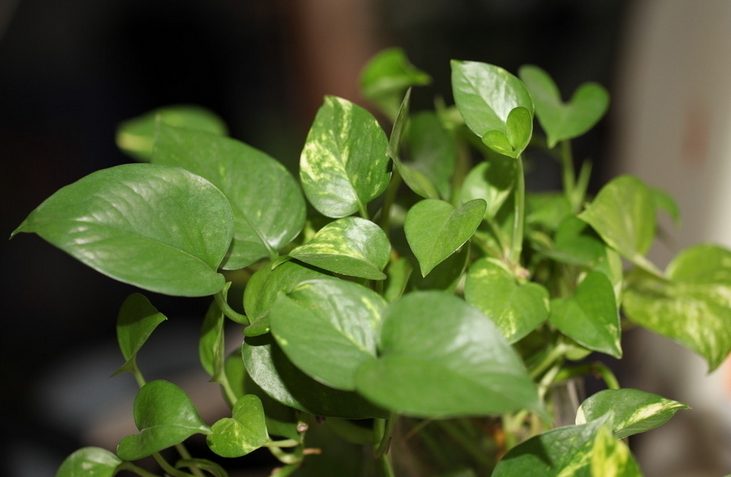
What methods are there for growing pothos
1. For household indoor pothos cultivation, loose soil with good drainage should be chosen for potting, and pothos is suited to slightly acidic soil.
2. Temperature: The suitable temperature for growing pothos is 20 to 30 degrees, and it must not go below 15 degrees at the lowest. Around 10 degrees it will freeze to death. Of course, most households have growing temperature conditions suitable for pothos cultivation, but in winter attention must be paid to keeping it warm. When the climate is too cold, pothos can be kept warm by reducing how often windows are opened.
3. Light: Because pothos originally grew in dark primeval forests and is shade-loving by nature, its light requirements are not strong. Therefore, when growing pothos, it is usually enough to place it indoors where it can see sunlight, and it can also be taken into the sun at noon for a while so it can carry out photosynthesis better, then brought back indoors for display. Although pothos is very shade-tolerant, it is also not good to place it in a dark place for a long time. At least about half a month, it should be exposed to strong light once.
4. Water: When growing pothos, do not water too much. At most, just spray water at its roots. As long as the soil is kept moist, that is enough. If water accumulates, it will breed mosquitoes and insects, seriously affecting the growth and ornamental effect of pothos. In summer, watering can be appropriately increased. The principle is to keep the potting soil moist but not waterlogged. In winter, watering should be restrained, once every two or three days is enough. When indoor heating is turned on, watering can be appropriately increased. When the indoor temperature is too low, attention should be paid to reducing watering. When watering is not possible, the temperature can be lowered by sprinkling water on the leaves.
5. Fertilizer: For fertilizing pothos, ordinary inorganic fertilizers are difficult to absorb, so special fertilizers must be used, such as Beida Huhuashen and Japan's Hana Ichiban. Because pothos growth slows in winter, fertilizer should be applied less, while during the growing season of pothos, fertilization can be appropriately increased. When fertilizing, spraying liquid fertilizer can be used as the main method.
What precautions are there for growing pothos hydroponically
Hydroponic pothos is one of the very good hydroponic plants for indoor decoration, a climbing vine with ornamental leaves. The pothos stems are slender and soft, and the leaves are delicate and elegant. Place a nested pot high on top of a furniture cabinet and let its vines hang down calmly, or after the vines hang too long, coil and hang them into a circle, just like emerald-colored relief. So what precautions are there for growing pothos hydroponically? Next, let the editor of Yiqizhuangxiu.com briefly introduce them to everyone!
What precautions are there for growing pothos hydroponically
Precautions for hydroponic pothos
1. Change the water frequently
If growing pothos hydroponically, frequent water changes are very necessary, generally once every two to three days. The reason is that pothos has extremely high requirements for water quality, and adding nutrient solution is also necessary so that pothos can shine with vitality.
2. Suitable temperature
The temperature for pothos to safely pass the winter is above 10 degrees C. When room temperature is above 20 degrees C, pothos can grow normally. Too large a temperature difference will affect the growth of pothos. At the same time, be careful that the leaves do not get close to heating equipment.
3. Choice of water quality
Use clean tap water or purified water to grow pothos. The correct choice of water quality matters because it contains a large amount of minerals.
Actually, there are two kinds of hydroponic pothos. One is purely hydroponic, and the other is to fill a pot or perhaps a teacup with vermiculite and then fill it with water. Of the two, the one with vermiculite is relatively simpler. To grow pothos well, you still need a certain amount of patience.
Seven methods for growing hydroponic pothos
Hydroponic pothos, namely pothos grown by the hydroponic method. Pothos is a large evergreen vine plant. It grows in tropical regions, often climbing on rocks and tree trunks in rainforests, and can grow into a huge vine plant. It has strong twining ability and well-developed aerial roots. It can be allowed to climb on a cylinder tied with palm fiber and placed in an entrance hall or hotel, or it can be cultivated into a hanging form and placed in a study or on a windowsill. It is a flower suitable for indoor placement. So what methods are there for growing hydroponic pothos? Next, let the editor of Yiqizhuangxiu.com briefly introduce them to everyone!
Seven methods for growing hydroponic pothos
1. Choice of hydroponic container
A vase, beaker, or other transparent container (such as a glass bottle) can all be used.
2. Choice of water
Water is the key element of hydroponic pothos. Tap water, well water, clean drinking water, etc. can be used, but they should be left to stand for one or two days before use.
3. Cutting method
It is advisable to choose healthy and strong pothos stems with aerial roots as the object for hydroponics. The stem length is 15cm~30cm. Basically remove the leaves of 1~2 nodes and then put them into water; a potted plant with a relatively good plant shape can also be selected, the soil on the roots washed clean, excess old roots trimmed off, and then placed in clean water, which also makes it easy to survive.
4. Water change cycle
In the early stage of hydroponics, change the water frequently, once every 2~3 days. After rooting, change it once every 7~10 days. A hydroponic acclimation liquid can be purchased for anti-inflammatory and sterilization purposes to promote root growth.
5. Root pruning
If the root system is too long, cut it short in time to prevent nutrient loss. If the root system becomes rotten and slimy, it should also be cleaned in time, the rotten roots cut off, and soaked in potassium permanganate solution for disinfection before resuming care. Water changes should follow the early hydroponic stage.
6. Temperature and light
In winter in the north, when room temperature is above 10 degrees C, it can safely pass the winter. Only above 20 degrees C can it grow normally. At the same time, care should be taken to avoid too large a temperature difference, and it must not be close to heating equipment. Hydroponic pothos needs sufficient scattered light for the leaves to spread out and be emerald green in color. It should be placed in a place with sufficiently ample scattered light, such as a sealed balcony with light or a place with good indoor light.
7. Humidity
There are several ways to increase humidity: stay close to a humidifier, use a sprayer to spray the leaves, stems, and aerial roots, gently wipe the leaf surface with a cold wet towel or toilet paper, and spray water at the place where aerial roots grow.