How do you solve the common diseases in money tree cultivation?
The money tree (Pachira aquatica) is a popular potted plant. It can be sown when the temperature is above 20°C, and the germination rate is quite high. Compared with bought cutting-grown potted plants, a money tree you grow yourself from seed is easier to care for. So what are the common diseases in money tree cultivation? And what are the corresponding solutions? Next, let the editor of Together Decoration Network give everyone a brief introduction!
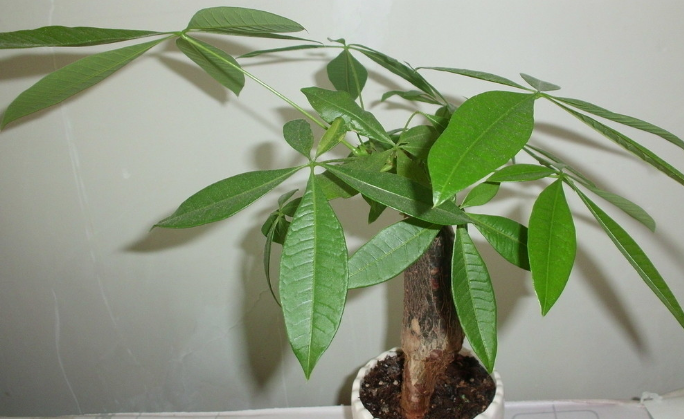
Common diseases in money tree cultivation and their solutions
I. The role of the money tree
The role of the money tree lies mainly in its ornamental value. At the same time, because its name is auspicious and pleasant-sounding, it is favored and loved by many people, especially as an indispensable plant for display in office settings and storefronts. In addition, the money tree can have a very good effect in purifying indoor air and absorbing harmful gases such as formaldehyde. The seeds of the money tree are edible, and the taste is similar to peanuts, but this is obviously not the main point of the money tree's role.
II. Common diseases in money tree cultivation and their solutions
The diseases of the money tree are mainly in the areas of root rot and leaf blight, and this is also the key point of money tree cultivation methods. Here the editor separates them out to analyze for everyone, and owners should pay attention to these matters during cultivation.
1. Root rot
Root rot is a serious and common disease, also known as rot disease. The prevention and treatment method is to keep the cultivation environment dry and refreshing, and prevent the harm of Botrytis cinerea; before planting, cut off the rotting tissue at the top of the main root, then dry the wound before planting; if the Phytophthora fungus is found to be active, spray promptly with drugs such as Previcur, Soilfungin, and Ridomil; if partially rotten plants are found, they should be discarded immediately.
2. Leaf blight
Leaf blight and yellowing are also problems that easily occur during money tree cultivation. If withered and diseased leaves are found, they should be removed and destroyed promptly, and management and care should be strengthened during money tree cultivation, with timely watering and fertilizing.
Cultivation methods and precautions for potted money trees. Common problems in money tree cultivation
The money tree has always been a potted plant that flower lovers quite like. Whether at work or at home, people are willing to grow a pot of money tree, but they are not sure about the cultivation methods of the money tree. After growing it for a while, they find the money tree leaves turning yellow, so what should be done? Below we will explain how the money tree should actually be cultivated, and what precautions there are for cultivating the money tree.
Common problems
✔ Cultivation methods for small potted money trees
✔ Cultivation methods for small-leaf money trees
✔ Reasons for money tree leaves turning yellow
✔ Hydroponic cultivation methods for money trees
✔ Cultivation methods for household money trees
✔ Methods for pruning and shaping money tree bonsai
I. Money tree cultivation methods
Method 1: Money tree cultivation requires appropriate sunlight
Money tree cultivation should place it in a spot indoors with sufficient sunlight. When placing it, note that the leaf surface should face the sunlight, and it must not be kept shaded for a long time, otherwise the branches and leaves will become twisted and deformed. It is best to spray water on the money tree leaves once every 3 to 5 days, which not only helps photosynthesis but also makes the branches and leaves more beautiful.
Method 2: Money tree cultivation requires moderate watering
The money tree has strong adaptability to moisture. Generally, whether watered heavily outdoors or not watered for more than ten days indoors, waterlogging and drought will not occur, but watering is still an important part of money tree cultivation. If the amount of water is too little, branch and leaf development is prone to stalling; if the amount of water is too much, the roots may rot and the plant may die; if the amount of water is moderate, the branches and leaves will be plump.
The first principle of watering the money tree is to prefer moist over dry. Water more in the high-temperature summer season and less in winter; water more during the vigorous growth period and less for small newly planted ones. Under normal circumstances, watering once every 15 to 20 days is enough.
Method 3: How to fertilize money tree cultivation
The money tree has a greater demand for fertilizer than other flowers and trees. When repotting, the proportion of fertile soil can be one third. Fertile soil includes decomposed leaf litter, mixed bone meal, soybean cake residue, etc. These fertile soils are highly effective and easy to obtain. However, care should be taken to fully decompose them, so as not to "burn" the leaves yellow. It is worth noting that during the money tree's growth period (that is, from May to September), a fully decomposed liquid fertilizer or flower-growing fertilizer should be applied once every 15 days to make its roots deep and leaves lush.
Method 4: Temperature and humidity for money tree cultivation
Money tree cultivation has relatively high requirements for temperature and humidity. If the temperature is too low or the humidity is insufficient, leaf drop may occur, and in severe cases the branches may become bare, which is unfavorable for viewing and may also cause the plant to die.
For money tree cultivation, care should be taken to maintain a temperature above 15°C, and spray water on the branches and leaves frequently to increase humidity. In late autumn and winter, care should be taken to do a good job of cold protection and frost protection. For indoor cultivation in summer, water once every 3 to 5 days, and in spring and autumn once every 5 to 10 days. In winter, it depends on the room temperature; if the room temperature is around 12°C, watering once a month is enough. Its most suitable growth temperature is 18 to 30°C.
Method 5: How to repot money tree cultivation
For newly introduced money tree plants, there is no need to repot in the same year, to prevent the tree shape from becoming distorted. The suitable repotting season is spring, and it can also be done in July and August, using the plant's semi-dormant state during the high-temperature period to repot. The money tree has relatively strict requirements for potting soil. The potting soil should be slightly moist and well-draining, and the potting soil can use acidic sandy loam containing humus.
II. Precautions for money tree cultivation
Precaution 1:The money tree likes high temperatures, humidity, and sunlight, and cannot be shaded for a long time. Therefore, during maintenance and management, it should be placed in a spot indoors with sufficient sunlight, and when placing it, the leaf surface must face the sunlight. Otherwise, because the leaves are phototropic, the entire branches and leaves will become twisted. In addition, every 3 to 5 days, use a spray bottle to spray water on the leaves once. This not only helps photosynthesis proceed but also makes the branches and leaves look more beautiful.
Precaution 2:The money tree is a flowering plant that likes fertilizer, and its demand for fertilizer is greater than that of other common flowers and trees. When repotting each year, the proportion of fertile soil can account for 1/3, or even more. Fertile soil has a wide range of sources; you can collect humus soil from broadleaf tree leaf litter, add a little garden soil and mix it with bone meal and soybean cake residue. This fertile soil is highly effective and easy to obtain, but care should be taken to fully decompose it, so as not to "burn" the leaves yellow.
Precaution 3:During the money tree's growth period (May to September), every 15 days, apply a fully decomposed liquid fertilizer or a mixed flower-growing fertilizer once, to promote deep roots and lush leaves. Normally keep the potting soil moist; in winter keep the potting soil on the dry side, and avoid wetness; otherwise, the leaf tips are prone to scorching, and even the leaves may fall off. Prune and repot once every 1 to 2 years, and year by year change to a slightly larger pot. At the same time, add base fertilizer and replace with new nutrient soil, so that it grows vigorously.
Precaution 4:The money tree has relatively high requirements for temperature and humidity. If the temperature is relatively low or humidity is lacking, leaf drop often occurs, and in severe cases the branches become bare, which not only hinders viewing but also very easily causes the plant to die. Therefore, during cultivation, care should be taken to maintain a temperature above 15°C, and spray water on the branches and leaves frequently to increase the necessary humidity. In late autumn and winter, care should be taken to do a good job of overwintering cold protection and frost protection management.
III. 10 reasons for money tree leaves turning yellow
1. Improper watering: The money tree likes a warm and humid climate environment, and the potting soil should preferably be moist, but for indoor cultivation, generally do not water until the potting soil is dry, and when watering, water thoroughly. Because if you do not water thoroughly and only water so that the top is wet and the bottom is dry, it will affect nutrient absorption, causing the leaf color to become dull and lusterless, and gradually wither and yellow from bottom to top and fall off. In this situation, you need to water lightly and spray water often, so that it gradually recovers and then returns to normal watering.
2. Unsuitable light: The money tree likes light, but it is not tolerant of strong direct light. Semi-shade or scattered light is preferable. Only in winter does it need relatively good light conditions to grow well. Starting in late April, you can choose a clear and warm noon, move the pot outdoors or onto a balcony, expose it directly to sunlight for 1-2 hours, and gradually extend the time, which will produce very good cultivation results. Being in shade or a relatively dark place for a long time will cause the leaves to turn yellow and fall off, and in severe cases the plant may wither and die.
3. Pest and disease control: Leaf spot disease is a common condition of the money tree. The symptom is that a few spots appear first, then the spots gradually expand and extend to the entire leaf, and the leaf falls off. Garlic juice can be sprayed to sterilize. As for pests, the main ones are the harm of red spider mites and scale insects. Red spider mites are small, with a body length of less than 1 mm, and can be effectively controlled with acaricides such as Mite-Clear, Kete-Man, and dicofol. Scale insects differ in size depending on the species, and their colors also vary greatly, but they share one common feature: they are round or oval, generally do not move, and cling tightly to the plant's stems or leaf stalks to suck sap. When there are few, they can be wiped clean with a cloth strip, because scale insects die as soon as they leave the plant. When there are many, you can spray a 0.2% solution of essential balm or laundry detergent for control.
4. Too much fertilizer: Generally, during the suitable temperature period for money tree growth, fertilizer should be applied regularly to ensure vigorous plant growth. Usually apply a thin fertilizer once about every 20 days, and add fully decomposed base fertilizer when repotting. However, applying too much fertilizer, or applying fertilizer that has not been decomposed, will cause the money tree's roots to burn and cause leaves to turn yellow and fall off.
5. Dust on the leaf surface: If the dust on the leaf surface is too thick, it not only affects the appearance but also affects the plant's respiration and photosynthesis, thereby causing the leaves to turn yellow. The dust should be wiped clean promptly.
6. Incorrect soil changing operation: When changing the soil, incorrect operation can also cause money tree leaves to turn yellow. When changing the soil for the money tree, try to damage the roots as little as possible. The added substrate should be sterile, breathable, fertile, and slightly acidic. Also, fill the potting soil firmly and do not leave gaps. If there are gaps, no matter how much water is poured on the plant, water shortage will still occur, thereby causing the leaves to turn yellow.
7. Low ambient temperature: The money tree likes a warm and humid environment. Its suitable growth temperature is 20-30°C. When the temperature is below 18°C, the money tree stops growing. It can also adapt to temperatures as low as 10°C, but the temperature must not be lower than 5°C at the lowest, otherwise frost damage will occur. In mild cases, the leaves turn yellow and scatter and fall; in severe cases, the plant dies.
8. Hot high temperatures: For the money tree, which likes a warm and humid environment, if it is placed in high temperatures and exposed to strong sun, the plant's transpiration will be excessive, and the roots will not be able to supply enough water and nutrients, which very easily causes leaf tip scorching or yellowing and falling leaves. It needs to be moved promptly to a well-ventilated cool place.
9. Too dense and not ventilated: If the money tree's branches and leaves grow too luxuriantly, and it has not been pruned for a long time, the inner branches and leaves will lack light, which very easily causes leaves to turn yellow and fall off. Pruning should be strengthened promptly to make it ventilated and let light through.
10. Soil and water tending alkaline: In most areas of the north, the soil and water contain relatively more salt and alkali, and are not very suitable for planting the acid-loving money tree, because the soil lacks iron elements that it can absorb, and the money tree's leaves will gradually turn yellow. Therefore, when planting, pay attention to choosing acidic soil, and frequently water with ferrous sulfate fertilizer water during the growth period.
Money tree cultivation methods. Precautions for money tree cultivation
The money tree originates from the tropical regions of the Americas. It likes a high-temperature and high-humidity climate, is an evergreen tree, has poor cold resistance, likes fertile, loose, breathable, and water-retaining sandy loam, and is relatively tolerant of drought and waterlogging. Below is a specific explanation of the content of money tree cultivation methods. >>Recommended reading: What to do if money tree leaves turn yellow
I. Money tree cultivation methods and precautions
For money tree cultivation methods, the main attention should be paid to the following five aspects.
1. Sunlight should be appropriate
Money tree cultivation should place it in a spot indoors with sufficient sunlight. When placing it, note that the leaf surface should face the sunlight, and it must not be kept shaded for a long time, otherwise the branches and leaves will become twisted and deformed. It is best to spray water on the money tree leaves once every 3 to 5 days, which not only helps photosynthesis but also makes the branches and leaves more beautiful.
2. Moderate watering
The money tree has strong adaptability to moisture. Generally, whether watered heavily outdoors or not watered for more than ten days indoors, waterlogging and drought will not occur, but watering is still an important part of money tree cultivation. If the amount of water is too little, branch and leaf development is prone to stalling; if the amount of water is too much, the roots may rot and the plant may die; if the amount of water is moderate, the branches and leaves will be plump.
The first principle of watering the money tree is to prefer moist over dry. Water more in the high-temperature summer season and less in winter; water more during the vigorous growth period and less for small newly planted ones. Under normal circumstances, watering once every 15 to 20 days is enough.
3. How to fertilize
The money tree has a greater demand for fertilizer than other flowers and trees. When repotting, the proportion of fertile soil can be one third. Fertile soil includes decomposed leaf litter, mixed bone meal, soybean cake residue, etc. These fertile soils are highly effective and easy to obtain. However, care should be taken to fully decompose them, so as not to "burn" the leaves yellow. It is worth noting that during the money tree's growth period (that is, from May to September), a fully decomposed liquid fertilizer or flower-growing fertilizer should be applied once every 15 days to make its roots deep and leaves lush.
4. Temperature and humidity
Money tree cultivation has relatively high requirements for temperature and humidity. If the temperature is too low or the humidity is insufficient, leaf drop may occur, and in severe cases the branches may become bare, which is unfavorable for viewing and may also cause the plant to die.
For money tree cultivation, care should be taken to maintain a temperature above 15°C, and spray water on the branches and leaves frequently to increase humidity. In late autumn and winter, care should be taken to do a good job of cold protection and frost protection. For indoor cultivation in summer, water once every 3 to 5 days, and in spring and autumn once every 5 to 10 days. In winter, it depends on the room temperature; if the room temperature is around 12°C, watering once a month is enough. Its most suitable growth temperature is 18 to 30°C.
5. How to repot
For newly introduced money tree plants, there is no need to repot in the same year, to prevent the tree shape from becoming distorted. The suitable repotting season is spring, and it can also be done in July and August, using the plant's semi-dormant state during the high-temperature period to repot. The money tree has relatively strict requirements for potting soil. The potting soil should be slightly moist and well-draining, and the potting soil can use acidic sandy loam containing humus.
II. The role of the money tree
The role of the money tree lies mainly in its ornamental value. At the same time, because its name is auspicious and pleasant-sounding, it is favored and loved by many people, especially as an indispensable plant for display in office settings and storefronts. In addition, the money tree can have a very good effect in purifying indoor air and absorbing harmful gases such as formaldehyde. The seeds of the money tree are edible, and the taste is similar to peanuts, but this is obviously not the main point of the money tree's role.
III. Common diseases in money tree cultivation and their solutions
The diseases of the money tree are mainly in the areas of root rot and leaf blight, and this is also the key point of money tree cultivation methods. Here the editor separates them out to analyze for everyone, and owners should pay attention to these matters during cultivation.
1. Root rot
Root rot is a serious and common disease, also known as rot disease. The prevention and treatment method is to keep the cultivation environment dry and refreshing, and prevent the harm of Botrytis cinerea; before planting, cut off the rotting tissue at the top of the main root, then dry the wound before planting; if the Phytophthora fungus is found to be active, spray promptly with drugs such as Previcur, Soilfungin, and Ridomil; if partially rotten plants are found, they should be discarded immediately.
2. Leaf blight
Leaf blight and yellowing are also problems that easily occur during money tree cultivation. If withered and diseased leaves are found, they should be removed and destroyed promptly, and management and care should be strengthened during money tree cultivation, with timely watering and fertilizing. For more highlights, click to view the Flowers section of Tubatu Network.