How to Grow a Money Tree? A Complete Guide to Care Methods and Precautions
The money tree is loved by homeowners for its festive symbolism. Yet practical questions such as how to grow a money tree and what care it requires still puzzle many owners. So how should a money tree be grown? What precautions should be taken during cultivation? Let the editors of Yiqizhuangxiu.com give everyone a brief introduction!
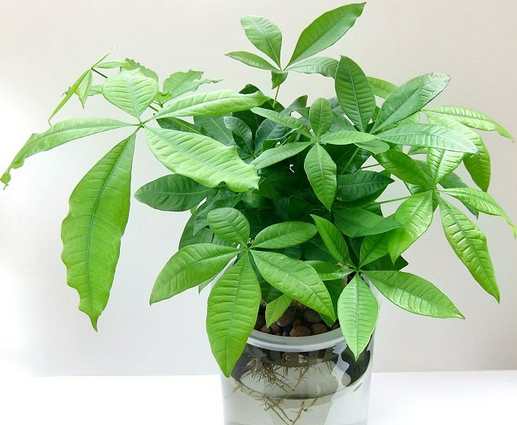
Money Tree Growing Methods and Precautions
1. Sunlight must be appropriate
Money trees should be placed in a spot indoors with plenty of sunlight. When positioning them, make sure the leaf surfaces face the light, and do not leave them in shade for long periods, otherwise the branches and leaves will twist and deform. It is best to mist the leaves of the money tree once every 3 to 5 days, which both aids photosynthesis and makes the foliage more attractive.
2. Water moderately
The money tree adapts well to moisture. Generally, whether watered heavily outdoors or left unwatered indoors for more than ten days, it will not suffer from waterlogging or drought. Still, watering remains an important part of money tree care. Too little water easily stagnates branch and leaf development; too much water may cause root rot and death; a moderate amount produces thick, lush foliage.
The first principle of watering a money tree is to keep it moist rather than dry. Water more in the hot summer months and less in winter; water more during the vigorous growth period and less for small, newly potted plants. Under normal conditions, watering once every 15 to 20 days is enough.
3. How to fertilize
The money tree needs more fertilizer than other flowering plants and trees. When repotting, the proportion of fertilizer soil can be one third. Fertilizer soil includes a mix of decomposed leaf litter, crushed bone meal and soybean cake residue, and this kind of fertilizer soil is highly effective, convenient and easy to obtain. However, note that it must be fully decomposed, so as not to "burn" the leaves yellow. It is worth noting that during the money tree's growing season (that is, from May to September), a decomposed liquid fertilizer or flower fertilizer should be applied once every 15 days to promote deep roots and lush leaves.
4. Temperature and humidity
Money tree cultivation has relatively high requirements for temperature and humidity. If the temperature is too low or the humidity is insufficient, leaf drop may occur, and in severe cases the branches may become bare, harming its ornamental value and possibly even causing the plant to die.
When growing a money tree, care should be taken to maintain a temperature above 15°C and to mist the branches and leaves regularly to increase humidity. In late autumn and winter, take care to protect against cold and freezing. For indoor cultivation in summer, water once every 3 to 5 days; in spring and autumn, once every 5 to 10 days. In winter it depends on the room temperature: if the room temperature is around 12°C, watering once a month is enough. Its most suitable growing temperature is 18 to 30°C.
5. How to repot
Newly acquired money tree plants do not need repotting in the same year, to prevent the tree shape from going awry. The suitable season for repotting is spring, though it can also be done in July or August, taking advantage of the plant's semi-dormant state during the high-temperature period. The money tree has fairly strict requirements for potting soil; the soil should be slightly moist and well-draining, and an acidic sandy loam containing humus can be used.
Money Tree Growing Methods and Precautions
Money Tree
The money tree, scientifically named Malabar chestnut (Pachira aquatica), originated in Costa Rica in Latin America, Australia and some small islands in the Pacific Ocean. It is now a very popular plant in China, and people have given it an auspicious name and symbolism, making it a bestseller in many places. So how should a money tree be grown? And what precautions are there?
I. How to grow a money tree well
1. Temperature: The money tree likes warmth and moisture, with a suitable growing temperature of 20°C to 30°C. In summer, with high temperature and high humidity, fertilizer and water management should be strengthened, and direct sunlight avoided. In winter, place it in a bright spot indoors, with a minimum temperature of 16-18°C; below this temperature the leaves turn yellow and drop; below 10°C it easily dies.
2. Light: The money tree is a strongly sun-loving plant and is grown in open fields in places such as Hainan Island. But this plant is fairly tolerant of shade and can be enjoyed indoors in a low-light spot for 2-4 weeks in a row, after which it should be placed in a bright spot.
3. Water: The money tree should not be watered too much, to prevent water accumulating in the potting soil and causing root rot, yellowing branches and leaves, and even plant death. During the high-temperature growing period it needs sufficient water; the money tree is fairly drought-tolerant and will not be harmed by going several days without water. Reduce watering in winter.
4. Fertilizing and pruning: Applying an appropriate amount of phosphorus and potassium fertilizer to the money tree can make its trunk thick and sturdy, giving it a vigorous, quaint beauty. In spring, the branches should be pruned to encourage new shoots to sprout from the base of the trunk, so that the new shoots are easy to braid into shapes.
5. Potting soil: The money tree has fairly strict requirements for potting soil; it needs a well-draining, acidic sandy loam containing humus. Generally, use 6 parts garden soil, 2 parts decomposed organic fertilizer, 2 parts coarse sand, 2 parts coal cinders and 1 part peanut cake to make the growing medium. The pot or tub should be at least 40 cm deep to benefit the growth and development of the money tree's root system.
II. How to water a money tree?
Watering is an important part of the care and management process. With too little water, branch and leaf development stagnates; with too much water, root rot and death may result; with a moderate amount, the foliage becomes thick and lush. The first principle of watering is to keep it moist rather than dry, and the second is "two mores and two lesses," that is, water more in the hot summer months and less in winter; water more for large and medium-sized plants in vigorous growth and less for small newly potted plants. When the watering amount is too large, the plant easily suffers root rot, causing the leaves to droop, lose their luster and even fall off. At this point, immediately move it to a cool place, reduce watering to the minimum, just enough that the potting soil does not dry out, mist the leaf surfaces multiple times a day with a spray bottle, stop fertilizer and water, and after about 15 to 20 days it can gradually recover.
Money Tree
III. Precautions for keeping a money tree
1. Prevent root rot: Root rot is the most likely cause of potted plant death. There are two ways to prevent root rot: first, skillfully prepare a growing medium with good air and water permeability. You can mix pond mud, river sand and decomposed sawdust in a ratio of 5:3:2, or use mountain soil and river sand in a ratio of 7:3. Second, water according to the soil color: when the soil turns white, water it, and water thoroughly; there is no need to water every day, once every three or four days is enough, and prefer dry over wet. If water accumulates because the small hole at the bottom of the pot is blocked, clear it promptly. In addition, potted plants should not be placed in unventilated, closed-off places for long periods.
2. Appropriate shade: Most money trees cultivated today are plants obtained after trunk planting and dwarfing, and being potted and placed indoors, they have been acclimated to like semi-shade, but their nature is not to like shade. Excessive shading causes a serious lack of light and poor photosynthesis, which weakens the plant's growth, reduces its resistance, and makes it prone to disease and death. For this reason, place the potted plant in a spot indoors with good light transmission, and do not keep it indoors too long; after more than two months it should be moved outdoors to receive light.
3. Cultivate before enjoying: When a money tree is placed indoors for enjoyment, its survival depends mainly on nutrients stored within the plant, and secondly on photosynthesis. Therefore, a plant brought indoors should be at least one meter tall with a thick trunk; the thicker the trunk, the bigger the head, and under the same conditions, the longer its lifespan. Lush leaves aid photosynthesis, so while not losing ornamental value, try to keep six or seven branches; such a plant has more roots and sufficient internal nutrients, and with proper management is not prone to leaf drop and withering. However, some people are eager to enjoy it and place small, tender-stemmed plants indoors for display, leaving them there for a long time; because the plant's root system is still small, its internal nutrients are insufficient, the shade is excessive and photosynthesis is poor, it greatly damages its "vitality" and dies. If you have such a plant, cultivate it outdoors for a period, and once it grows thicker, bring it indoors for enjoyment.
The money tree is a relatively easy plant to care for, non-toxic and harmless, and quite suitable for keeping at home. It is just that the money tree grows relatively slowly, which is normal; do not give too much fertilizer and water, lest it die.
What are the money tree growing methods and precautions
The growing methods for the fortune tree are actually very simple, but the fortune tree is very sensitive to its environment, so some plant growers cannot find the right method for growing it. How exactly should a fortune tree be grown? Let us take a look together below.
Growing methods for the fortune tree
[Morphological characteristics of the fortune tree] The umbrella tree is a shrub with an upright stem and few branches. The young stem is green and gradually becomes woody; the bark is brown and smooth. The leaves are palmately compound, and the number of leaflets varies greatly with growth: 3-5 when young, 9-12 when grown, and up to as many as 16.
The leaflets are long-elliptical, with a blunt apex and a short protruding tip, and a blunt base; the leaf margin is wavy and leathery; when young they are densely covered with stellate short hairs, and when slightly larger they are clean and hairless. The leaves are 15-25 cm long and 5-10 cm wide, with a deep and glossy upper surface and a pale green underside, and reddish-brown petioles. The inflorescence is umbel-like, with small white flowers borne at the top; the flowering period is in spring, but potted plants rarely bloom.
The fortune tree can be propagated by sowing and by cuttings. When sowing, it is best to sow the seeds immediately after collection, as this gives a high germination rate. Cuttings can be taken in spring, summer and autumn; generally, cuttings are combined with shaping: cut the branches off an irregularly shaped plant 10-15 cm above the potting soil surface, letting the mother trunk sprout several branches to cultivate a good tree shape.
Cut the removed semi-lignified branches into stem sections 8-10 cm long with 2-3 nodes, and insert them into a cutting bed of river sand or perlite, maintaining a certain substrate humidity and air humidity, and taking care to provide shade. Generally, roots can form in about one month. For thick, large branches with a high degree of lignification, air layering can also be used.
The money tree is highly adaptable, liking light yet tolerating shade, and grows well in full sun, half sun or shade. But if grown in a dark place for a long time, its vigor will decline. When summer arrives, 50% shading is best, to prevent the scorching sun from burning the leaf tips and margins. For indoor cultivation and enjoyment, place it in a spot with some scattered light, and do not keep it there continuously for more than 30 days. If leggy growth and declining vigor appear, it should gradually be exposed to sunlight; never expose it suddenly to strong light, lest it fail to adapt and wither and die.
Most money trees bought today come with soil provided by the seller. Gardeners need not repot immediately after buying; keep it growing first, and consider repotting later. If repotting, a money tree in a pot generally uses loose garden soil or peat soil, leaf mold and coarse sand, with a small amount of compound fertilizer or chicken manure as a base fertilizer and growing medium.
The money tree's root system is very poorly developed, and many gardeners' money trees die mainly from root rot. Some gardeners may ask how often a money tree should be watered and how much at a time. Here it must be stated clearly: conditions vary from place to place, and the pots and soil used also differ, so there is no fixed watering standard. So how should gardeners water? Generally speaking, watering a money tree once a month is not too little. Also, a little tip for gardeners: a plant will not die quickly from lack of water and will recover quickly after watering, but if it is waterlogged it is basically beyond saving. For money trees, you can usually mist more and water less.
Money Tree Growing Methods and Precautions
For money tree growing methods, the following five aspects should mainly be noted.
1. Sunlight must be appropriate
Money trees should be placed in a spot indoors with plenty of sunlight. When positioning them, make sure the leaf surfaces face the light, and do not leave them in shade for long periods, otherwise the branches and leaves will twist and deform. It is best to mist the leaves of the money tree once every 3 to 5 days, which both aids photosynthesis and makes the foliage more attractive.
2. Water moderately
The money tree adapts well to moisture. Generally, whether watered heavily outdoors or left unwatered indoors for more than ten days, it will not suffer from waterlogging or drought. Still, watering remains an important part of money tree care. Too little water easily stagnates branch and leaf development; too much water may cause root rot and death; a moderate amount produces thick, lush foliage.
The first principle of watering a money tree is to keep it moist rather than dry. Water more in the hot summer months and less in winter; water more during the vigorous growth period and less for small, newly potted plants. Under normal conditions, watering once every 15 to 20 days is enough.
The fortune tree carries the meaning of attracting wealth, so placing it on the wealth corner of the living room is a very good choice. The fortune tree has large, round, thick leaves and a thick stem; placing it on the wealth corner gives us great visual enjoyment, and of course lifts the mood considerably and boosts positive energy, letting us happily welcome the arrival of the God of Wealth!
The above is the relevant introduction in this article. I believe that after reading it you have a simple understanding of this. If you need more, you can continue to follow No.1 Home Network to learn more information.